Abstract
Deep learning of artificial neural networks has become the de facto standard approach to solving data analysis problems in virtually all fields of science and engineering. Also in biology and medicine, deep learning technologies are fundamentally transforming how we acquire, process, analyze, and interpret data, with potentially far-reaching consequences for healthcare. In this mini-review, we take a bird's-eye view at the past, present, and future developments of deep learning, starting from science at large, to biomedical imaging, and bioimage analysis in particular.
🔬 Techniques
✨ Fluorophores
🧪 Sample Preparation
🔬 Cell Lines
💻 Software Details
🏛️ Research Organizations (ROR)
Affiliated research institutions:
📊 Figures
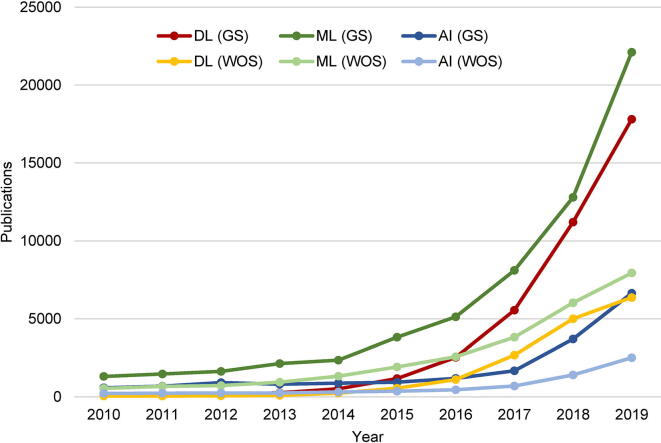
Fig. 1
Explosive growth of the scientific literature on deep learning and related topics. The graph shows the number of publications per year in the past decade, having the terms deep learning (DL), machine ...
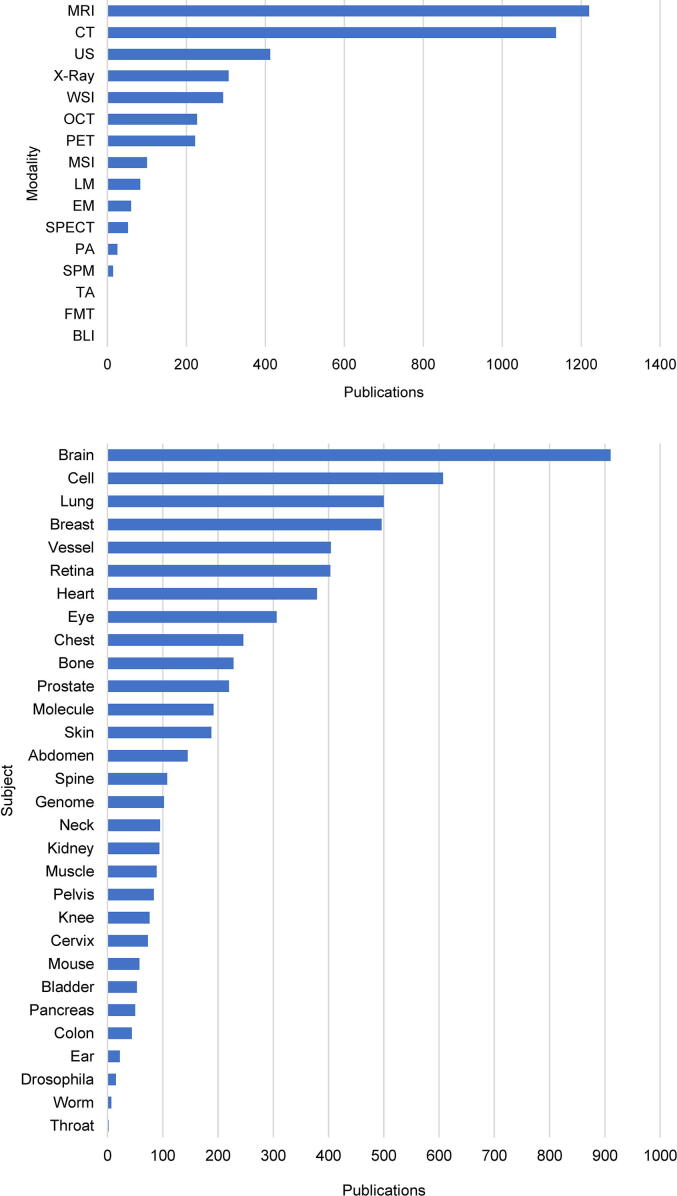
Fig. 2
Impact of deep learning on biomedical imaging. The graphs show the number of peer-reviewed journal and selected conference proceedings publications on deep learning in different biomedical application...
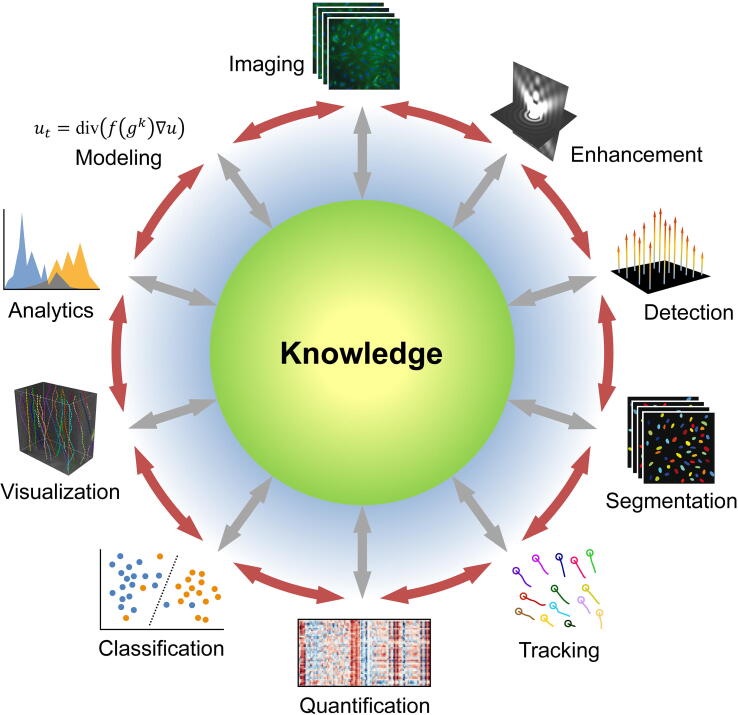
Fig. 3
Common tasks in bioimage analysis. The ultimate goal is to gain knowledge of biological processes in health and disease by extracting relevant information from microscopy image or video recordings of ...
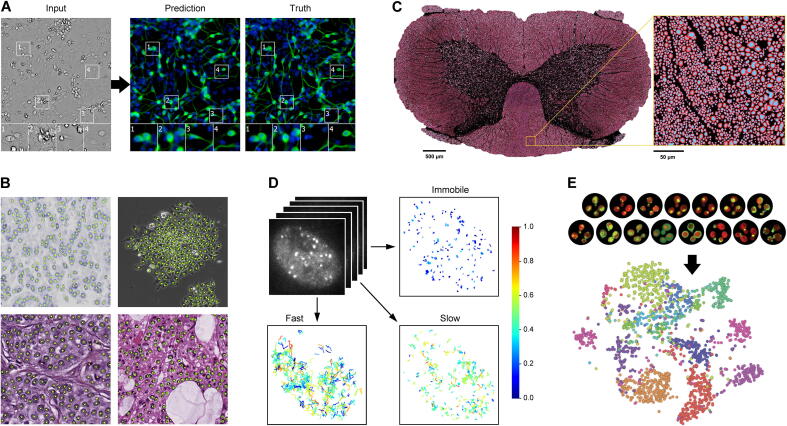
Fig. 4
Examples of successful application of deep learning in bioimage analysis. A : Prediction of a fluorescence microscopy image (middle) from a bright-field microscopy image (left) compared to the truth (...
Figure images are served from the NIH/NLM PubMed Central Open Access Subset or Europe PMC; copyright remains with the publishers and authors.
💬 Discussion
0 commentsNo comments yet. Be the first to start a discussion!
Leave a Comment