Abstract
Small-molecule fluorescent probes are powerful tools for chemical biology; however, despite the large number of probes available, there is still a need for a simple fluorogenic scaffold, which allows for the rational design of molecules with predictable photophysical properties and is amenable to concise synthesis for high-throughput screening. Here, we introduce a highly modular quinoline-based probe containing three strategic domains that can be easily engineered and optimized for various applications. Such domains are allotted for (1) compound polarization, (2) tuning of photophysical properties, and (3) structural diversity. We successfully synthesized our probes in two steps from commercially available starting materials in overall yields of up to 95%. Facile probe synthesis was permitted by regioselective palladium-catalyzed cross-coupling, which enables combinatorial development of structurally diverse quinoline-based fluorophores. We have further applied our probes to live-cell imaging, utilizing their unique two-stage fluorescence response to intracellular pH. These studies provide a full demonstration of our strategy in rational design and stream-lined probe discovery to reveal the diverse potential of quinoline-based fluorescent compounds.
🔬 Techniques
✨ Fluorophores
🧪 Sample Preparation
🔬 Cell Lines
🧪 Reagent Suppliers
🏛️ Research Organizations (ROR)
Affiliated research institutions:
📊 Figures
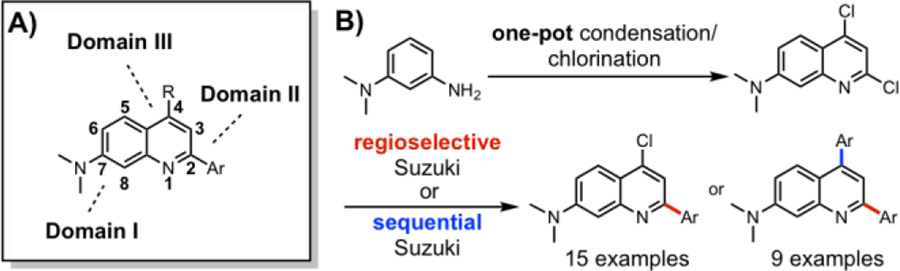
Figure 1.
(A) Modularity of dimethylamino quinoline (DMAQ) dyes consisting of a polarization domain and two tuning domains (B) Two-step synthesis of 2,4-disubstituted quinoline derivatives (15 monoarylated, 9 b...
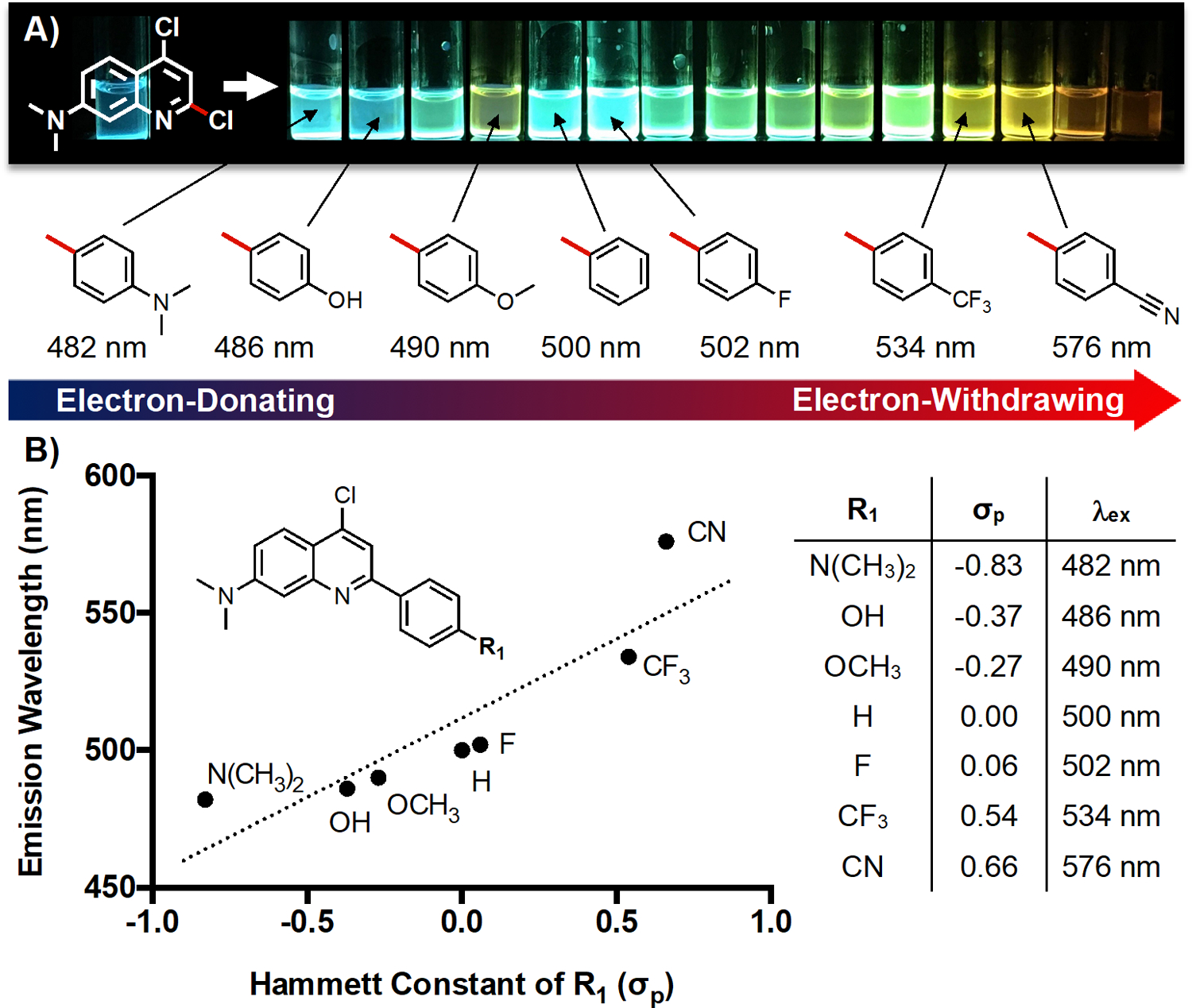
Figure 2.
Structure-photophysical property relationship of DMAQ. A) A range of C-2 aryl substitution with emission maximum under 405 nm excitation is shown. The compound order is 4b, 4a, 4n, 4i, 4c, 4d, 4m, 4l,...
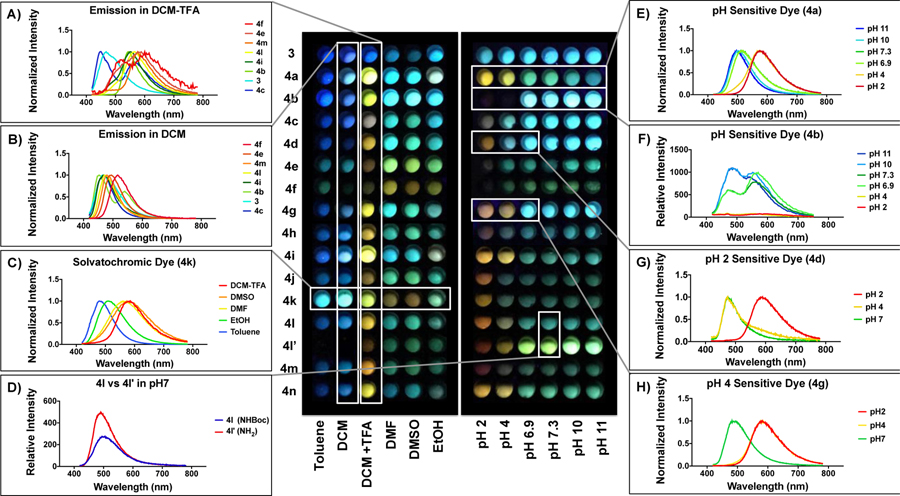
Figure 3.
Plate reader analysis of photophysical properties of monoaryl DMAQ. Each compound ( 3,4a-4n ) was prepared as a 5 mM stock solution in diemthyl sulfoxide (DMSO) except for 4lu2019 in water. Each well ...
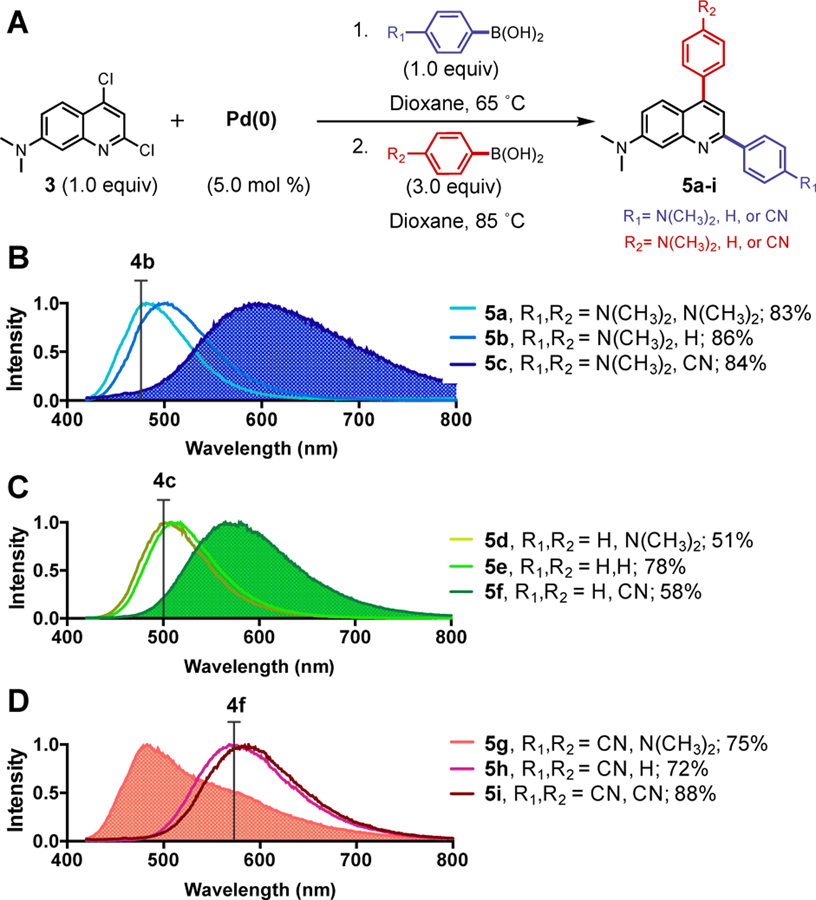
Figure 4.
Sequential cross-coupling for bisaryl DMAQ dyes. A) Reaction scheme for sequential cross coupling. B-D) Emission spectra of 5a - 5i in DMSO upon 405 nm excitation. They are categorized under same R 1 ...
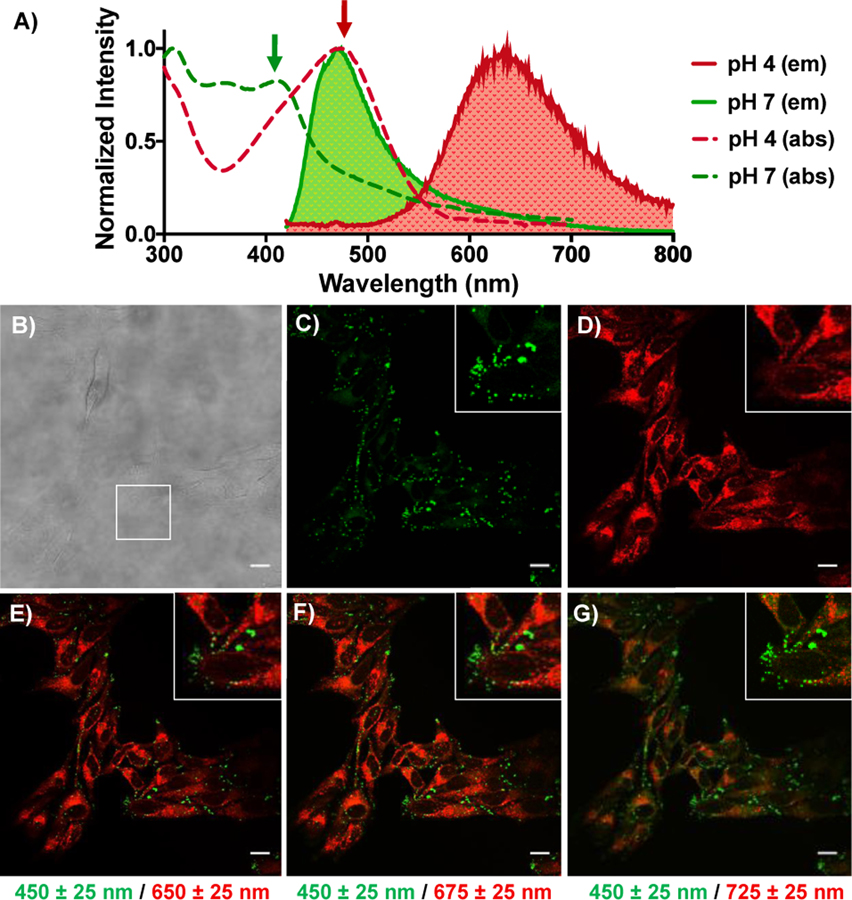
Figure 5.
Fluorescence spectrum and live HeLa cell imaging after 3 h incubation of 5a. A) Normalized UV absorption spectra and emission spectra excited by 405 nm are shown in pH 7 and pH 2 buffer. 405 nm and 48...
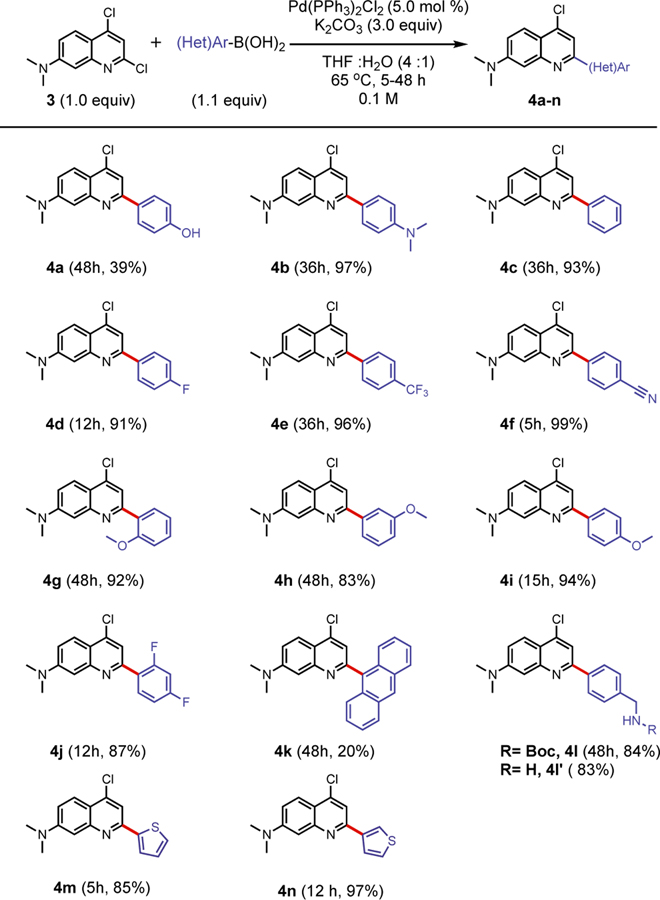
Scheme 1.
Aryl/Heteroaryl Boronic Acid Substrate Scope All reactions performed on 0.18 mmol scale. Reported yields are isolated yield.
Figure images are served from the NIH/NLM PubMed Central Open Access Subset or Europe PMC; copyright remains with the publishers and authors.
💬 Discussion
0 commentsNo comments yet. Be the first to start a discussion!
Leave a Comment