Abstract
The rodent olfactory bulb incorporates thousands of newly generated inhibitory neurons daily throughout adulthood, but the role of adult neurogenesis in olfactory processing is not fully understood. Here we adopted a genetic method to inducibly suppress adult neurogenesis and investigated its effect on behavior and bulbar activity. Mice without young adult-born neurons (ABNs) showed normal ability in discriminating very different odorants but were impaired in fine discrimination. Furthermore, two-photon calcium imaging of mitral cells (MCs) revealed that the ensemble odor representations of similar odorants were more ambiguous in the ablation animals. This increased ambiguity was primarily due to a decrease in MC suppressive responses. Intriguingly, these deficits in MC encoding were only observed during task engagement but not passive exposure. Our results indicate that young olfactory ABNs are essential for the enhancement of MC pattern separation in a task engagement-dependent manner, potentially functioning as a gateway for top-down modulation.
🔬 Techniques
✨ Fluorophores
🧪 Sample Preparation
🔬 Cell Lines
🏭 Microscope Brands
🧪 Reagent Suppliers
💻 Software Details
💾 Data Repositories
🏷️ Research Resource Identifiers (RRIDs)
Verified research resources used in this paper:
🏛️ Research Organizations (ROR)
Affiliated research institutions:
📋 Methods
Key resources table
Reagent type (species) or resource Designation Source or reference Identifiers Additional information strain, strain background Gfap-tk , ICR PMID: 21814201 Cameron Lab strain, strain background Cdhr1-Cre , C57Bl/6 RIKEN Brain Research Center ID_source:RBRC02189 strain, strain background mGfap-Cre , C57Bl/6 PMID: 15494728 Sofroniew Lab strain, strain background Slc17a7-LoxP-TeNT , C57Bl/6 PMID: 24760839 Imayoshi Lab transfected constrct AAV2.1 hsyn-FLEX-GCaMP6f Upenn Vector Core ID_source:CS1165 transfected constrct AAV2.1-EF1a-FLEX-taCasp3-TEVp Upenn Vector Core ID_source:V3734TI-S transfected constrct AAV2.1-CMV-PI-Cre-rBG Upenn Vector Core ID_source:CS1235 antibody rat anti-BrdU AbD serotec ID_source:OBT0030 Dilution: 1:500 antibody goat anti-rat Alexa 488 Thermo Fisher ID_source:RRID: AB_2534074 Dilution: 1:1000 antibody goat anti-Doublecortin Santa Cruz ID_source:SC8066 Dilution: 1:400 antibody donkey anti-goat Alexa 488 Thermo Fisher ID_source:RRID: AB_2534102 Dilution: 1:1000 antibody goat anti-GFAP Santa Cruz ID_source:SC6170 Dilution: 1:400 antibody mouse anti-NeuN Millipore ID_source:MAB377 Dilution: 1:400 antibody rabbit anti-VAMP2 Synaptic Systems ID_source:104_202 Dilution: 1:500 antibody DAPI Vector Labs ID_source:H1200 chemical compound, drug Valganciclovir Genentech ID_source:NDC 0004-0039-09 chemical compound, drug heptanal Sigma ID_source:111-71-7 chemical compound, drug ethyl-tiglate Sigma ID_source:5837-78-5 software, algorithm Matlab https://www.mathworks.com/products/matlab.html ID_source:RRID: SCR_001622 Subjects All procedures were in accordance with protocols approved by the Institutional Animal Care and Use Committee at UCSD or Kyoto University and guidelines of the National Institute of Health. For all experiments, mice were housed in plastic cages with standard bedding in a room with a reversed light cycle (12 hr-12hr), and all experiments were performed during the dark period. All experiments except suppression of hippocampal postnatally-born neurons were performed at UCSD. Gfap-tk mice were generous gifts from H. Cameron with ICR background. Cdhr1-Cre mice were originally acquired from RIKEN Brain Research Center and backcrossed at least four generations to C57Bl/6. Only male mice were used. All littermates were used for experiments, roughly 50% of which were positive for Gfap-tk , and the mice negative for Gfap-tk served as control. The experimenters were blinded to the genotype of each mouse until the end of the experiments. The genotypes were confirmed by both PCR and post hoc Doublecortin immunostaining, which were always consistent with each other (PCR negative mice always showed Doublecortin signals and vice versa). Suppression of hippocampal postnatally-born neurons was performed at Kyoto University. mGfap-Cre mice ( Garcia et al., 2004 ) were crossed with Slc17a7-LSL-TeNT mice ( Sakamoto et al., 2014 ). Both strains were maintained on the C57Bl/6 background. The experimenters were blind to the genotype of each mouse during the experiments, after which double transgenic mice were identified by PCR. Slc17a7-LSL-TeNT single transgenic mice served as control. No behavioral abnormalities were observed in the mGfap-Cre and Slc17a7-LSL-TeNT single transgenic mice. All behavioral tests were carried out with 3-months-old male mice. Valganciclovir (VGCC) treatment VGCC (Genentech) was dissolved in drinking water at 0.63 mg/ml before water restriction, and mixed with powdered food (Harlan, Indianapolis, IN) at 0.44 mg/g during water restriction, to achieve approximately 0.1 mg/g body weight/day. Mice were 10–12 weeks old at the beginning of VGCC treatment. Surgeries After 6 weeks of continuous VGCC treatment, mice were anesthetized with isoflurane (3% induction, 0.7–2% maintenance) and surgeries were performed as previously described ( Kato et al., 2012 ). Briefly, a stainless-steel custom headplate was secured onto the skull with cyanoacrylate glue, and an optical glass window (1 × 2 mm, oval) was implanted above the right olfactory bulb craniotomy and was secured by dental cement.
Show full methods section
Key resources table
Reagent type (species) or resource Designation Source or reference Identifiers Additional information strain, strain background Gfap-tk , ICR PMID: 21814201 Cameron Lab strain, strain background Cdhr1-Cre , C57Bl/6 RIKEN Brain Research Center ID_source:RBRC02189 strain, strain background mGfap-Cre , C57Bl/6 PMID: 15494728 Sofroniew Lab strain, strain background Slc17a7-LoxP-TeNT , C57Bl/6 PMID: 24760839 Imayoshi Lab transfected constrct AAV2.1 hsyn-FLEX-GCaMP6f Upenn Vector Core ID_source:CS1165 transfected constrct AAV2.1-EF1a-FLEX-taCasp3-TEVp Upenn Vector Core ID_source:V3734TI-S transfected constrct AAV2.1-CMV-PI-Cre-rBG Upenn Vector Core ID_source:CS1235 antibody rat anti-BrdU AbD serotec ID_source:OBT0030 Dilution: 1:500 antibody goat anti-rat Alexa 488 Thermo Fisher ID_source:RRID: AB_2534074 Dilution: 1:1000 antibody goat anti-Doublecortin Santa Cruz ID_source:SC8066 Dilution: 1:400 antibody donkey anti-goat Alexa 488 Thermo Fisher ID_source:RRID: AB_2534102 Dilution: 1:1000 antibody goat anti-GFAP Santa Cruz ID_source:SC6170 Dilution: 1:400 antibody mouse anti-NeuN Millipore ID_source:MAB377 Dilution: 1:400 antibody rabbit anti-VAMP2 Synaptic Systems ID_source:104_202 Dilution: 1:500 antibody DAPI Vector Labs ID_source:H1200 chemical compound, drug Valganciclovir Genentech ID_source:NDC 0004-0039-09 chemical compound, drug heptanal Sigma ID_source:111-71-7 chemical compound, drug ethyl-tiglate Sigma ID_source:5837-78-5 software, algorithm Matlab https://www.mathworks.com/products/matlab.html ID_source:RRID: SCR_001622 Subjects All procedures were in accordance with protocols approved by the Institutional Animal Care and Use Committee at UCSD or Kyoto University and guidelines of the National Institute of Health. For all experiments, mice were housed in plastic cages with standard bedding in a room with a reversed light cycle (12 hr-12hr), and all experiments were performed during the dark period. All experiments except suppression of hippocampal postnatally-born neurons were performed at UCSD. Gfap-tk mice were generous gifts from H. Cameron with ICR background. Cdhr1-Cre mice were originally acquired from RIKEN Brain Research Center and backcrossed at least four generations to C57Bl/6. Only male mice were used. All littermates were used for experiments, roughly 50% of which were positive for Gfap-tk , and the mice negative for Gfap-tk served as control. The experimenters were blinded to the genotype of each mouse until the end of the experiments. The genotypes were confirmed by both PCR and post hoc Doublecortin immunostaining, which were always consistent with each other (PCR negative mice always showed Doublecortin signals and vice versa). Suppression of hippocampal postnatally-born neurons was performed at Kyoto University. mGfap-Cre mice ( Garcia et al., 2004 ) were crossed with Slc17a7-LSL-TeNT mice ( Sakamoto et al., 2014 ). Both strains were maintained on the C57Bl/6 background. The experimenters were blind to the genotype of each mouse during the experiments, after which double transgenic mice were identified by PCR. Slc17a7-LSL-TeNT single transgenic mice served as control. No behavioral abnormalities were observed in the mGfap-Cre and Slc17a7-LSL-TeNT single transgenic mice. All behavioral tests were carried out with 3-months-old male mice. Valganciclovir (VGCC) treatment VGCC (Genentech) was dissolved in drinking water at 0.63 mg/ml before water restriction, and mixed with powdered food (Harlan, Indianapolis, IN) at 0.44 mg/g during water restriction, to achieve approximately 0.1 mg/g body weight/day. Mice were 10–12 weeks old at the beginning of VGCC treatment. Surgeries After 6 weeks of continuous VGCC treatment, mice were anesthetized with isoflurane (3% induction, 0.7–2% maintenance) and surgeries were performed as previously described ( Kato et al., 2012 ). Briefly, a stainless-steel custom headplate was secured onto the skull with cyanoacrylate glue, and an optical glass window (1 × 2 mm, oval) was implanted above the right olfactory bulb craniotomy and was secured by dental cement.
Viral injection
To express GCaMP6f in mitral cells, a viral vector containing a Cre-dependent, GCaMP6f-expressing construct (AAV2.1 hsyn-FLEX-GCaMP6f, UPenn Vector Core, 1:11 diluted in saline) was injected into the craniotomy (20 nl / site, four sites, 250 μm depth). To ablate a random subset of cells in GCL, a mixture of viruses containing Cre-expressing construct (AAV2.1-CMV-PI-Cre-rBG, UPenn Vector Core, 1:10 dilution in saline) and Cre-dependent modified Caspase3 ( Yang et al., 2013 ), AAV2.1-EF1a-FLEX-taCasp3-TEVp, custom prep by UPenn Vector Core, 1:1 dilution in saline) was injected into the olfactory bulb (300 nl or 500 nl, one site, 0.75 mm M-L, 0.8 mm anterior from the inferior cerebral vein, 1.5 mm D-V, injection speed: 100 nl / min) through a small craniotomy. For all behavioral experiments and a subset of histology experiments, the injections were bilateral. For the other histology experiments, the injections were unilateral and the uninjected hemisphere served as control.
BrdU treatment
To validate the effectiveness of adult neurogenesis ablation, after 6 weeks of continuous VGCC treatment, mice (six control, six ablation) were treated with BrdU for three consecutive days, and were sacrificed 7 days later for immunostaining. BrdU powder was dissolved in drinking water at 1 mg/ml to achieve approximately 0.2 mg/g body weight/day. Immunostaining and cell counting 30 μm-thick olfactory bulb coronal sections were prepared with a microtome (Thermo Fisher) and mounted on pre-coated slides. Immunostaining was then performed with overnight primary antibody and 2 hr secondary antibody incubation. For BrdU staining, sections were incubated at 37°C in HCl (6% in water) for 30 min, and neutralized by borate acid buffer (0.5 M) for 10 min prior to incubation with the primary antibody. Both primary and secondary antibodies were diluted in blocking buffer (0.3% TritonX-100, 1% serum from the same species as secondary antibody, 0.1% bovine serum albumin, 0.1 M ph7.4 PBS). BrdU: primary (rat, AbD serotec, Oxford, UK, RRID: AB_10015293 ), 1:500, secondary (goat, Alexa 488, Thermo Fisher, Waltham, MA, RRID: AB_2534074 ), 1:1000. Doublecortin: primary (goat, Santa Cruz, Dallas, TX), 1:400, secondary (donkey, Alexa 488, Thermo Fisher, Waltham, MA, RRID: AB_2534102 ), 1:1000. GFAP: primary (goat, Santa Cruz, Dallas, TX), 1:400, secondary (same as doublecortin). NeuN: primary (mouse, Millipore, Temecula, CA), 1:400, secondary (goat, Alexa 488, Thermo Fisher, Waltham, MA, RRID: AB_2633275 ), 1:1000. DAPI: 1:10,000 (Invitrogen, Carlsbad, CA) for Figure 1C,D,E , and Vectashield mounting medium (Vector Labs, Burlingame, CA) for Figure 3C,E . GFAP, BrdU, NeuN and DAPI quantification was performed manually using ImageJ. Representative sections (~4 for each animal) were chosen, and in each section, four rectangle areas were selected for counting, each encompassing the entire depth of the GC layer from dorsal, ventral, medial and lateral sides where signals were relatively homogenous. For GFAP signals, only complete structures containing soma were counted. For BrdU, all clearly visible puncta were included. To measure GCL width, 3–4 coronal sections from the widest segment of each OB were selected, and the distances between the central line of ventricle to the mitral cell layer on both medial and lateral sides were measured using ImageJ, and then averaged. Odorant delivery Odorants (Sigma) were diluted in mineral oil (Thermo Fisher, Waltham, MA) to a calculated vapor pressure of 200 ppm. A custom-built olfactometer mixed saturated odorant vapor 1:1 with filtered, humidified air for a final concentration of 100 ppm. Air flow rate was controlled at 1 L / min by a mass flow controller (Aalborg, Orangeburg, NY). Heptanal and Ethyl-tiglate were selected based on their structural dissimilarity and strong odorant-evoked responses in dorsal olfactory bulb.
Behavior
Water restriction started ~1 week after surgery and 14–18 days prior to the start of behavioral training. Mice were given at least 1 ml of water per day to maintain the body weight ≥80% of the initial value. The behavioral program was controlled by a real-time system (C. Brody). Two lick ports with infrared beam detector were available for left and right licks. A correct trial (determined by the first lick during the answer period) was rewarded with ~6 μl of water. Each daily training session consisted of 150 trials unless mice disengaged earlier. Pre-training In the first session, mice were rewarded for both left and right licks during a 2 s answer time. The inter-trial interval (ITI) was increased from 1 s to 3 s. In the second session, 80% Heptanal 20% Ethyl-tiglate (80H20E) mixture was delivered for 4 s in each trial, followed by a 2 s answer period during which a left lick was rewarded. Right lick during the answer period would terminate the trial without reward or punishment. ITI was increased by 3 s every ~20 trials up to 15 s and was fixed at 15 s for all the following sessions. In the following session, 20% Heptanal 80% Ethyl-tiglate (20H80E) mixture was delivered in each trial to train right licks. Easy discrimination Once mice could perform correctly for >90% of 60 consecutive trials in both the left- and right-lick pre-training sessions, we began the easy discrimination task in which 80H20E and 20H80E were pseudo-randomly delivered in each trial with no more than three successive trials of the same mixture. 80H20E and 20H80E signaled left and right lick trials, respectively. Incorrect responses terminated the trials without reward or punishment. Mice were trained with this easy discrimination task until they achieved >80% success rate in an entire session. Difficult discrimination In each trial, one of the eight mixtures (left lick: 54H46E, 52H48E, 51.5H48.5E and 51H49E; right lick: 49H51E, 48.5H51.5E, 48H52E, 46H54E) was pseudo-randomly delivered so that no consecutive trials were of the same mixture and each mixture was delivered at about the same frequency. Mice were trained with this difficult discrimination task for 10 sessions. Passive exposure A separate cohort of mice went through a passive experience paradigm, where they experienced the same odorants through the same timeline (pre-training, easy discrimination to difficult discrimination) with the same trial structure and session duration (150 trials) passively without task engagement. The number of easy discrimination sessions (4) was determined based on the median of session numbers during the task engagement experiment.
Open field test
An open field test was performed on a subset of mice who had completed the behavioral training. An enclosed cubic box (edge: 40 cm) made with black acrylic boards was used as the open field. Each mouse was placed in the center of the box floor, and was allowed to explore freely for 5 min. An infrared camera (29 frames/s) was secured at the center of the box ceiling to record the location of the mouse. Speed, distance and location were analyzed on a frame-by-frame basis using custom code in MATLAB (RRID: SCR_001622 ). The center area was defined as the 20 × 20 cm area in the center of the floor.
Image acquisition
Two-photon imaging was performed with a commercial microscope (B-scope, Thorlabs, Newton, NJ) with 925 nm laser excitation (Mai-Tai, Spectra-physics, Santa Clara, CA) at the frame rate of 26–28 Hz. Each frame was 512 × 512 pixels with the average field of view of 546 × 467 μm. Imaging was performed continuously within each of 4000-frame (~44 s) segments, which were separated by a 6 s inter-segment interval. Trials that overlapped with these intervals were discarded. The average image from the first imaging session was used as a template to identify the same imaging field in the following sessions.
Data analysis
The image time series were first processed for full-frame motion correction with a custom program in MATLAB. ROIs Regions of Interest (ROIs) were manually drawn around each mitral cell with a custom MATLAB program on the average image of each session. ROIs were added or removed by comparing across all imaging sessions to make sure all analyzed cells were visible and appeared healthy in every session. A background ROI was also manually drawn in an area adjacent to each cell body ROI without cellular structures. The values of the pixels within each cell body and background ROI were averaged to generate two fluorescence time series (F). For each trial, (F(background) - mean(F(background)) was subtracted from F(cell body) to derive the final cell activity trace. The 5 s period before odorant onset was used as baseline for each trial and the activity trace for each trial was normalized to the mean of the baseline period to calculate F/F 0 and dF/F. The total number of mitral cells and mice imaged were: control: 703 cells in 12 mice; ablation: 540 cells in 10 mice; control passive: 416 cells in 10 mice; ablation passive: 298 cells in seven mice.
Defining responsive cells
Responsive mitral cells were defined in each session as previously described ( Chu et al., 2016 ) using trial traces smoothed with MATLAB 'smooth' function (smooth factor = 6). A mitral cell was classified as responsive to a given odorant mixture if both of the following criteria were met: Criterion 1 F/F 0 is significantly different by Wilcoxon rank sum test (p
📊 Figures
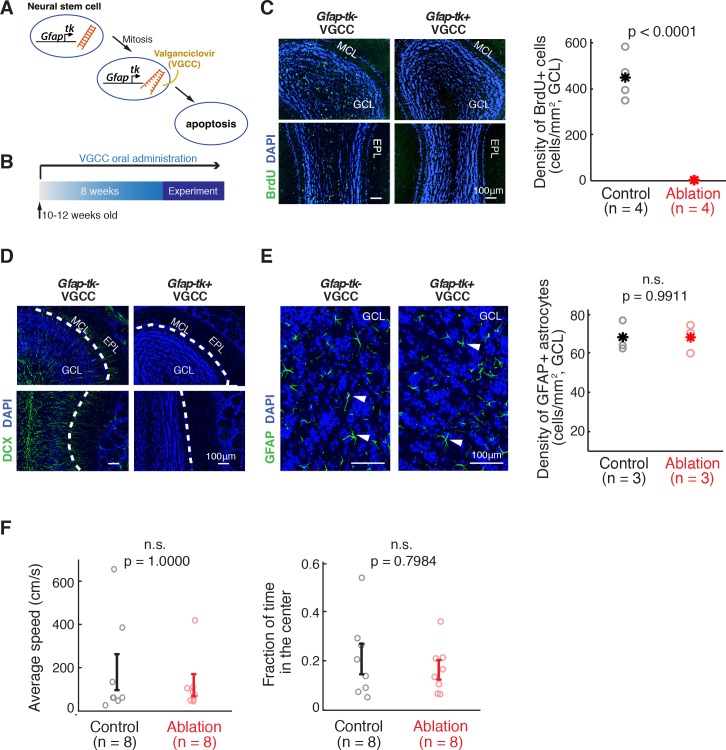
Figure 1.
Inducible ablation of adult neurogenesis.
( A ) Pharmacogenetic ablation of ABNs. Valganciclovir (VGCC) induces apoptosis of Gfap -expressing mitotic neural stems cells, blocking the generation of ABNs. ( B ) Experimental timeline. Adult mice...
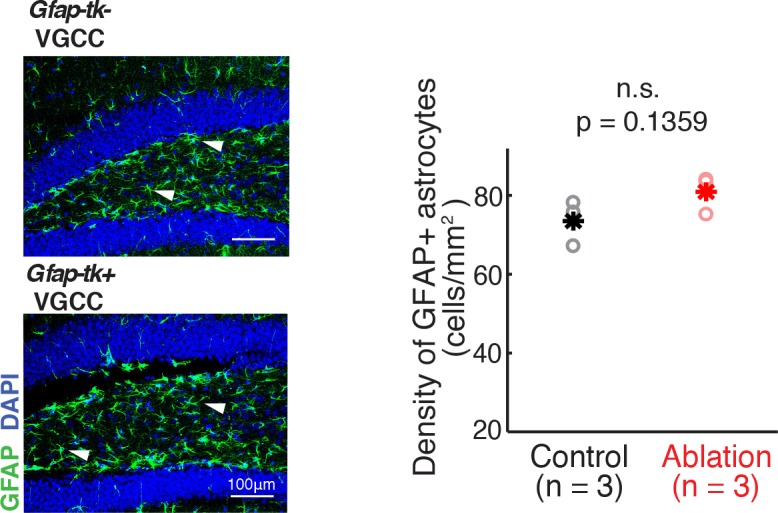
Figure 1u2014figure supplement 1.
VGCC administration in ablation mice does not affect the density of GFAP astrocytes in the hippocampus.
Left: GFAP immunostaining of astrocytes in the dentate gyrus of control mice (upper panel) and ablation mice (lower panel) after 8 weeks of continuous treatment of VGCC. Arrowheads show examples of GF...
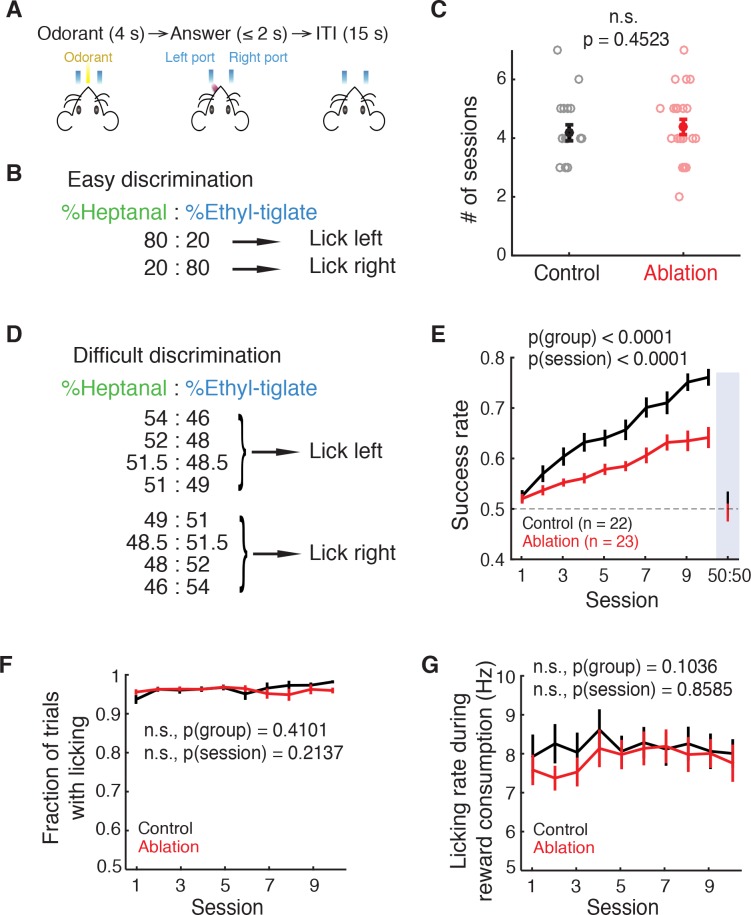
Figure 2.
Ablation mice are impaired in difficult but not easy discrimination task.
( A ) Trial structure. ( B ) Easy discrimination task. Mice are trained to lick left in response to H80E20 (a mixture of 80% heptanal and 20% ethyl-tiglate) and lick right to H20E80. ( C ) Number of s...
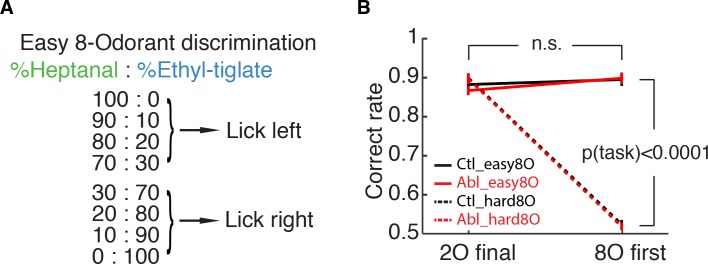
Figure 2u2014figure supplement 1.
ABN ablation does not affect the performance in the easy 8-odorant discrimination.
( A ) Easy 8-odorant discrimination task. One of the eight mixtures is presented pseudorandomly in each trial. ( B ) Fraction of correct trials out of answered trials in the last session with the easy...
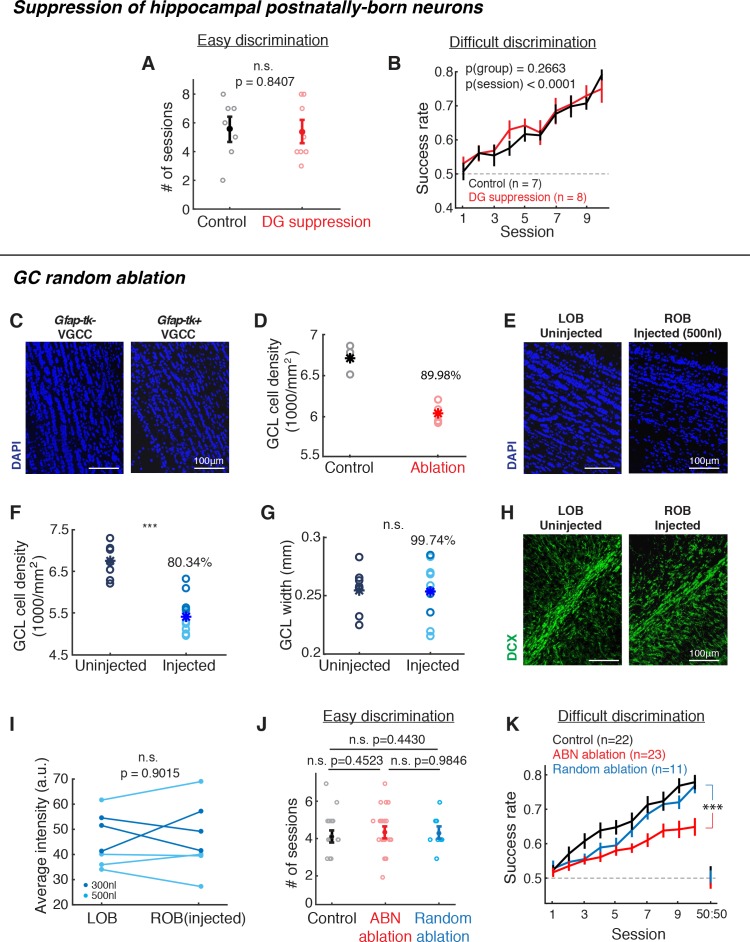
Figure 3.
Suppression of hippocampal postnatally-born neurons or random ablation of GCL neurons did not cause the same behavioral deficit as Gfap-tk mice.
( A,B ) Behavioral performance of control (black) vs. hippocampal DG postnatally-born neuron suppression (red) groups. ( A ) Number of sessions required to reach expertise (>80% success rate) for the ...
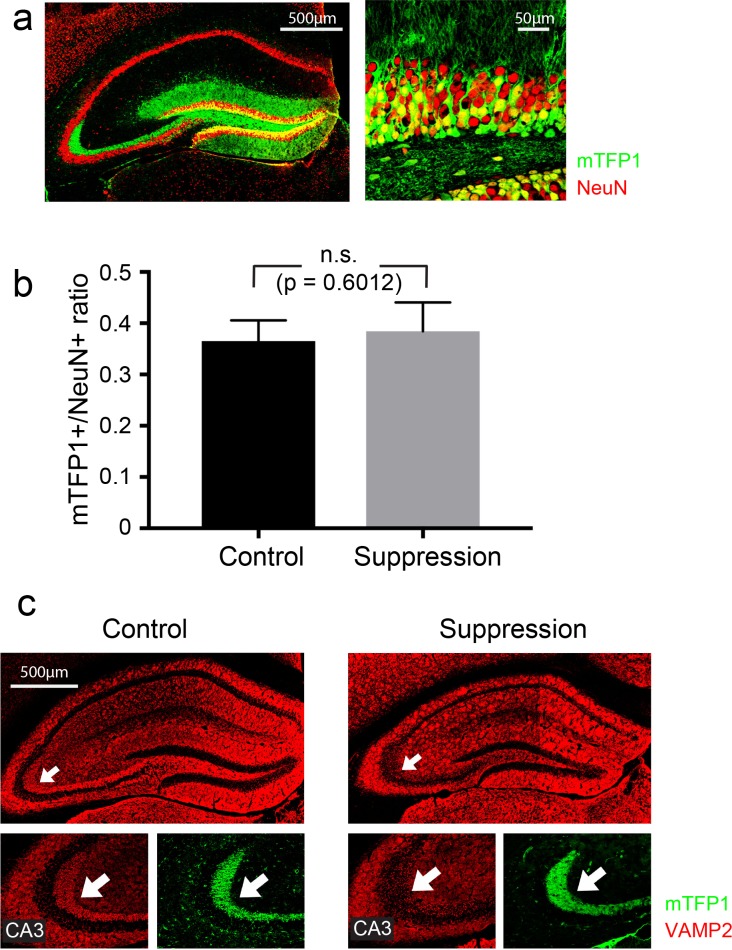
Figure 3u2014figure supplement 1.
Suppression of hippocampal postnatally-born neurons with mGfap-Cre::vGlut1-LSL-TeNT targeted a larger fraction of DG neurons than ABN ablation.
( A ) Hippocampal section of a mGfap-Cre::R26-CAG-LoxP-HA-mTFP1 mouse ( Imayoshi et al., 2012 ). Targeted neurons are labeled with mTFP1. Green: mTFP1; red: NeuN. Left: hippocampus; right: DG granule ...
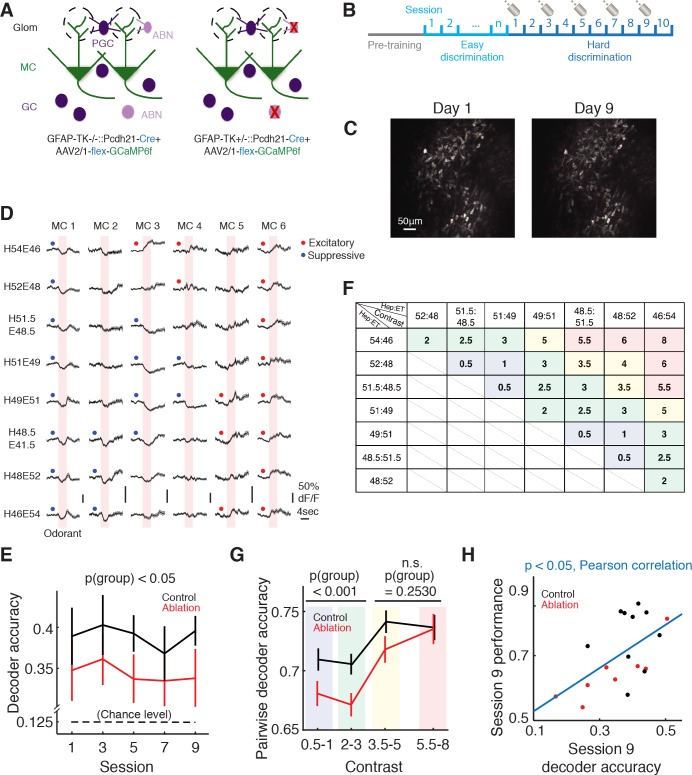
Figure 4.
Imaging of mitral cell responses during the difficult discrimination task.
( A ) Schematic of the olfactory bulb. AAV2/1-flex-GCaMP6f was injected into the olfactory bulb to express GCaMP6f in mitral/tufted cells in both control ( Gfap-tk -/- :: Cdhr1-Cre ) and ablation ( Gf...
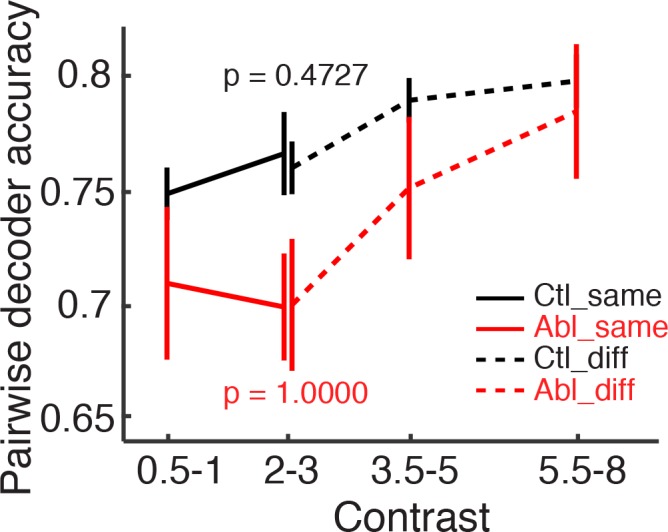
Figure 4u2014figure supplement 1.
Categorical associations with choices do not influence the pattern separation of MC population responses.
Pairwise decoder accuracy during the difficult discrimination task plotted as a function of binned odorant pair contrasts (see Figure 4F and G ). Odorant pairs are further separated into the pairs ass...
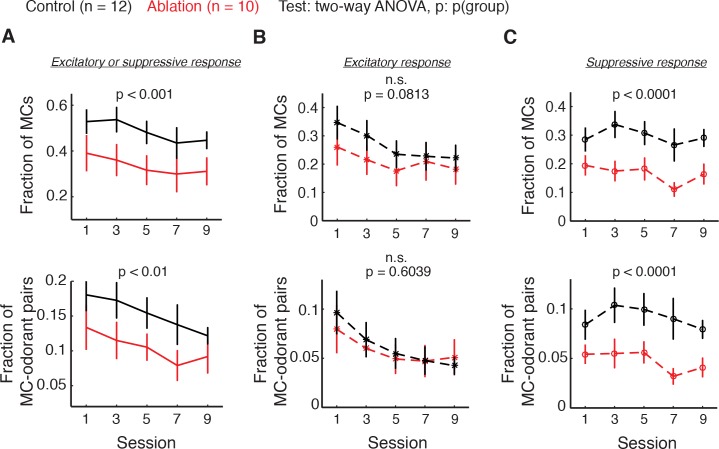
Figure 5.
Fraction of responsive MCs (top) and responsive MC-odorant pairs (bottom) during the difficult discrimination task.
Control: n = 12; ablation: n = 10. Mean u00b1S.E.M. ( A ) MCs with either excitatory or suppressive responses. Fraction of MCs: p<0.001; fraction of MC-odorant pairs: p<0.01. ( B ) MCs with exci...
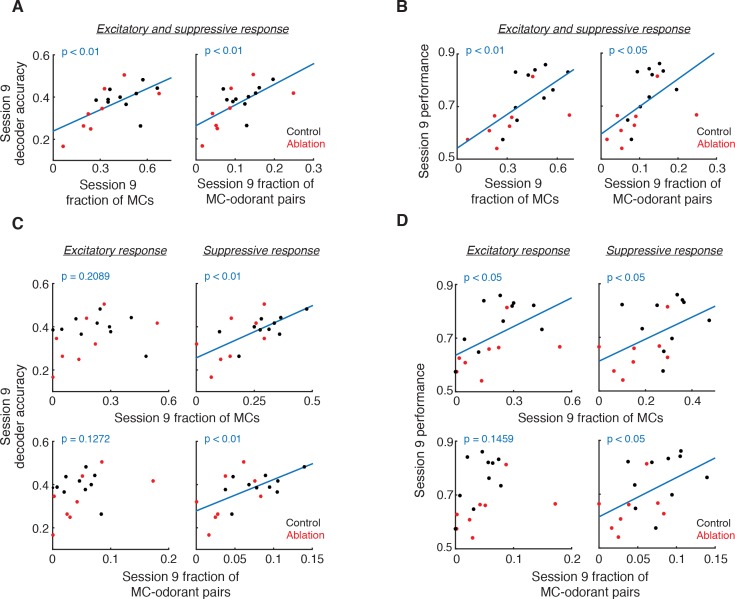
Figure 6.
Relationship of responsive MC fractions with MC ensemble discriminability and behavioral performance.
(A) Session 9 decoder accuracy correlates with fraction of responsive MCs (left, p<0.01, Pearson correlation) and MC-odorant pairs (right, p<0.01, Pearson correlation). (B) Session 9 behavioral ...
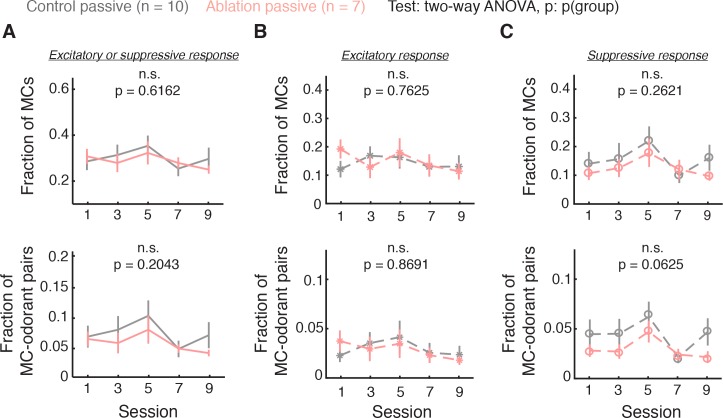
Figure 7.
Task engagement enhances MC suppressive responses through ABNs.
( Au2013C ) Fraction of responsive MCs (top) and responsive MC-odorant pairs (bottom) during passive exposure. Control passive: n = 10; ablation passive: n = 7. Mean u00b1S.E.M. ( A ) MCs with either ...
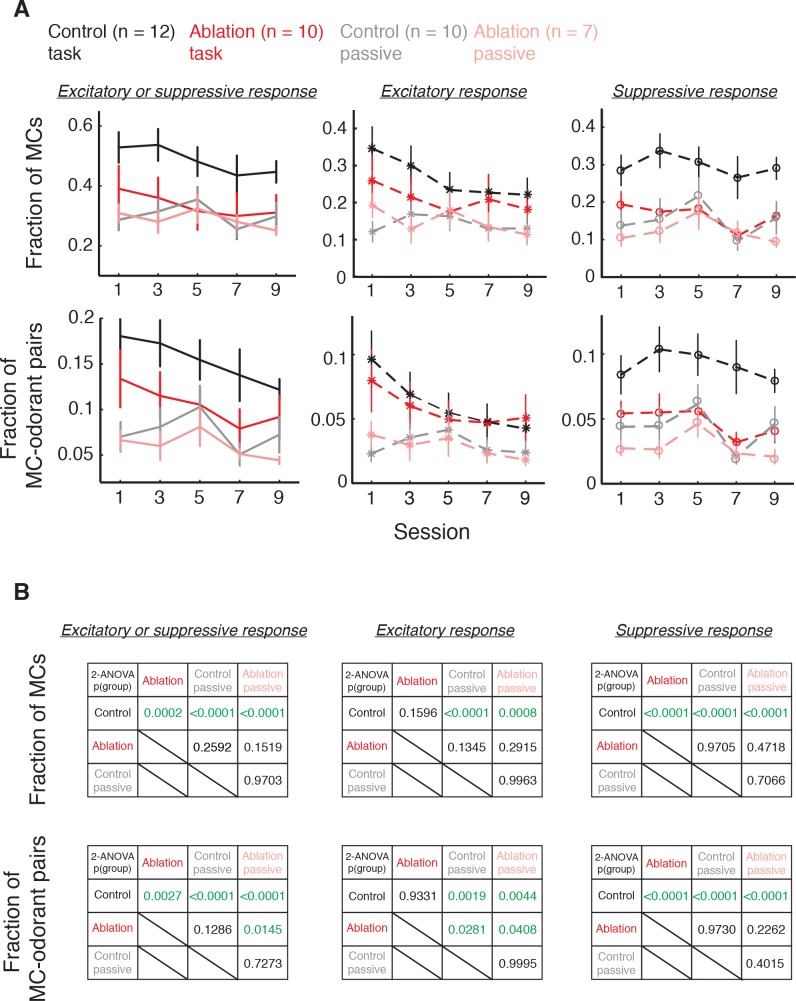
Figure 7u2014figure supplement 1.
Fractions of responsive MCs during difficult discrimination task and passive exposure.
Control behavior: n = 12; ablation behavior: n = 10; Control passive: n = 10; ablation passive: n = 7. ( A ) Overlay of Figures 5Au2013C and 7Au2013C . Mean u00b1S.E.M. ( B ) P values of comparisons b...
Figure images are served from the NIH/NLM PubMed Central Open Access Subset or Europe PMC; copyright remains with the publishers and authors.
💬 Discussion
0 commentsNo comments yet. Be the first to start a discussion!
Leave a Comment