Abstract
The progress of PD and its related disorders cannot be prevented with the medications available. In this study, we recruited 8 PD and 4 PD plus patients between 5 to 15 years after diagnosis. All patients received BM-MSCs bilaterally into the SVZ and were followed up for 12 months. PD patients after therapy reported a mean improvement of 17.92% during "on" and 31.21% during "off" period on the UPDRS scoring system. None of the patients increased their medication during the follow-up period. Subjectively, the patients reported clarity in speech, reduction in tremors, rigidity, and freezing attacks. The results correlated with the duration of the disease. Those patients transplanted in the early stages of the disease (less than 5 years) showed more improvement and no further disease progression than the later stages (11-15 years). However, the PD plus patients did not show any change in their clinical status after stem cell transplantation. This study demonstrates the safety of adult allogenic human BM-MSCs transplanted into the SVZ of the brain and its efficacy in early-stage PD patients.
✨ Fluorophores
🧪 Sample Preparation
🔬 Cell Lines
🏭 Microscope Brands
🧪 Reagent Suppliers
🏛️ Research Organizations (ROR)
Affiliated research institutions:
📋 Methods
A clinical study was designed to determine the safety, feasibility, and efficacy of allogenic adult bone-marrow-derived mesenchymal stem cells in Parkinson's disease (PD) patients. According to the national guidelines, Institutional Ethics Committee (IEC) approval was obtained for conducting the study. Necessary approvals for isolation, culturing, and transplantation of stem cells were also taken. Each patient who participated in the study was counseled on the procedure and informed consent obtained. The patient was screened for HIV, HBV, HCV, CMV, and VDRL by a nationally certified testing laboratory before being included in the study. All deviations to the protocol, drop outs, and adverse events were documented and informed to the IEC. 2.1.
Study Design and Randomization
The study was conducted as a prospective, uncontrolled, one year, single centre safety, and efficacy clinical study of allogenic BM-MSCs bilaterally transplanted in patients diagnosed with PD. 2.2.
Isolation of Mesenchymal Stem
Cells from Healthy Adult Donors 2.2.1.
Selection of Healthy Donors
Healthy donors were selected according to the donor inclusion criteria and as per the guideline of International Society of Cell Therapy (ISCT). Healthy donors were either male or female in the age group of 18–30 years of age, able to understand the voluntary donation program, and ready to provide voluntary written informed consent. Donors were excluded if they have illness such as autoimmune disorders, tuberculosis, malaria and any other infection, any illness which precludes the use of general anesthesia, history of malignancy, diabetes, hypertension, significant heart disease, genetic or chromosomal disorders, history of any inherited disorders, hemoglobin less than 10, and pregnant women. At the time of obtaining informed consent they were screened for infection with human immunodeficiency virus (HIV), hepatitis B (HBV), hepatitis C (HCV), cytomegalovirus (CMV), and syphilis (VDRL) using reverse transcriptase-polymerase chain reaction (RT-PCR) method and excluded if found positive. They were also tested for complete blood count (CBC), renal function test (RFT), liver function tests (LFT), blood glucose, chest X-ray, Echocardiogram, and Electrocardiogram (ECG). 2.2.2.
Show full methods section
A clinical study was designed to determine the safety, feasibility, and efficacy of allogenic adult bone-marrow-derived mesenchymal stem cells in Parkinson's disease (PD) patients. According to the national guidelines, Institutional Ethics Committee (IEC) approval was obtained for conducting the study. Necessary approvals for isolation, culturing, and transplantation of stem cells were also taken. Each patient who participated in the study was counseled on the procedure and informed consent obtained. The patient was screened for HIV, HBV, HCV, CMV, and VDRL by a nationally certified testing laboratory before being included in the study. All deviations to the protocol, drop outs, and adverse events were documented and informed to the IEC. 2.1.
Study Design and Randomization
The study was conducted as a prospective, uncontrolled, one year, single centre safety, and efficacy clinical study of allogenic BM-MSCs bilaterally transplanted in patients diagnosed with PD. 2.2.
Isolation of Mesenchymal Stem
Cells from Healthy Adult Donors 2.2.1.
Selection of Healthy Donors
Healthy donors were selected according to the donor inclusion criteria and as per the guideline of International Society of Cell Therapy (ISCT). Healthy donors were either male or female in the age group of 18–30 years of age, able to understand the voluntary donation program, and ready to provide voluntary written informed consent. Donors were excluded if they have illness such as autoimmune disorders, tuberculosis, malaria and any other infection, any illness which precludes the use of general anesthesia, history of malignancy, diabetes, hypertension, significant heart disease, genetic or chromosomal disorders, history of any inherited disorders, hemoglobin less than 10, and pregnant women. At the time of obtaining informed consent they were screened for infection with human immunodeficiency virus (HIV), hepatitis B (HBV), hepatitis C (HCV), cytomegalovirus (CMV), and syphilis (VDRL) using reverse transcriptase-polymerase chain reaction (RT-PCR) method and excluded if found positive. They were also tested for complete blood count (CBC), renal function test (RFT), liver function tests (LFT), blood glucose, chest X-ray, Echocardiogram, and Electrocardiogram (ECG). 2.2.2.
Isolation of Mesenchymal Stem Cells
BM-MSCs were isolated from healthy screened donors between the age of 18–30 years with informed consent. 60 milliliter of bone marrow was aspirated aseptically under local anesthesia from iliac crest of the healthy screened donors. The sample will be transported appropriately to the processing lab consisting of a class 1000 cGMP facility, and all sample processing was done in a class 100 biosafety cabinet. Bony spicules and particles were removed using a cell strainer and further diluted with DMEM-KO, centrifuged at 1800 rpm for 10 minutes at 20°C. The cells were resuspended with DMEM-KO and gently layered onto a density gradient solution (Lymphoprep, Axis Shield PoC AS, Oslo, Norway) to obtain an enriched mononuclear fraction. This was washed with DMEM-KO and centrifuged to collect the cells. The cells obtained were resuspended and plated in MSC complete culture medium consisting of Dulbecco's modified Eagle Medium (DMEM-KO) 10% fetal bovine serum (FBS) from preselected lots, and glutaMAX as described elsewhere [ 20 ]. The culture was maintained at 37°C in a humidified atmosphere containing 95% air and 5% CO 2 and subcultured prior to confluency. 2.3. Subculturing and Expansion Once 80% confluent these cells were dissociated with 0.25% trypsin/0.53 mM EDTA (Invitrogen) and further upscaled and expanded in order to provide the required number of cells to the patient. Briefly, trypsinized cells were reseeded at a density of 1000 cells per cm 2 in cell stacks (Corning). After 14 days in culture, the cells reached 80% confluency and were ready for transplantation. 2.4.
Quality Control Testing
MSCs were tested for quality control parameters such as Mycoplasma, Endotoxin, sterility and cell surface markers such as CD73, CD90, CD105, CD166, CD34, and CD45 markers using flow cytometry. They should be more than 80% positive for CD73, CD90, CD166, and CD105 but negative [
📊 Figures
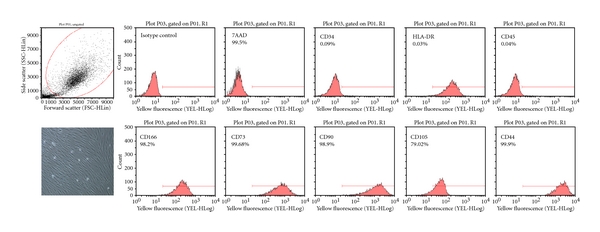
Figure 1
Characterization of adult BM-MSCs prior to transplantation as per ISCT criteria. It shows the plastic adhered spindle-shaped fibroblast like appearance of adult BM-MSCs in culture (lower left panel). ...
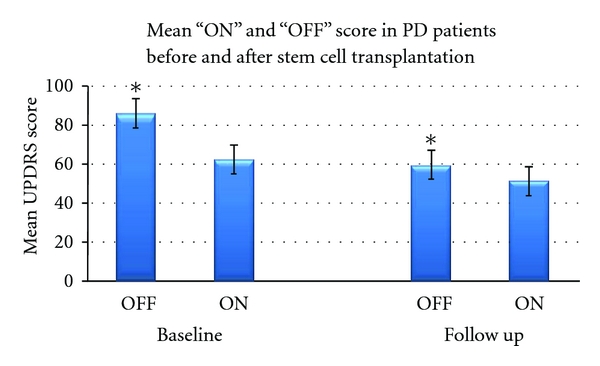
Figure 2
Shows the mean u00b1 SD of the UPDRS score of the PD patients during u201cOFFu201d and u201cONu201d periods at baseline and after stem cell transplantation. The scores have been assessed during the sc...
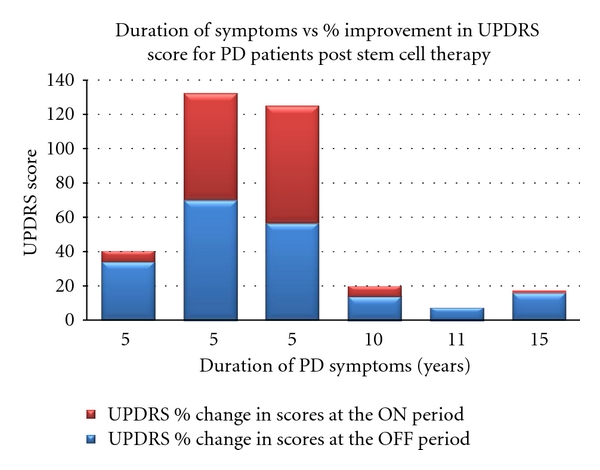
Figure 3
Illustrates the improvement in UPDRS scores for PD patients before and after stem cell transplantation. The graph highlights the fact that the patients treated early at the onset of the disease (5 yea...
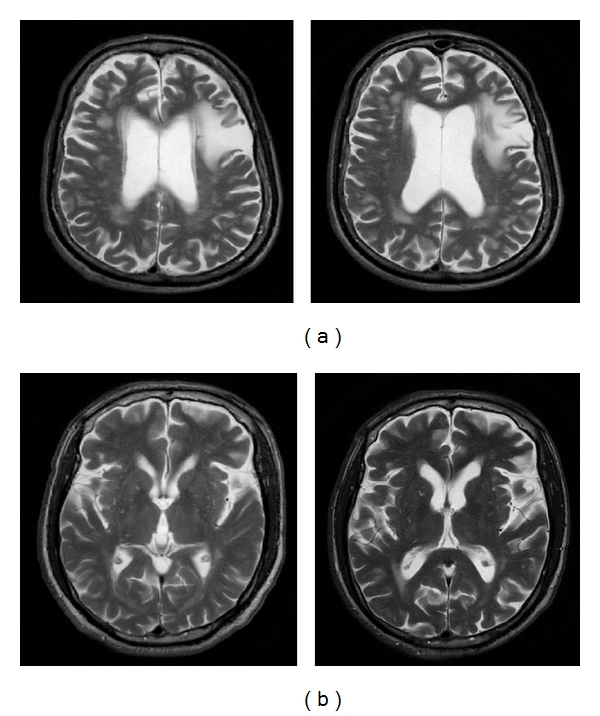
Figure 4
Shows T2 FLAIR axial images. (a) Depicts bilateral asymmetric multifocal hyperintensities involving pontine base periventricular and deep white matter suggestive of small-vessel ischemia. Diffuse brai...
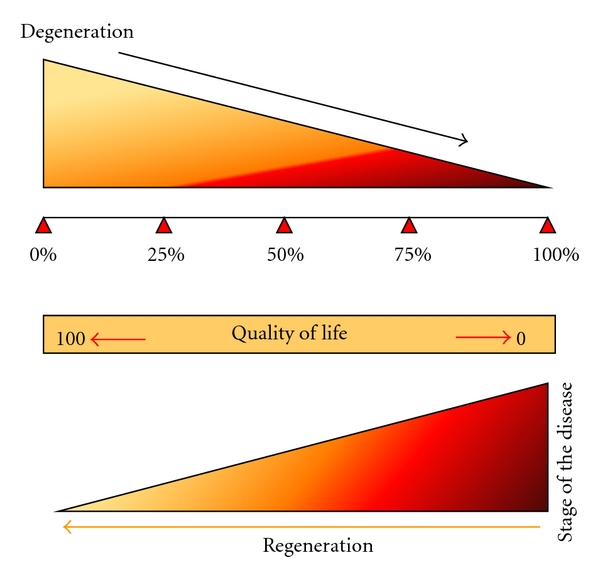
Figure 5
Depicts the balance between degeneration due to illness and the neuroregenerative reserve present in the brain. The schematic diagram illustrates that higher the degeneration higher the illness and mo...
Figure images are served from the NIH/NLM PubMed Central Open Access Subset or Europe PMC; copyright remains with the publishers and authors.
💬 Discussion
0 commentsNo comments yet. Be the first to start a discussion!
Leave a Comment