Abstract
STUDY QUESTION: Are the concentrations of factors secreted by decidual natural killer (dNK) cells from pregnancies at high risk of poor spiral artery remodelling different to those secreted from pregnancies at low risk? SUMMARY ANSWER: Expression levels of PLGF, sIL-2R, endostatin and angiogenin were significantly increased by dNK cells from high-risk pregnancies, and angiogenin and endostatin were found to alter trophoblast function. WHAT IS KNOWN ALREADY: During early pregnancy, maternal uterine spiral arteries are remodelled from small diameter, low-flow, high-resistance vessels into larger diameter, higher flow vessels, with low-resistance. This change is essential for the developing fetus to obtain sufficient oxygen and nutrients. dNK cells have been implicated in this process. STUDY DESIGN, SIZE, DURATION: dNK cells were isolated from first trimester terminations of pregnancies (obtained with local ethical approval) screened for normal- or high-resistance index, indicative of cases least (21%) likely to have developed pre-eclampsia had the pregnancy not been terminated (n = 18 each group). Secreted factors and the effects of these on the trophoblast cell line, SGHPL-4, were assessed in vitro. PARTICIPANTS/MATERIALS, SETTING, METHODS: A multiplex assay was used to assess dNK cell-secreted factors. SGHPL-4 cell functions were assessed using time-lapse microscopy, 3D invasion assays, endothelial-like tube formation ability and western blot analysis. MAIN RESULTS AND THE ROLE OF CHANCE: The expression levels of PLGF (P < 0.01), sIL-2R (P < 0.01), endostatin (P < 0.05) and angiogenin (P < 0.05) were significantly increased by dNK cells from high-risk pregnancies. Endostatin significantly decreased SGHPL-4 invasion (P < 0.05), SGHPL-4 tube formation (P < 0.05) and SGHPL-4 Akt(ser473) phosphorylation (P < 0.05). Angiogenin significantly decreased SGHPL-4 invasion (P < 0.05), but increased SGHPL-4 tube formation (P < 0.01) and decreased SGHPL-4 Akt(ser473) phosphorylation (P < 0.05). LIMITATIONS, REASONS FOR CAUTION: The culture of dNK cells and protein concentrations in vitro may not fully represent the in vivo situation. Although SGHPL-4 cells are extravillous trophoblast derived, further studies would be needed to confirm the roles of angiogenin and endostatin in vivo. WIDER IMPLICATIONS OF THE FINDINGS: The altered expression of secreted factors of dNK cells may contribute to pregnancy disorders associated with poor spiral artery remodelling. STUDY FUNDING/COMPETING INTEREST(S): This study was supported by the Wellcome Trust (project reference 091550). R.F. was a recipient of a PhD studentship from the Division of Biomedical Sciences, St. George's, University of London. The authors have no conflict of interests.
🔬 Techniques
🧪 Sample Preparation
🔬 Cell Lines
🏭 Microscope Brands
🧪 Reagent Suppliers
📷 Detectors
💻 Software Details
🏛️ Research Organizations (ROR)
Affiliated research institutions:
📋 Methods
PARTICIPANTS/MATERIALS, SETTING, METHODS A multiplex assay was used to assess dNK cell-secreted factors. SGHPL-4 cell functions were assessed using time-lapse microscopy, 3D invasion assays, endothelial-like tube formation ability and western blot analysis.
Materials and Methods
Doppler ultrasound of uterine artery resistance and ethical approval
Maternal uterine artery Doppler ultrasound scans were conducted on women attending a clinic for elective termination of pregnancy as previously described ( Melchiorre et al. , 2008 ; Prefumo et al. , 2008 ).
Wandsworth Local Research Ethics
Committee approval was in place for both the Doppler ultrasound before surgical termination and the use of first trimester tissue after the termination, and all women gave informed written consent. Terminations of pregnancy were carried out at 9–14 weeks of gestation. All were singleton pregnancies, with no known pre-existing medical conditions. High-RI cases were defined as those presenting with bilateral uterine diastolic notches and a mean RI above the 95th percentile, while normal-RI cases were defined as presenting with no diastolic notches and a mean RI below the 95th percentile. These two RI groups represent cases with the most (21%) and least (
📊 Figures
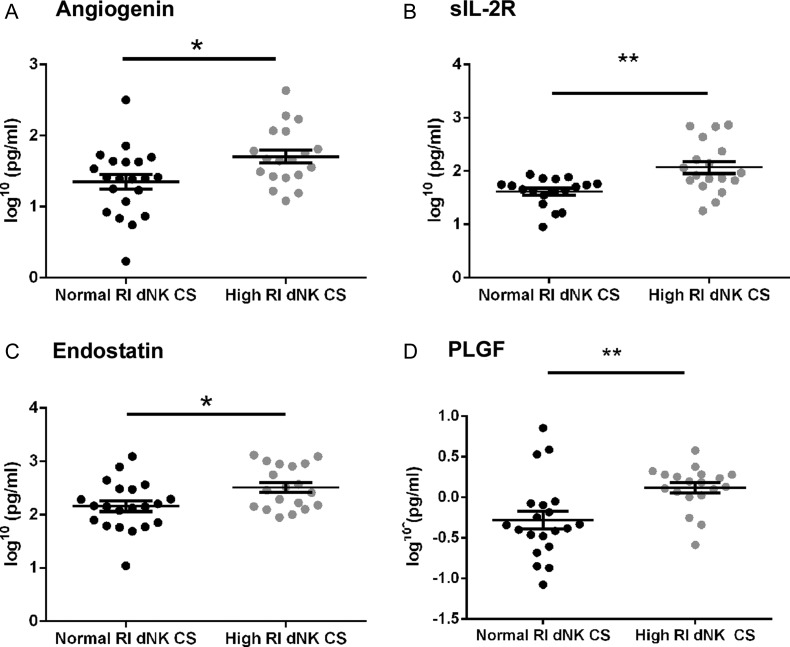
Figureu00a01
Comparison of factors secreted by normal-RI dNK cells and high-RI dNK cells. Measurement by multiplex assay of ( A ) Angiogenin (* P < 0.05) ( B ) sIL-2R (** P < 0.01), ( C ) Endostatin (* P <...
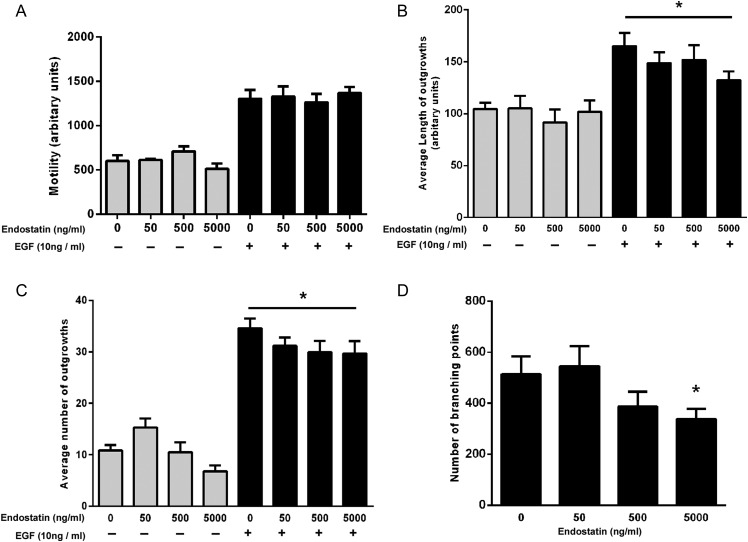
Figureu00a02
The effect of endostatin on basal and EGF-stimulated trophoblast function. Recombinant endostatin was added to SGHPL-4 cells at the concentrations listed. ( A ) SGHPL-4 cell basal and EGF-stimulated m...
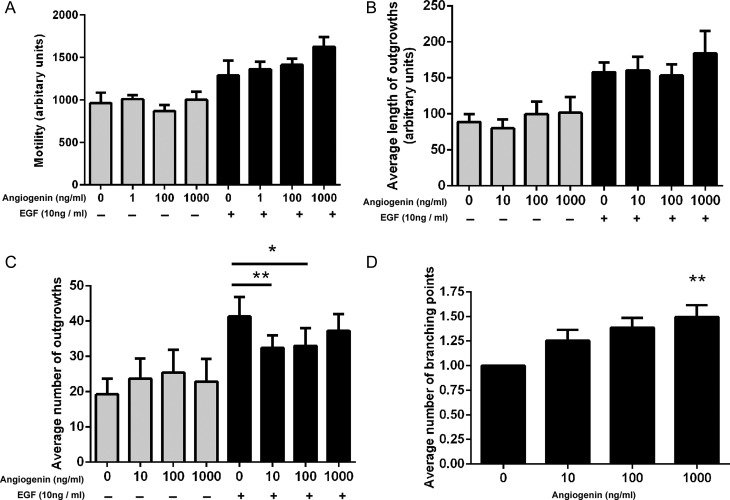
Figureu00a03
The effect of angiogenin on basal and EGF-stimulated trophoblast function. Recombinant angiogenin was added to SGHPL4 cells at the concentrations listed. ( A ) SGHPL-4 cell basal and EGF-stimulated mo...
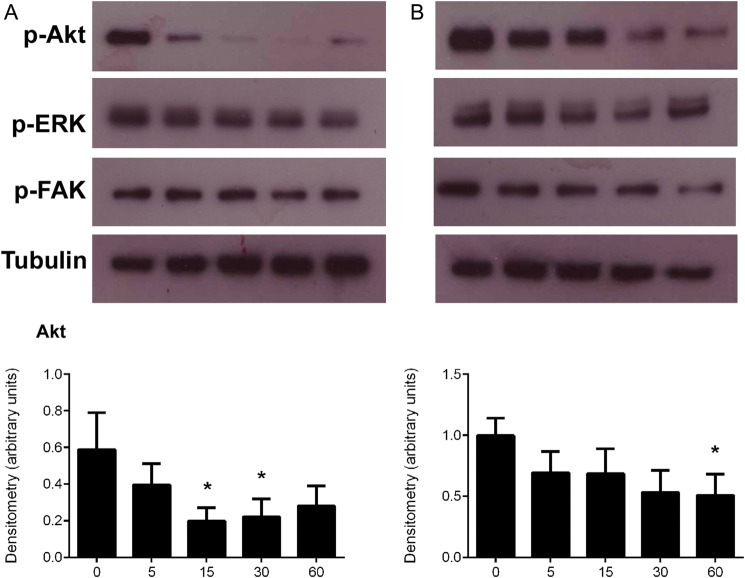
Figureu00a04
Signalling pathways affected in SGHPL-4 cells by recombinant human endostatin and recombinant human angiogenin. ( A ) SGHPL-4 cells were cultured in the presence of 500 ng/ml recombinant endostatin fo...
Figure images are served from the NIH/NLM PubMed Central Open Access Subset or Europe PMC; copyright remains with the publishers and authors.
💬 Discussion
0 commentsNo comments yet. Be the first to start a discussion!
Leave a Comment