Abstract
The breaking of bilateral symmetry in most vertebrates is critically dependent upon the motile cilia of the embryonic left-right organizer (LRO), which generate a directional fluid flow; however, it remains unclear how this flow is sensed. Here, we demonstrated that immotile LRO cilia are mechanosensors for shear force using a methodological pipeline that combines optical tweezers, light sheet microscopy, and deep learning to permit in vivo analyses in zebrafish. Mechanical manipulation of immotile LRO cilia activated intraciliary calcium transients that required the cation channel Polycystin-2. Furthermore, mechanical force applied to LRO cilia was sufficient to rescue and reverse cardiac situs in zebrafish that lack motile cilia. Thus, LRO cilia are mechanosensitive cellular levers that convert biomechanical forces into calcium signals to instruct left-right asymmetry.
🔬 Techniques
✨ Fluorophores
🧪 Sample Preparation
💻 Code & Software
💾 Data Repositories
🏛️ Research Organizations (ROR)
Affiliated research institutions:
📊 Figures
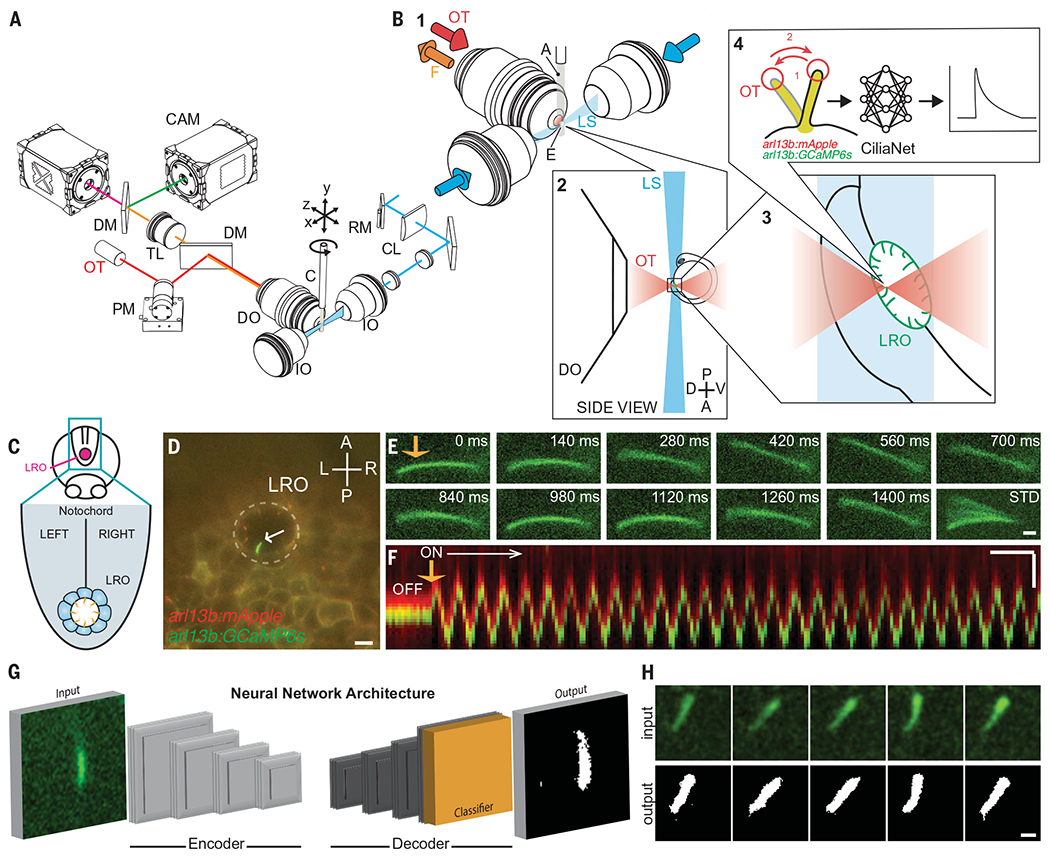
Fig. 1.
CiliaSPOT is a precise and tunable platform for cilia mechanosensing studies.
( A ) Mechanical drawing of the CiliaSPOT microscope highlighting key components. For detailed description of the setup, see Materials and Methods and fig. S3 . ( B ) Trapping and analyzing ciliary re...
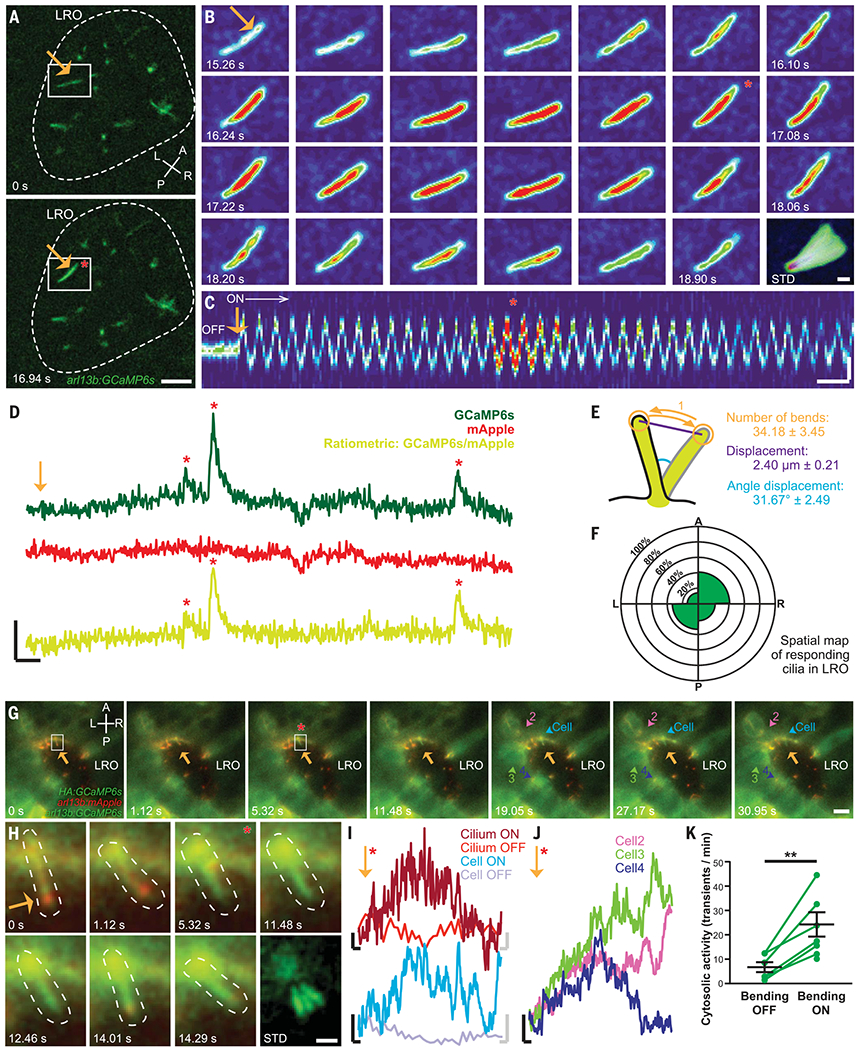
Fig. 2.
Oscillatory mechanical stimuli on LRO cilia activate intraciliary calcium transients.
( A ) Representative images of the LRO of a c21orf59 morphant zebrafish. Dashed line: LRO. Scale: 10 u03bcm. ( B ) Representative montage of the GCaMP6s-positive LRO cilium highlighted in (A). Scale: ...
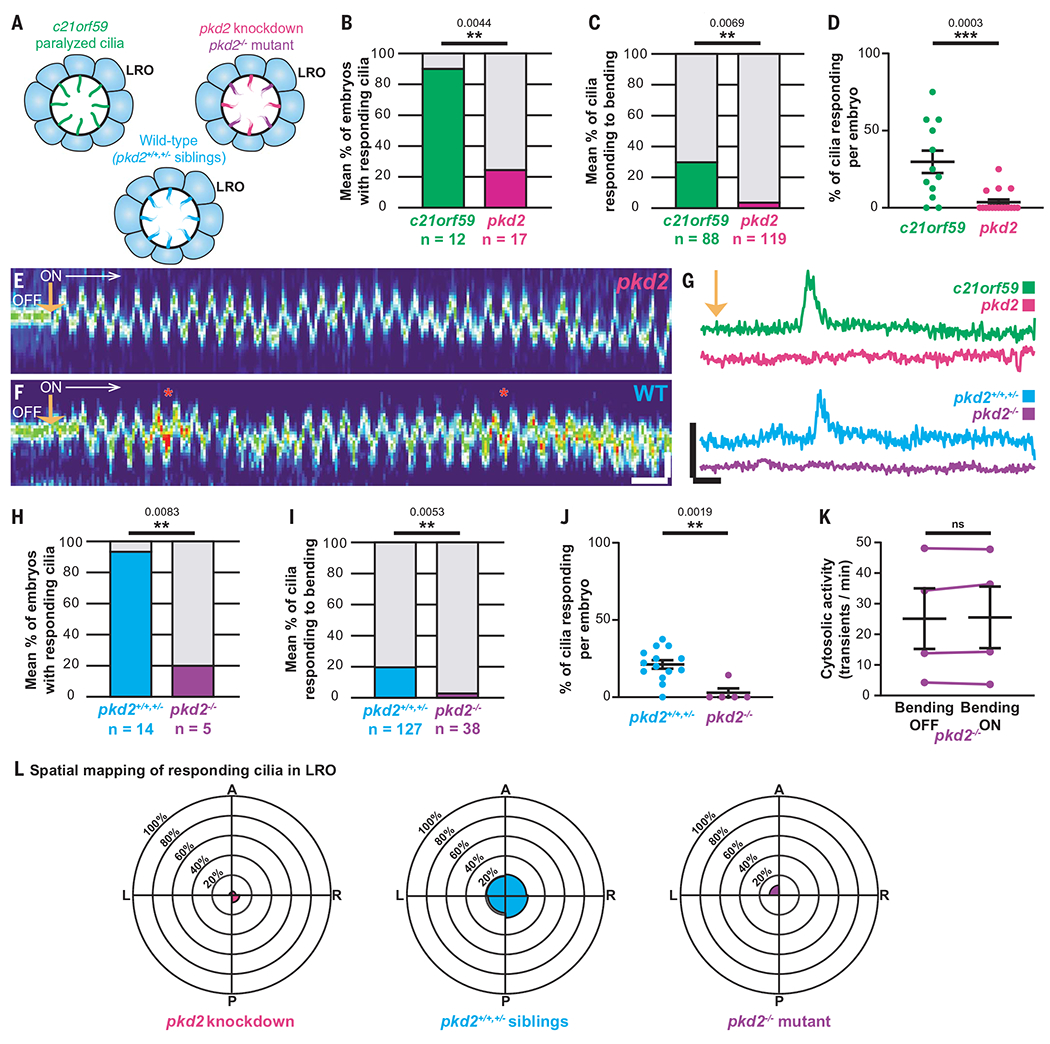
Fig. 3.
Ciliary mechanosensation requires Polycystin-2.
( A ) Illustrations of the different models used in this study. ( B to D ) Percentage of embryos (B), cilia (C), and cilia per embryo (D) responding to optical bending in c21orf59 (green, 88 cilia fro...
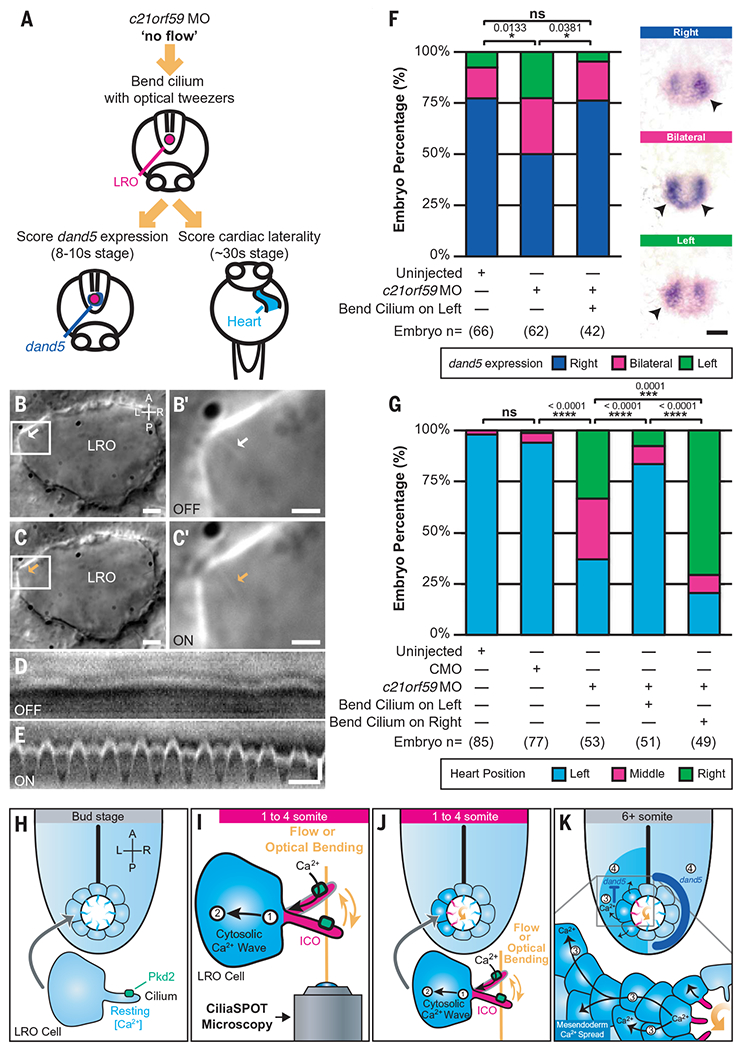
Fig. 4.
Ciliary mechanosensation is determinative for LR asymmetry.
( A ) Schematic depicting the approach followed to assess dand5 expression and cardiac laterality in c21orf59 morphants (MO) after oscillatory optical bending of one LRO cilium. ( B to Cu2019 ) Repres...
Figure images are served from the NIH/NLM PubMed Central Open Access Subset or Europe PMC; copyright remains with the publishers and authors.
💬 Discussion
0 commentsNo comments yet. Be the first to start a discussion!
Leave a Comment