Abstract
Advanced optical methods combined with various probes pave the way toward molecular imaging within living cells. However, major challenges are associated with the need to enhance the imaging resolution even further to the subcellular level for the imaging of larger tissues, as well as for in vivo studies. High scattering and absorption of opaque tissues limit the penetration of light into deep tissues and thus the optical imaging depth. Tissue optical clearing technique provides an innovative way to perform deep-tissue imaging. Recently, various optical clearing methods have been developed, which provide tissue clearing based on similar physical principles via different chemical approaches. Here, we introduce the mechanisms of the current clearing methods from fundamental physical and chemical perspectives, including the main physical principle, refractive index matching via various chemical approaches, such as dissociation of collagen, delipidation, decalcification, dehydration, and hyperhydration, to reduce scattering, as well as decolorization to reduce absorption.
🔬 Techniques
🧬 Organisms
✨ Fluorophores
🧪 Sample Preparation
🏛️ Research Organizations (ROR)
Affiliated research institutions:
📊 Figures
Figureu00a01
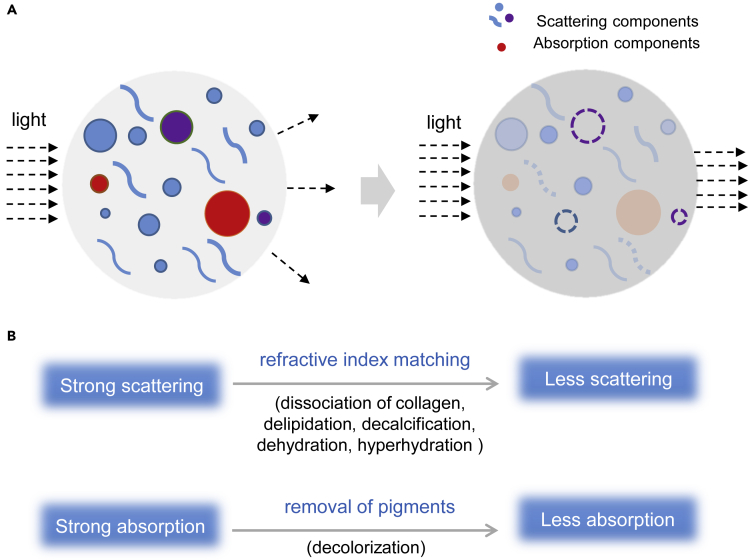
Principles of tissue optical clearing Reducing light scattering and light absorption are the main physical principles of tissue optical clearing. RI matching can reduce scattering, and removal of pigm...
Figureu00a02
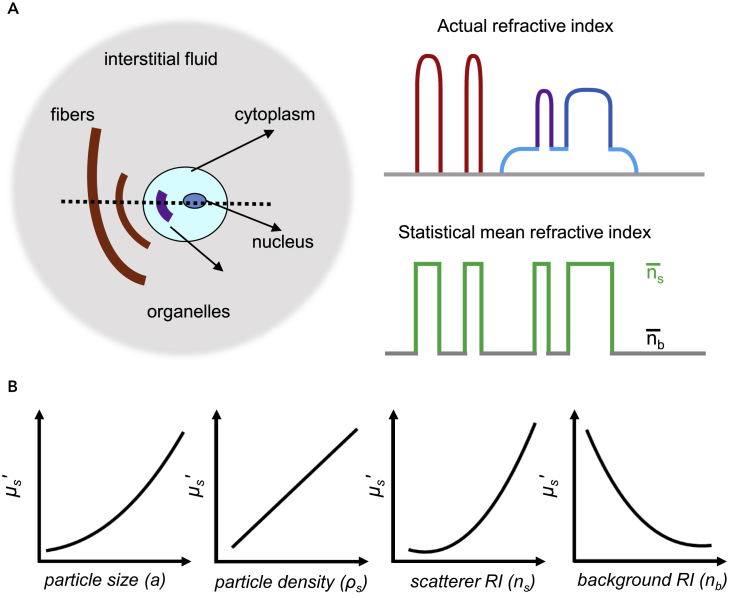
Refractive index matching and tissue optical clearing (A) Sketch map of biological tissue components and RI difference in different components (adapted from the study by [ Tuchin, 2006 ]). (B) Variati...
Figureu00a03
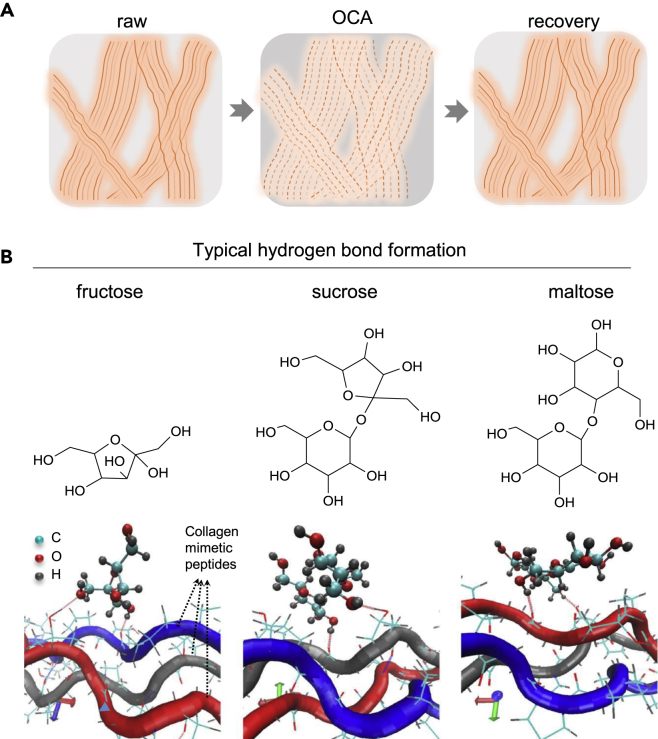
Dissociation of collagen fibers (A) Sketch map of the reversible effect of OCAs (e.g., glycerol). (B) Chemical structures of fructose, sucrose, and maltose, and schematic representation of the hydroge...
Figureu00a04
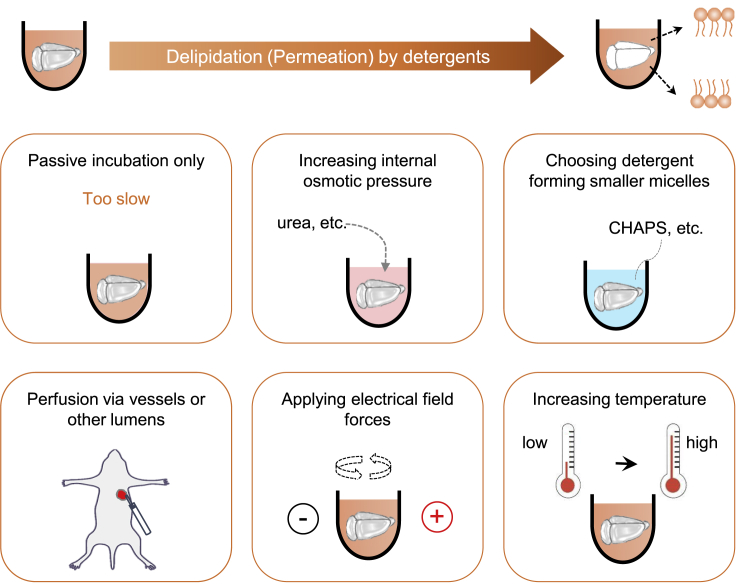
Delipidation by detergents Passive incubation for the diffusion of detergents is very slow. Permeation of detergents into tissues can be promoted by increasing the internal osmotic pressure via the in...
Figureu00a05
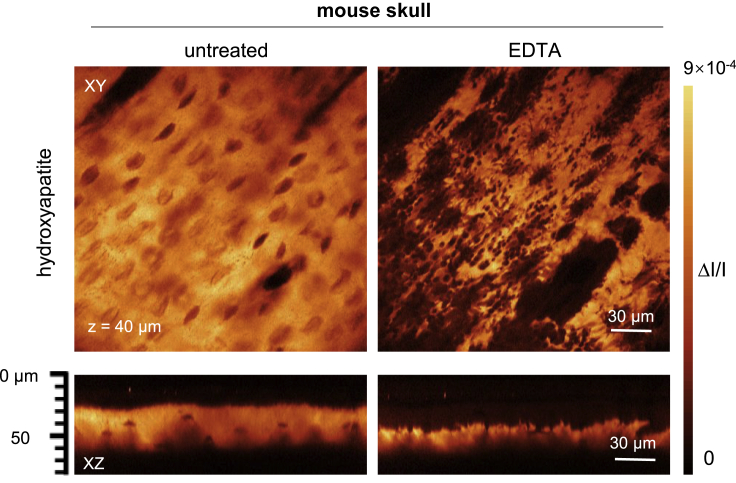
Microstructural variation of hydroxyapatite SRS images of the mouse skull before and after topical treatment with EDTA. A large number of cavities formed after EDTA immersion and the thickness of hydr...
Figureu00a06
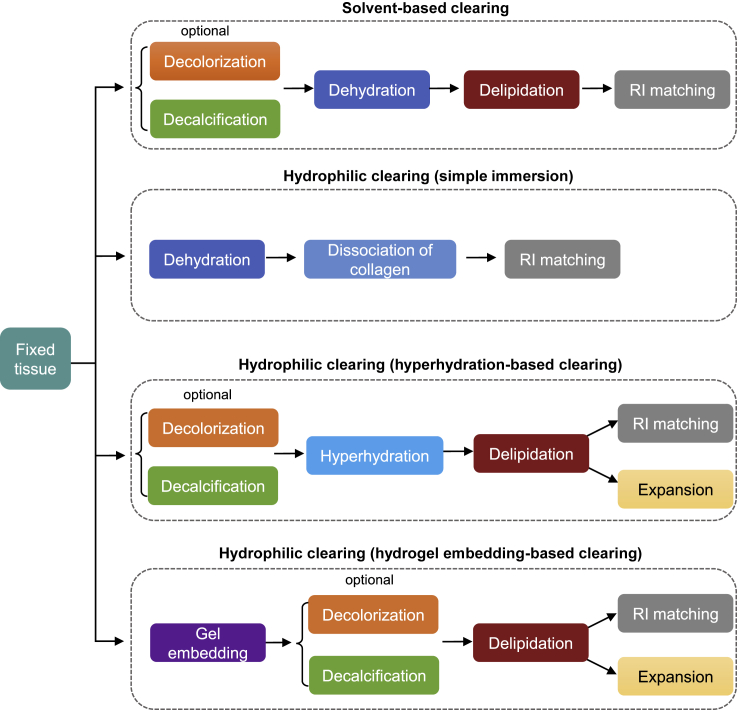
Different processes involved in tissue clearing methods Solvent-based clearing mainly includes an adequate dehydration followed by delipidation and RI matching. Hydrophilic clearing involves three typ...
Figure images are served from the NIH/NLM PubMed Central Open Access Subset or Europe PMC; copyright remains with the publishers and authors.
💬 Discussion
0 commentsNo comments yet. Be the first to start a discussion!
Leave a Comment