Abstract
Fluorescence microscopy relies on dyes that absorb and then emit photons. In addition to fluorescence, fluorophores can undergo photochemical processes that decrease quantum yield or result in spectral shifts and irreversible photobleaching. Chemical strategies that suppress these undesirable pathways-thereby increasing the brightness and photostability of fluorophores-are crucial for advancing the frontier of bioimaging. Here, we describe a general method to improve small-molecule fluorophores by incorporating deuterium into the alkylamino auxochromes of rhodamines and other dyes. This strategy increases fluorescence quantum yield, inhibits photochemically induced spectral shifts, and slows irreparable photobleaching, yielding next-generation labels with improved performance in cellular imaging experiments.
🔬 Techniques
🧬 Organisms
✨ Fluorophores
🧪 Sample Preparation
🔬 Cell Lines
💾 Data Repositories
🏛️ Research Organizations (ROR)
Affiliated research institutions:
📊 Figures
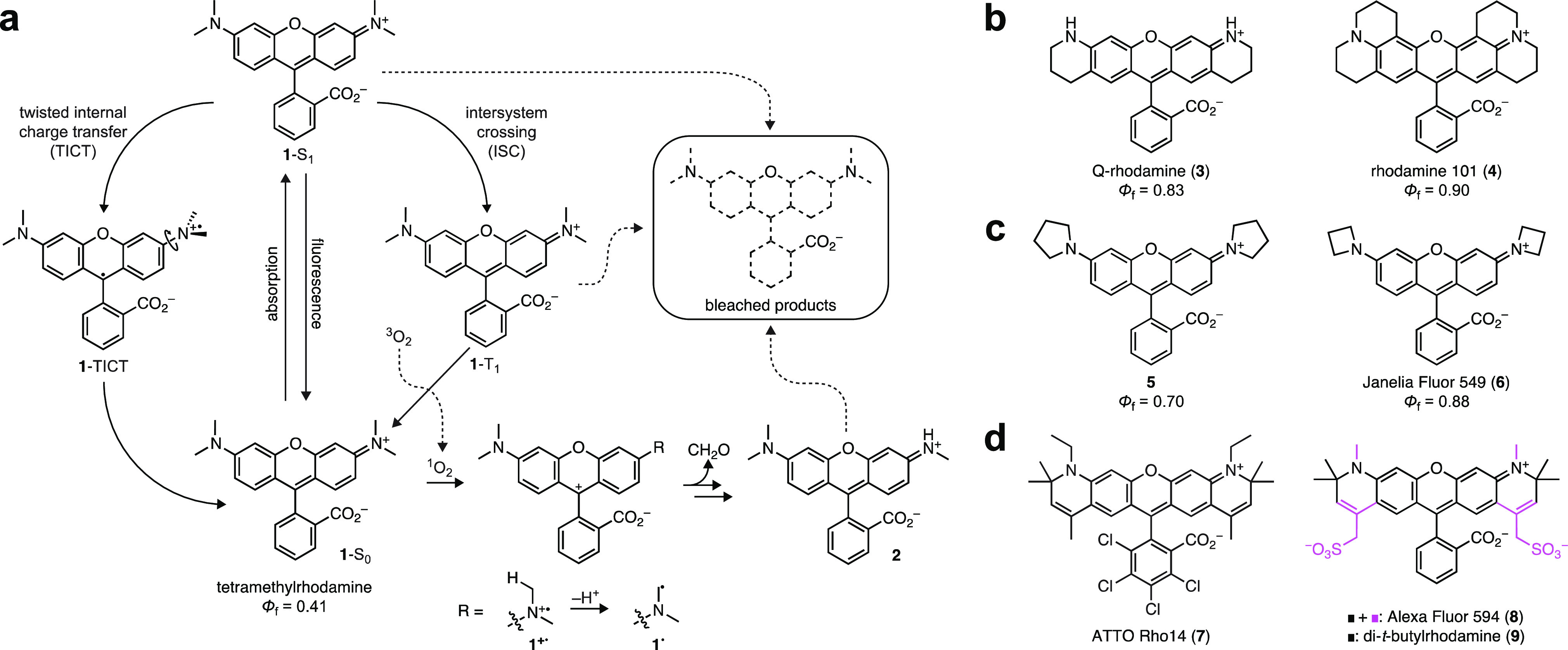
Figure 1
Photophysics of rhodaminesnand methods to improve rhodamine properties.n(a) Photophysics of tetramethylrhodamine (TMR, 1 ). (b)nStructures of rigidified rhodamines 3 u2013 4 . (c) Structures of cyclic...
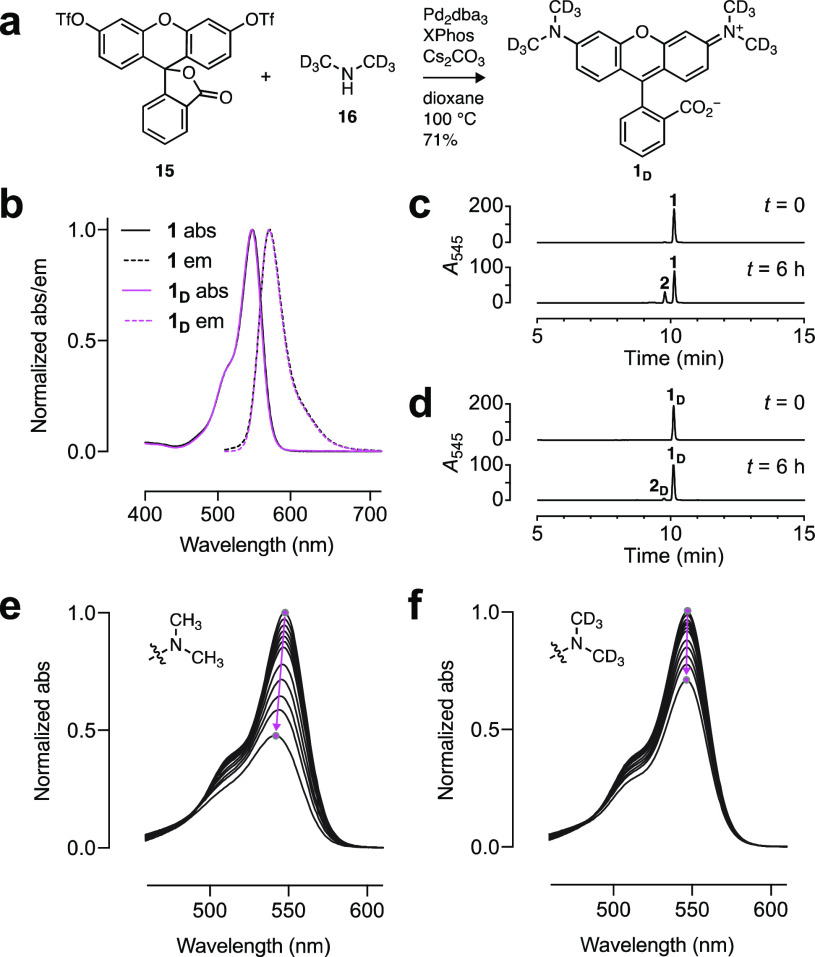
Figure 2
Deuterated tetramethylrhodamine. (a) Synthesis of 1 D . (b) Normalized absorption (abs) and fluorescencenemission (em) spectra of 1 and 1 D . (c, d) LCu2013MS traces of 1 (c)nand 1 D (d) before and af...
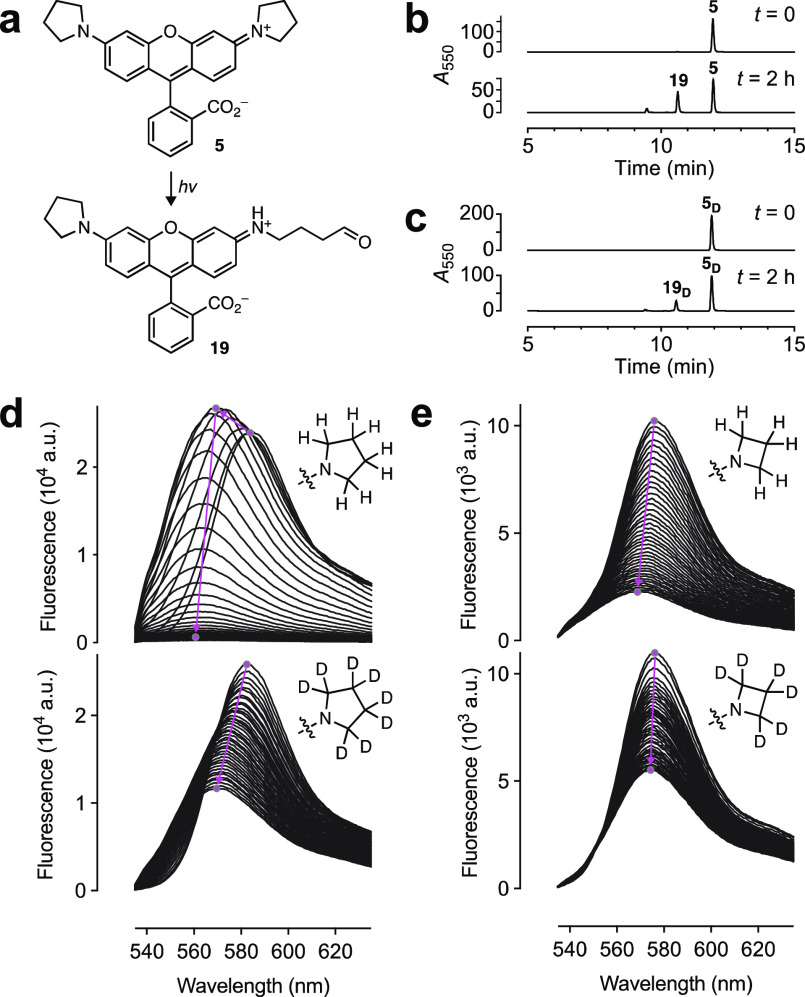
Figure 3
Photostability and chromostabilitynof 5 , 5 D , 6 , and 6 D . (a)nPhotochemical dealkylation of 5 to form aldehyde 19 . (b, c) LCu2013MS traces of 5 (b) and 5 D (c) before and after photobleaching.n(d...
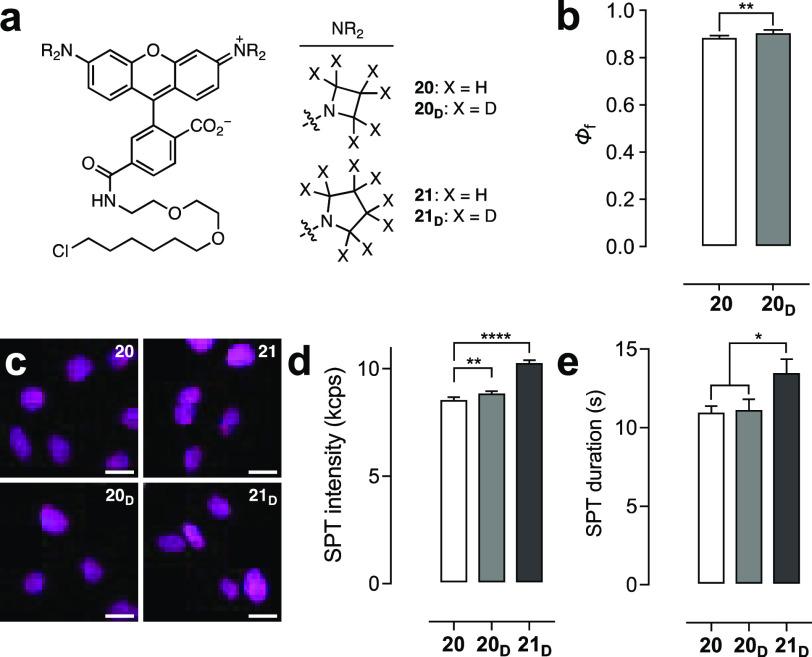
Figure 4
Performancenof rhodamine ligands. (a) Structures of HaloTag ligands 20 , 20 D , 21 , and 21 D . (b) u03a6 f of HaloTagnprotein conjugates of 20 and 20 D . (c) Confocal microscopy images of livenU2OS c...
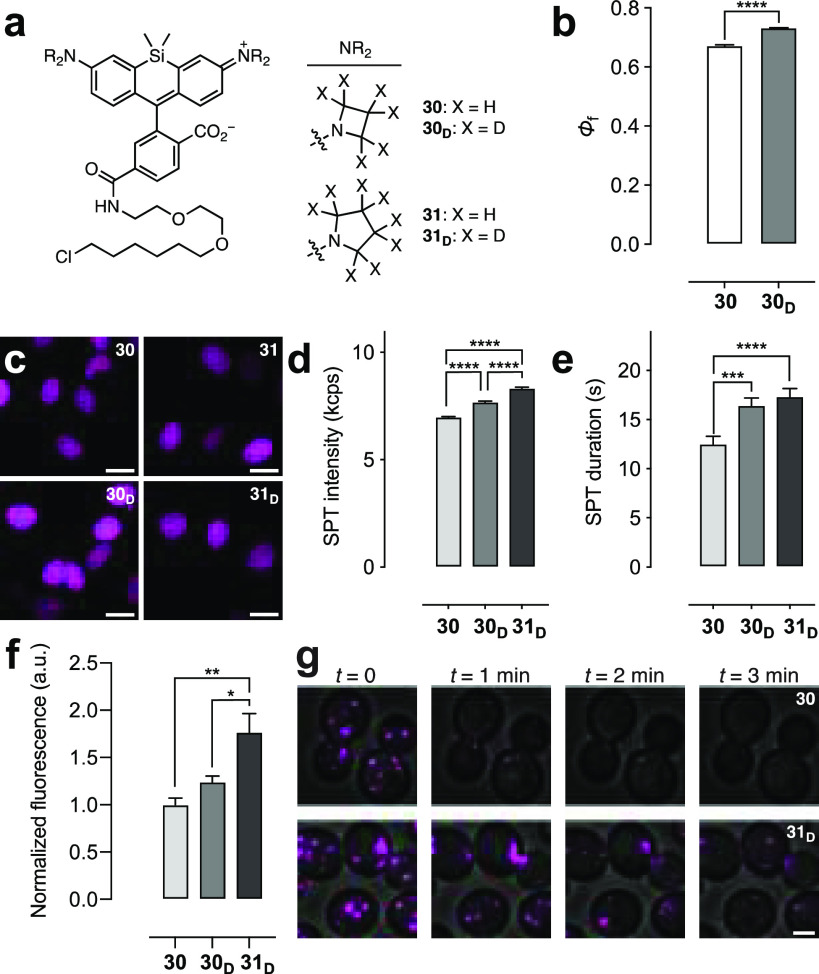
Figure 5
Performance of Siu2013rhodaminenligands. (a) Structures of HaloTagnligands 30 , 30 D , 31 , and 31 D . (b) u03a6nof HaloTag protein conjugates of 30 or 30 D . (c) Confocal microscopy images of livenU2...
Figure images are served from the NIH/NLM PubMed Central Open Access Subset or Europe PMC; copyright remains with the publishers and authors.
💬 Discussion
0 commentsNo comments yet. Be the first to start a discussion!
Leave a Comment