Abstract
AbstractMachine learning holds significant research potential in the field of nanotechnology, enabling nanomaterial structure and property predictions, facilitating materials design and discovery, and reducing the need for time‐consuming and labor‐intensive experiments and simulations. In contrast to their achiral counterparts, the application of machine learning for chiral nanomaterials is still in its infancy, with a limited number of publications to date. This is despite the great potential of machine learning to advance the development of new sustainable chiral materials with high values of optical activity, circularly polarized luminescence, and enantioselectivity, as well as for the analysis of structural chirality by electron microscopy. In this review, an analysis of machine learning methods used for studying achiral nanomaterials is provided, subsequently offering guidance on adapting and extending this work to chiral nanomaterials. An overview of chiral nanomaterials within the framework of synthesis–structure–property–application relationships is presented and insights on how to leverage machine learning for the study of these highly complex relationships are provided. Some key recent publications are reviewed and discussed on the application of machine learning for chiral nanomaterials. Finally, the review captures the key achievements, ongoing challenges, and the prospective outlook for this very important research field.
🔬 Techniques
✨ Fluorophores
🧪 Sample Preparation
🔬 Cell Lines
🏭 Microscope Brands
💻 Software Details
🏛️ Research Organizations (ROR)
Affiliated research institutions:
📋 Methods
3.1.
Nature of Nanomaterials Data
The diverse landscape of NMs is constantly expanding, which in turn results in the generation of enormous volumes of experimental data. Even within one synthetic methodology, the structure and properties of individual NPs might be slightly different. For example, the “wet chemistry” synthesis of NMs, including hot-injection, [ 52 ] microwave-assisted, [ 53 ] hydro/solvothermal, [ 54 ] and pyrolysis, [ 55 ] even with fixed reaction parameters, may result in the formation of NMs with slight structural or compositional differences, and hence changes to their properties and performance. To understand the intricate interplay between synthesis, structure, and properties, a parameter space should be constructed that will contain all possible data for further analysis. A parameter space can be described as the realm of possible parameter values that define a given NM. In this space, one typically can distinguish between two types of data: synthesis-related and property-related ( Figure 2 ). Synthesis-related data: Synthetic parameters are most often defined by the researcher. To reveal the impact of a specific synthetic parameter on the resultant properties of NMs, a series of syntheses can be conducted, in which all synthetic parameters are held constant, except for one, which is systematically varied using a one-factor-at-a-time approach. This data is typically presented in the literature in the form of tables containing several parameters, such as the molar ratio of precursors, temperature, reaction time, etc., that are varied in a limited span, thus narrowing down the variables in the synthesis–property dependence. This approach is sophisticated and demands significant time and resources. Moreover, some of the parameters that influence the resulting NM during the synthesis, such as humidity, atmosphere (i.e., inert vs exposed to air), pressure, storage conditions, etc., are not consistently reported in protocols, imposing a certain degree of uncertainty on the inferred relationships ( Figure 2 , left panel). Property-related data: Another type of data is related to the properties of synthesized NMs, including morphology, and optical and electrical properties, among others. These properties are often evaluated via various characterization approaches, from visualization of the size and shape of nanomaterials using electron microscopy to the investigation of specific properties, for example, chiroptical responses ( Figure 2 , right panel). The collected data are often presented in the form of: numeric values (e.g., the energy of the highest occupied molecular orbital); xy -arrays (e.g., spectroscopic data); xyz -arrays (e.g., images or photoluminescence excitation-emission maps, to provide a few examples). An additional type of data that can be collected is time-dependent data, for example, change in concentration of precursors and ligands, and the chemical composition of NMs as the reaction proceeds ( Figure 2 , central panel). This type of data is vital for shedding light on time-dependent processes that occur during the synthesis, formation, operation, and storage of NMs of interest. 3.1.1.
Show full methods section
3.1.
Nature of Nanomaterials Data
The diverse landscape of NMs is constantly expanding, which in turn results in the generation of enormous volumes of experimental data. Even within one synthetic methodology, the structure and properties of individual NPs might be slightly different. For example, the “wet chemistry” synthesis of NMs, including hot-injection, [ 52 ] microwave-assisted, [ 53 ] hydro/solvothermal, [ 54 ] and pyrolysis, [ 55 ] even with fixed reaction parameters, may result in the formation of NMs with slight structural or compositional differences, and hence changes to their properties and performance. To understand the intricate interplay between synthesis, structure, and properties, a parameter space should be constructed that will contain all possible data for further analysis. A parameter space can be described as the realm of possible parameter values that define a given NM. In this space, one typically can distinguish between two types of data: synthesis-related and property-related ( Figure 2 ). Synthesis-related data: Synthetic parameters are most often defined by the researcher. To reveal the impact of a specific synthetic parameter on the resultant properties of NMs, a series of syntheses can be conducted, in which all synthetic parameters are held constant, except for one, which is systematically varied using a one-factor-at-a-time approach. This data is typically presented in the literature in the form of tables containing several parameters, such as the molar ratio of precursors, temperature, reaction time, etc., that are varied in a limited span, thus narrowing down the variables in the synthesis–property dependence. This approach is sophisticated and demands significant time and resources. Moreover, some of the parameters that influence the resulting NM during the synthesis, such as humidity, atmosphere (i.e., inert vs exposed to air), pressure, storage conditions, etc., are not consistently reported in protocols, imposing a certain degree of uncertainty on the inferred relationships ( Figure 2 , left panel). Property-related data: Another type of data is related to the properties of synthesized NMs, including morphology, and optical and electrical properties, among others. These properties are often evaluated via various characterization approaches, from visualization of the size and shape of nanomaterials using electron microscopy to the investigation of specific properties, for example, chiroptical responses ( Figure 2 , right panel). The collected data are often presented in the form of: numeric values (e.g., the energy of the highest occupied molecular orbital); xy -arrays (e.g., spectroscopic data); xyz -arrays (e.g., images or photoluminescence excitation-emission maps, to provide a few examples). An additional type of data that can be collected is time-dependent data, for example, change in concentration of precursors and ligands, and the chemical composition of NMs as the reaction proceeds ( Figure 2 , central panel). This type of data is vital for shedding light on time-dependent processes that occur during the synthesis, formation, operation, and storage of NMs of interest. 3.1.1.
Challenges in Data Analysis
For data analysis, one typically uses software packages such as OriginLab, Wolfram Mathematica, MatLab, etc. However, manual data processing is often time-consuming. Furthermore, the occasional omission of errors and uncertainties from laboratory equipment and experimental setups, along with the constraints of finite data ranges, can limit the analysis and further implementation of derived dependencies. [ 4 ] Furthermore, in order to build a sufficiently complex model for an accurate description of synthesis–structure–property correlations, it is insufficient to obtain data from one set of experiments, and it is of the utmost importance to collect as much data as possible. Tremendous amounts of data are dispersed across many different sources, including in-depth discussion of results in the literature, which can be extracted by text mining methods. However, it can often be difficult to collect and structure this data in a “machine-friendly” format, as was mentioned in Step #3 in Section 2 . 3.1.2. Databases Usage of databases gives materials scientists access to enormous and diverse datasets, which are vital for accurate data analysis, simulations, and ML model training. Several examples of existing databases and their parameters are provided in Table S1 ( Supporting Information ). Many of these existing databases are focused on crystal structure, energy level structure, and physicochemical properties of bulk materials, while the NM databases are focused mainly on interaction with bio-objects, i.e., nanotoxicity. As an example, the NanoE-Tox database is based on existing literature on the ecotoxicology of eight NMs with different chemical compositions. [ 56 ] The existing databases can be used as a starting point for further predictions and explorations of new materials with desired properties, as was recently demonstrated for ligands for A β (1–42) fibrils, [ 57 ] and for 2D materials. [ 58 ] Another facility that is particularly useful is Matminer—a Python library for data mining materials properties from online repositories and existing datasets. These databases are constantly being replenished and enriched with new and updated data. The guiding principles for curating machine-readable data for NMs have been highlighted extensively in a recent article from Blekos et al., and underscore the importance of key considerations in the data collection process. [ 59 ] These include prioritizing accuracy, completeness, and flexibility, to enable encoding of morphology and composite materials properties, distributions of properties, capture of auxiliary information, and reuse of data. The above-mentioned data sources and types of data are also summarized in Figure 2 . 3.1.3.
Data Quality and the Data-Centric ML Approach
Even with the existing databases, data can often be disorganized, incomplete, and scarce. Data quality may depend on a wide range of factors, from physicochemical characterization requirements to broader issues such as minimum information checklists, and toxicology data quality schemes. [ 60 ] The traditional strategy of improving ML models through a model-centric approach may not be the best way to enhance the performance of models and gain deeper insights into NM properties. Instead, the data-centric AI approach proposes to focus on improving data quality, rather than exclusively concentrating on model refinement. [ 61 ] Thus, data quality is of utmost importance for further ML analysis and should be evaluated using the following criteria: accuracy, completeness, reliability, relevance, consistency, and timeliness, i.e., whether it’s up to date. Researchers in materials science are likely to face some of the following obstacles during the collection, pre-processing, and preliminary analysis of data which determine the data quality . Some indicators of poor-quality data include: Heterogeneous (data of different types, and measured using inconsistent scales) Incomplete (not all parameters or features are measured, there are gaps in the data space) Inaccurate (data is measured with errors) Inconsistent (while objects are the same, results are different) Insufficient (fewer examples are collected than features) Unstructured (no ready-made features present in the dataset) Since maintaining high-quality data is a difficult and complex task, in a data-centric paradigm researchers should think about scientific data management and stewardship. To this end, the FAIR data principles have been developed, with the acronym representing the goal of Findability, Accessibility, Interoperability, and Reusability of data. [ 62 ] These principles are widely supported by researchers and have inspired many open data-sharing initiatives in the realm of NMs. [ 63 ] For example, Nature Nanotechnology recently announced their support of open data sharing inspired by the FAIR principles and strongly encourages their authors to do so. [ 63 ] Furthermore, the open resource Nano Commons, which was established as a data and nano-informatics resource for the nano-safety community, offers an extensive guide for researchers in evaluating data completeness and data quality. Interested readers may also refer to a recent review from Yan et al. on how AI, in conjunction with molecular simulations, can enhance large-scale data analysis in nanotoxicology research. [ 64 ] 3.1.4.
Data Quality Assessment and Enhancement
It is important to draw attention to several examples of data quality assessment using ML approaches presented elsewhere. A comprehensive methodology for automated assessment of data quality and completeness, using an open-source R tool, is presented by Basei et al. [ 65 ] In their approach, the authors present an approach for assessing the completeness of data by considering key materials properties (11 measured physicochemical properties) and testing procedures. From this, a completeness score was derived as the ratio of the number of key properties reported to the number of properties required by the database. In addition, the data relevance was assessed by classification of the data into 4 categories based on the toxicity studies protocols given in the data source and their automatic comparison with the pre-defined list of protocols. Furthermore, ML is likely to be incredibly useful in enhancing or improving the quality of existing data. [ 66 ] A good example of this use of ML is provided by Walker et al., in which the data was initially converted to machine-readable format using RDKitpackage. [ 67 ] The data quality was then further improved by firstly removing statistical outliers, followed by prediction error optimization using a NN. The importance of data quality and its open-accessibility and availability has been also discussed in detail elsewhere. [ 68 , 69 ] 3.1.5.
Data Mining Remarks
From the aforementioned obstacles, it is clear that data mining is a crucial but complicated aspect of ML. Addressing the challenges in relation to data quality requires strategies such as the synchronous use of multiple databases, and formatting data in machine-friendly formats. For example, the adaption of the chemistry-aware natural language processing tool (ChemDataExtractor) alongside the Cambridge Structural Database facilitated the building of an open-source database of metal-organic frameworks focused on their synthetic properties. [ 70 ] Furthermore, this database also matches specific metal-organic frameworks (MOFs) to a list of known linkers provided by Tokyo Chemical Industry UK Ltd., which allows researchers to analyze the cost of these important chemicals. Increasing the speed of data analysis, i.e., queries and visualization processing, can be achieved by the arrangement of the data in a graph database, as was reported recently for properties of silica aerogels [ 67 ] with Neo4j as a visualization tool, and for universal MatErials Graph Network (MEGNet)—molecules and crystals database. [ 71 ] Using this MEGNet model in conjunction with density functional theory (DFT) calculations, Mao et al. were able to identify 3 promising electrets from unoptimized molecular conformations. [ 72 ] The development of automatic evaluation methods of NM data quality and completeness is another means of shifting to the data-centric paradigm. A recent example of this from Basei et al. proposed an approach for the automatic assessment of NM data completeness and data quality for risk assessment purposes. [ 65 ] To summarize, for ML approaches to help overcome the low quality of available data, large open-source datasets are required. Large amounts of data enable pre-treatment procedures to be applied, typically with the use of NNs—allowing for incomplete datapoints and outliers to be removed, resulting in a large amount of high-quality data. For further information on this topic, interested readers may refer to the paper by Batini et al. where the authors compared 13 methodologies of data quality assessment and derived a list of quality assessment steps. [ 73 ] Another nice example of the influence of data quality on ML model accuracy is Chen et al., in which the authors compared different databases of medical entries, and showed that the accuracy of the ML predictions is highly dependent on whether the training database aligns with the specific task at hand. [ 74 ] Furthermore, their study highlighted the significance of pre-training ML models on extensive datasets before applying them to the dataset of interest. Aside from data quality, the volume of data required to build accurate and robust ML models is another vital parameter to consider. In a recent paper from Liu et al., the authors analyzed the fine balance needed between data quantity with ML model parameters and their accuracy for materials design and discovery. [ 75 ] The authors highlight that, in materials science, due to the time and labor-intensive experimental data acquisition, the number of samples is often less than the number of features, leading to poor performance of the proposed ML models.
4. From Predictive Power to Automated Analysis: The Role of Machine Learning in the Promotion of Functional Nanomaterial Applications By leveraging its large-scale analytical capabilities, ML has paved the way for further exciting opportunities in the discovery and advancement of the wide-ranging applications of functional NMs. The unparalleled ability of ML to analyze and generate massive datasets, as well as identify and predict patterns and trends, is helping researchers uncover unique properties and thus the suitability of NMs for tailored applications. Furthermore, it is envisioned that ML has the potential to predict multifunctionality in existing materials, reducing our reliance on traditional, time-intensive experimentation. [ 151 ] This ML-driven acceleration of NM applications is expected to lead to significant breakthroughs in medicine, advanced separation technology, catalysis, and electronic devices, among others. While the primary focus of this section is on utilizing ML to predict material performance, as well as aiding in the analysis of complex data, it is important to recognize the intrinsic link between material properties and their applications, as has been highlighted throughout this review thus far. As such, this section sheds light on the pivotal role that machine learning can play in the implementation of functional nanomaterials in real-world applications. 4.1. Filtration and Separation Technologies ML has the potential to play a pivotal role in expanding the horizons of advanced filtration and separation technologies. ML algorithms can be developed and applied for optimization of materials and membrane pore sizes, tuning of selectivity and permeability, as well as understanding mechanisms and competing separation processes. [ 152 ] ML is increasingly being utilized in the assessment of gas separation membrane performance according to several recent articles. [ 153 – 155 ] However, perhaps the most studied NM-based separation application using ML in recent times is filtration—namely ultrafiltration, nanofiltration, and reverse osmosis. Fetanat et al. built a database through the compilation of 14 years of published nanocomposite ultrafiltration membrane data. [ 156 ] A total of 2300 NN models were trained and tested using this data to predict key performance indicators for ultrafiltration membranes. The top 30 models, which were found to predict solute rejection and water flux with high accuracy, were used in the building of an open-source program with a graphical user interface based on MATLAB. This program enabled materials scientists with no prior coding expertise to predict performance for new ultrafiltration membranes using input variables such as solvent type, particle size, membrane materials, and solvent contact angle. Wang et al. conducted a study extracting data from 20 papers to create ML models for the prediction of thin-film nanocomposite membrane performance for organic solvent nanofiltration. [ 157 ] A gradient-boosted tree model was found to outperform other models in terms of the prediction of permeability and selectivity of the membranes. Additionally, this model was utilized to identify the key parameters influencing permeability and selectivity. Yeo et al. used a gradient-boosting tree model to assess the impact of key parameters such as pore size, NP size and loading on thin-film nanocomposite reverse osmosis membranes. [ 158 ] Their study revealed that factors such as NP loading, shape, size, and pore size have a crucial influence on water flux and salt rejection in reverse osmosis membranes, offering valuable design guidelines for future membrane development. However, it is important to highlight that the application of ML in filtration and separation technologies is still in the early stages of development, due in part to incompleteness of data, inappropriate data treatment, and data leakage. A study conducted by Jeong et al. using the XGBoost ML algorithm demonstrated that, while ML can be applied for the prediction of the size-exclusion performance of reverse osmosis and nanofiltration membranes, the model is limited in its understanding of adsorption processes and electrostatic interactions. [ 159 ] Therefore, it is evident that more high-quality and diverse datasets are required to improve the training and thus the predictive capability of ML models, in turn aiding in the advancement of the application of ML for separation technologies. Nevertheless, the close relationship between ML and experimental materials research presents significant opportunities for separation science. As ML is already being utilized in the field of chiral separation in the form of chromatography, it is envisioned that the advancement of ML should also uncover new opportunities for chiral NMs, such as ultrafiltration and nanofiltration membranes for chiral separation. [ 160 – 163 ] 4.2. Sensing ML is increasingly proving itself to be a game-changer in the field of NM-based sensors, enhancing selectivity, sensitivity, and analysis, as well as the discovery of new NMs for sensing. ML-assisted NM-based sensors are enabling more accurate and efficient sensing across a diverse range of applications, from environmental monitoring to disease diagnosis. [ 164 , 165 ] Wan et al. used ML for modeling potential sensors for detection of the gaseous decomposition products of CF 3 SO 2 F—an eco-friendly gaseous electrical insulation medium. [ 166 ] The authors performed a high-throughput screening study of a large variety of transition metal-embedded graphitic carbon nitride, with the primary objective being the ML-powered prediction of the interaction strength between the transition metal-embedded graphitic carbon nitride and the gaseous decomposition products. A hybrid DFT/ML method was applied, using 8 supervised ML algorithms, with support vector regression being identified as the optimum model. The approach identified 4 new sensing materials for CF 4 , HF, SO 2 , and SO 2 F 2 gases. Singh et al. used ML to aid in the understanding of the performance of their developed MoS 2 /carbon nanotube (CNT)-based sensor for the detection of DMF and NH3, with applications in air quality monitoring and disease diagnosis. [ 167 ] A python-based ML model was used to conduct PCA by feeding the experimentally obtained gas responses into the algorithm, resulting in variance outputs which could be attributed to primarily two principle components. The PCA served as evidence that both the sensor response and the recovery time were highly dependent on the gas concentration and also confirmed the sensitivity of the nanocomposite-based sensor toward NH 3 and DMF detection in the presence of other gases. Huang et al. developed a new ML model to support a nanofiber-based colorimetric sensor for environmental Cr(VI) monitoring. [ 168 ] The authors developed a novel few-shot learning ML model, based on a combination of a deep CNN and a generative adversarial network, to extract color features from smartphone images of the colorimetric sensor, leading to an increase in accuracy from 51% to 85%. Furthermore, the implementation of the few-shot learning improved the Cr(VI) detection limit from 1.571 to 0.05 mg L −1 , and allowed for accurate Cr(VI) detection in water samples in just 3 min. A recent report from Xuan et al. detailed the application of ML in the data analysis of perovskite/metal oxide core/shell nanocrystals-based methanol sensors with potential applications in air quality monitoring and disease screening. [ 169 ] RF and Adaboost algorithms were utilized for methanol identification, with the RF-based model being the most effective for confirming the high selectivity of the sensor in mixed analyte environments. The authors reported 94% accuracy for the identification of methanol in mixed environments containing alcohols, benzene derivatives, aldehydes, alkanes, and esters. It is important to note here that, as the implementation of ML in materials science becomes more commonplace, it is also driving major advances in the field of NMs for chiral sensing, which will be discussed in Section 6.6 . 4.3. Catalysis The integration of ML in materials science is accelerating NM-based catalyst discovery, design, and optimization. ML facilitates rapid screening of catalyst candidates at a rate that is unattainable by traditional experimentation or computational methods. [ 170 – 172 ] Furthermore, the power of ML is enabling researchers to uncover a deeper understanding of NM catalytic activity and mechanisms. Several recent studies have detailed how ML can be used to minimize the DFT computational cost of large-scale modeling of NM-based catalysts. Bunting et al. reported the use of an equivariant NN potential, trained using DFT calculations, to understand and predict the behavior of single-atom alloy NP catalysts for propane dehydrogenation. [ 173 ] This method allowed for a much larger-scale study on the entire NP to fully understand the catalytic behavior, in comparison to DFT which is limited to much fewer numbers of atoms. A recent report from Bang et al. used a graph convolutional NN to enable exploration of the stability of metallic platinum NPs in electrocatalysis. [ 84 ] Pourbaix diagrams—plots of possible thermodynamically stable phases—could be built for NPs measuring several nanometers in diameter, involving thousands of atoms, which is near impossible with DFT alone due to speed and cost. The use of ML in the field of catalysis is particularly promising for new catalyst discovery. Kim et al. utilized a Pareto active learning model to investigate hydrogen and oxygen evolution reactions of bifunctional alloy catalysts for overall water splitting. [ 174 ] The framework, based on supervised Gaussian process regressors, was initially trained using experimental overpotential data, and iteratively enhanced to discover several promising water-splitting catalysts.
Recent work from Pillai et al. applied ML to design
Ir-free trimetallic electrocatalysts for ammonia oxidation, reducing reliance on precious metals. [ 175 ] Graph NNs, trained with data from DFT calculations, rapidly predicted catalyst reactivity, stability, and synthesis ability. A promising Ir-free ternary alloy nanocube was predicted by the graph NN, which was subsequently synthesized and experimentally verified to have excellent activity for ammonia oxidation. Jiao et al. employed a combined DFT/ML approach using a sure dependence screening and sparsifying operator (SISSO) and VASP applications to swiftly screen MXene electrocatalysts for C–N coupling reactions. [ 176 ] The use of ML allowed them to rapidly assess 162 MXene candidates, and identify an optimal C–N coupling electrocatalyst (Ta 2 W 2 C 3 ), confirmed by DFT calculations. It is worth mentioning that, while the exploration of NMs for a wide variety of catalytic processes has been explored in depth over numerous decades, an emerging but exciting prospective application of chiral NMs is in the field of asymmetric catalysis. Chiral NMs can be applied in asymmetric catalysis via functionalization of NP catalysts with chiral ligands, by using NMs that exhibit structural chirality, or by the effect of chiral microenvironments. [ 177 – 181 ] While recent reports highlight some of the strides ML has made in the field of asymmetric catalysis, [ 182 , 183 ] to the best of our knowledge there are no reports of ML-assisted discovery of chiral NMs for this application. Looking forward, we envision that the advancement and increasing widespread use of ML will revolutionize the design and utilization of chiral NMs in the field of asymmetric catalysis. 4.4. Biomedical Applications Recent research on NMs in healthcare has led to exciting applications in areas such as wearable electronics, precision treatments, and nanosensors for early disease detection. [ 184 , 185 ] The integration of nanotechnology and ML shows great promise for accelerating discoveries and advancing the use of nanotechnology in medicine. [ 186 ] A key application of ML in the biomedical field is enabling the automatic analysis of the read-out of nano-bio-sensors. For instance, Liu et al. developed an intelligent wearable diagnostic tool using a piezoresistive nanocomposite pressure sensor to monitor patients’ pulse signals. [ 187 ] An intelligent algorithm was developed to recognize and extract key features of the pulse signal, assisting doctors in making diagnoses. This data was used to train a ML model, achieving a 97.8% success rate in recognizing unique pulse signals without the need for a doctor. Another study by Xu et al. utilized DL for the potential improvement of liver cancer treatment. [ 188 ] They developed NanoBeacon.AI, a CNN based on the AlexNet architecture, to be used in conjunction with a nanodiamond-supported biosensor. This framework allowed for rapid prediction of patient sensitivity to a therapeutic within a day, compared to traditional testing which takes three days. AI-assisted sensors are also being developed for automated analysis of complex biological data for diagnostic purposes. Diao et al. used ML-assisted SERS approach for cancer detection using a plasmonic 3D gold NP membrane. [ 189 ] Their combined PCA/LDA-based approach was used to distinguish between multiple cancer cell lines with 91.1% accuracy. Furthermore, this approach was used to shine light on the therapeutic mechanism of Doxorubicin using the MCF-7 cell line, demonstrating how ML can enhance our understanding of the efficacy of chemotherapeutic agents. Another significant advantage of implementing ML in nanomedicine is the ability to rapidly screen drug delivery candidates on a massive scale, which is challenging through physical experimentation or simulation. Reker et al. used a high-throughput combinatorial experimental/ML approach to design NPs formed via the co-assembly of small molecules and drugs. [ 107 ] Their RF approach screened 2.1 million potential small-molecule/drug pairings leading to the identification of 100 novel drug NPs with therapeutic actions ranging from asthma to cancer and antiviral drug delivery. While extensive research has been conducted on chiral NMs for biomedical applications in recent years, the untapped potential of ML in this area remains an area for exploration and innovation. [ 190 , 191 ] It is anticipated the crossover of the fields of ML and chiral NMs could lead to breakthroughs in areas such as precision medicine, biosensing, and targeted drug delivery. 4.5. Electronics, Optics, and Human–Machine Interfaces The integration of ML with NM research is expected to kick-start a new era of possibilities in the field of electronics. By exploiting the powers of ML in pattern and trend recognition and optimization, the rapid acceleration and optimization of NM-based electronic devices and human–machine interfaces are anticipated. Recent work from Abroshan et al. introduced a novel method to enhance the performance and efficiency of quantum dot-based light-emitting diodes (QLEDs) via ML-enabled high-throughput screening of hole transport materials (HTMs). [ 192 ] Initially, the authors generated a large library of potential HTMs from both literature and commercial sources. A synergistic DFT/MD/AL approach facilitated rapid screening of over 8000 HTM candidate molecules, creating a multi-parameter optimization metric to take into account the complexity of the optoelectronic property-performance relationship, reducing computation time by a factor of 18 compared to traditional DFT-based screening approaches. The application of QDs in solar cells is also an extensively researched area that is likely to be subject to further advances in the age of ML. Ren et al. recently reported a strategy to improve the efficiency of crystalline silicon solar cells, using ML in the analysis of QD doping for spectral down-shifting. [ 193 ] The authors used a multivariable linear regression algorithm, programmed in TensorFlow 1.0, to model and fit the absorption spectra of mixed-size QDs to the solar spectrum. Their ML-enabled approach predicted a theoretical increase in c-Si solar cell energy conversion efficiency from 18% to 20.9%, as a result of the inclusion of a QD-doped down-shifting layer. Significant efforts have been devoted to the use of ML in furthering the applications of triboelectric nanogenerators (TENGs), specifically in decoding the generated electrical outputs and converting them to useful, human-readable information. These TENGs show particular potential for the next generation of human–machine interfaces, that is the conversion of body signals to language, as highlighted more in-depth in a recent review from Ji et al. [ 194 ] A ML-assisted self-powered TENG acoustic sensor, using silver-coated nanofibers, was developed recently by Jiang et al. with applications for the hearing impaired. [ 195 ] A dense convolutional network (DenseNet) was chosen as the optimum algorithm for speech-to-text generation using the acoustic sensor, reaching over 92% voice recognition accuracy after 70 rounds of training. Both the working principle of the sensor, as well as the ML architecture, are represented in the schematic shown in Figure 5 . An et al. developed a DL-enabled intelligent wearable neck sensor, based on carbon-doped silicon-based TENGs, for monitoring posture and maintaining cervical health. [ 196 ] A CNN-based model was developed for the task of recognizing the different types of neck movement and did so with over 92% average accuracy. A very recent report from Das et al. details the potential of ML-assisted Au-gC 3 N 4 -ZnO-based TENGs in full-body motion detection using RF, NN, and SVM algorithms, with motion detection accuracy of up to 100%. [ 197 ] Wearable bioelectronics have the potential to be revolutionized with the aid of ML, as demonstrated by Kwon et al. [ 198 ] Their work details the development of printed nanomembrane hybrid electronics (NHEs) based on functionalized conductive graphene. Data obtained from hand gestures and muscle flexions made by a subject when wearing the NHE were used to train KNN and CNN algorithms to create a human–machine interface, which enabled the user to externally control drones, RC cars, and PowerPoint presentations using various hand movements. 4.6.
Evaluation and Prediction of Nanotoxicity and Nanosafety
As discussed thus far in this section, it is clear that NMs have found many potential and successful applications, which are anticipated to grow exponentially with the aid of ML techniques, both for automated analysis of complex data, as well as for materials design. As the applications of NMs and their integration into everyday objects continue to grow rapidly, the potential health impacts of this increased exposure to NMs must be carefully considered. If we, as researchers, do not devote sufficient attention and efforts to the analysis of the safety of NMs, this could have huge implications for human and environmental well-being, and the further commercialization and widespread applications of NMs may be significantly limited. As such, extensive research has been undertaken in the field of nanotoxicology in recent years. [ 199 ] The substantial volume of data generated from years of research presents exciting opportunities for the use of ML in the prediction of NM toxicity and addressing environmental concerns of NMs. Recent work from Shirokii et al. demonstrated a ML-based approach for quantitative prediction of inorganic NMs in vitro cytotoxicity. [ 200 ] A database of over 8000 unique samples was created by combining existing datasets with data manually extracted from research articles to train and test 40 ML models for cytotoxicity prediction. For example, the LightGBM model exhibited the highest prediction accuracy and speeds across a range of concentrations, cell lines, and NM types. This study showcases the creation of a valuable tool for researchers to design safe, non-cytotoxic NMs, as summarized in the schematic in Figure 6 . Gakis et al. built one of the largest databases on metal and metal oxide NP toxicity to date, to train a ML model using SVM, KNN and RF algorithms to predict their toxicity toward a variety of cell types, including human, mammalian, fish, and plant cells. [ 201 ] Using a testing dataset previously unseen to the ML model, they could predict the toxicity of metal and metal oxide NPs toward a variety of cells, with accuracies of over 90%. Cadmium-containing quantum dots (Cd-QDs) are of particular safety concern, especially considering their diverse applications such as in QLED-based devices, solar cells, and prospective uses in medicine. Oh et al. mined the literature to compile a database on Cd-QDs cytotoxicity by extracting relevant cell viability data from 307 publications. [ 202 ] Using RF regression models to identify trends in the available data, the authors deduced that several factors including QD diameter, surface chemistry (ligands, shells, surface charges, etc.), and exposure time have significant implications for cytotoxicity. More recently, Yu et al. [ 203 ] took a similar approach, utilizing LightGBM models to understand Cd QDs cytotoxicity, and coming to very similar conclusions as Oh et al. Moreover, the authors took this study one step further by utilizing SHAP to interpret ML predictions, which is an essential consideration for regulatory and policy-making decisions on NM safety. Martin et al. also utilized SHAP to explain the toxicity of amorphous silica (SiO 2 ) NPs as predicted by a categorical boosting (CatBoost) model. [ 204 ] The authors mined the literature to create a SiO 2 NP toxicity database from 115 publications, taking into consideration the implication of NP-corona complexes on toxicity, a facet that is often overlooked in similar studies. Their model predicted key factors in SiO 2 NP cytotoxicity, acting as a set of guidelines for researchers in the development of safe SiO 2 NPs by appropriate surface functionalization and the use of low concentrations. Thus, it is clear that ML shows huge potential in predicting the safety of NMs, thus guiding researchers and policymakers alike. In particular, there remains a significant gap in the field for the development of ML models to predict the toxicity of chiral NMs, even though chirality governs many biological processes and has huge implications for potential toxicity. [ 205 ] However, for this goal to be realized, and for the use of ML to become the status quo when considering the safe design of NMs, more strides need to be made in ensuring easy access to large, open-access, ML model-friendly datasets on NM toxicity and safety. As discussed in great detail in a recent review from Yan et al., while there is a large number of available databases on NM toxicity, more efforts need to be focused on ensuring these databases are model-friendly before the full potential of ML can be fully harnessed for nanotoxicology and nano-safety research. [ 64 ]
5. Chiral Nanomaterials Chirality is one of the most fascinating occurrences in the natural world, and it is one of the most important factors in biomolecular recognition. Chiral compounds play a very significant role in chemistry, biology, pharmacology, and medicine. Chirality has also been envisaged to play an important role in nanotechnology. In recent years, there has been a notable shift in attention toward inorganic chiral NMs, due to their unique optical and biomimetic properties, as well as a plethora of proposed and realized applications. [ 181 , 206 – 208 ] However, this surge in interest in chiral NMs has not been supported or advanced by ML in the same way that general NM development has. To drive further advancements in the field of chiral NMs, researchers need to embrace the power of ML that has already been demonstrated for NMs, in particular the ability of ML to predict structure–property–application relationships, as well as optimize synthetic parameters and even discover new materials. Herein, we will briefly discuss the structural features, synthetic approaches, properties, and applications of chiral NMs, as well as provide researchers with some insight into the use of ML analysis for the investigation of their complex interconnection, as shown in Figure 7 . 5.1. What Is Chirality? Chirality is the absence of mirror symmetry in an object. Imagine an object with distinct left and right forms, like our hands. These forms are mismatched in 3D space and are termed enantiomers. The majority of organic molecules in biological organisms are chiral. Enantiomers of these chiral substances, including drugs, interact with biological molecules based on the “lock-key principle,” and as a result exhibit different biological activity, including toxicity. [ 23 , 24 , 209 ] Notably, over 80% of current drugs and other synthetic biologically active substances are chiral. From this point of view, further development of enantioselective synthesis and catalysis, chiral separation, and sensing are all of extreme importance. Additionally, consideration of chirality is crucial in the design of new non-toxic, and sustainable materials. Another characteristic property of chiral substances is their interaction with circularly polarized light (CPL). Enantiomers absorb left and right polarized light to varying degrees, i.e., they exhibit chiroptical activity, which is reflected in the circular dichroism (CD) spectra and asymmetry factor ( g -factor) spectra. Typically, natural chiral compounds exhibit low optical activity and circularly polarized emission, most often occurring in the UV region. By contrast, chiral nanostructures can exhibit huge CD values in the visible region [ 210 , 211 ] and high circularly polarized emission intensities, which can span a wide wavelength range across the visible and NIR spectrum, presenting opportunities for applications in optoelectronics. Furthermore, chiral NMs can enantioselectively interact with chiral molecules and biomolecules, which leads to changes in their CD spectra—a behavior that can be exploited for chiral sensing. These and other properties make chiral NMs an important area of study. For interested readers, more detailed information on chirality and chiral NMs can be found in the cited reviews, [ 24 , 190 , 207 , 212 – 214 ] including more specific topics, such as plasmonic particles, [ 215 – 219 ] carbon dots, [ 220 ] magnetic NMs, [ 221 ] perovskites, [ 222 , 223 ] quantum dots, [ 26 ] chiral assemblies, [ 216 , 218 , 224 – 226 ] CPL emitters, [ 214 , 221 , 224 , 227 , 228 ] biological applications, [ 23 , 191 , 217 , 229 , 230 ] catalysis, [ 231 , 232 ] chiral spectroscopy, [ 221 ] and intrinsic chirality. [ 28 ] Since the main application of ML in nanotechnology, including the field of chiral NMs, is the analysis of synthesis-structure–property–application relationships, it is necessary to briefly discuss relevant aspects of chiral NMs. 5.2. Chirality in Nanomaterials The origin of chirality in NMs can vary widely and can appear in both single particles and NP assemblies. Frequently, these systems possess several types of chirality at once, all of which can influence each other. For a more comprehensive description and classification of NM chirality, readers may refer to the cited review from Ma et al. [ 207 ] Here we aim to describe the main types of chirality that are currently being investigated using ML and give comments on which other types of chirality ML can be used. 5.2.1. Chiral Shape of Individual NPs Chiral Particle Morphology: The most apparent form of chirality in NP is the chiral shape or 3D geometry of the particle. These NMs can take on various shapes, including coils, [ 233 ] helicoids, [ 210 , 234 ] propellers, [ 211 , 235 ] triskelions, [ 210 ] gammadions, [ 236 ] etc. The degree of shape chirality can be determined by the Hausdorff chirality measure and Osipov–Pickup–Dunmur index, [ 211 , 237 ] which may be used as parametric descriptors for ML. In recent years, a significant number of works have been published on the synthesis of plasmonic NMs with a wide variety of chiral shapes. [ 210 , 211 , 215 , 219 , 234 – 236 , 238 – 247 ] Some of them have displayed remarkable g- factor values, [ 210 , 211 ] up to 0.57. [ 210 ] Often, slight adjustments to synthetic conditions may lead to significant changes in NP shape and optical properties. [ 210 ] Analysis of the synthesis—shape— g -factor relation is an ideal task for ML in order to maximize the observed g -value. For other materials, the chiral form is less typical; nevertheless, chiral nanoceramics and semiconductor particles are known, for example, carbon nanocoils. [ 233 ] Folded 2D MoS 2 sheets were also demonstrated to exhibit optical activity. [ 248 ] Chiral Atomic Arrangement: NPs are not perfect, ideal geometric objects. NPs often have asymmetric faces, edges, and vertices, as well as both surface and bulk defects and dislocations present in the crystal structure. Chiral arrangements of chiral defects [ 249 , 250 ] or distortions [ 251 – 254 ] of the crystal lattice (e.g., screw dislocations) [ 255 ] can in fact induce chiroptical activity in NPs. The use of chiral ligands, either in situ or by post-synthetic treatment, increases the probability of generating chiral defects and distortions. Some materials, such as gold and copper, have high Miller-index facets with intrinsic chirality due to the presence of the chiral terraces, or kink sites. [ 244 , 256 , 257 ] Some materials possess intrinsically chiral crystal lattices, such as 𝛼-HgS, selenium, and tellurium. [ 258 ] Nanotubes can also acquire a chiral atomic arrangement, which depends on the direction in which a 2D nanosheet is rolled up to form the nanotube, as is the case for carbon nanotubes (CNTs). [ 259 – 261 ] It is indeed possible to visualize this chiral atomic arrangement with high-resolution TEM (HR-TEM), however manual identification of chiral patterns from images is a challenging task, one which ML can tackle. Furthermore, properties of NPs with chiral atomic arrangement can be predicted by computer simulations. The use of ML significantly decreases the cost of such simulations. Ligand-Induced Chirality and Influence of NP on Chiral Molecules: Chiral ligands and NPs have a sophisticated mutual influence on each other’s properties. While chiral ligands can induce optical activities in achiral NPs, binding to the NP surface can also change the chiral properties of the ligand itself. [ 27 ] Due to the high polarizability of the NMs, an asymmetric redistribution of electron density can occur under the influence of the field of chiral molecules. [ 207 , 262 ] This influences the electronic structure of NPs, leading to a change in the UV–vis and CD spectra. The HOMO electron levels of molecules can interact with plasmons in metal NPs [ 263 , 264 ] and excitons in semiconductor QDs, [ 26 , 265 – 267 ] and carbon dots [ 268 ] leading to coupling and splitting of energy levels and the appearance of a CD signal in the region of these transitions. If the molecule has multiple anchor groups, the binding mode to the NP surface determines the spatial configurations of the molecules, which affects both the chiral properties of the NPs and the molecules themselves, as well as their electronic interaction. Depending on the binding mode, even the same enantiomer can induce an opposite CD signal in a NP. [ 26 , 265 , 269 ] 5.2.2. Chiral Assemblies of Nanoparticles and Metamaterials Even intrinsically achiral NPs can exhibit chiral properties if arranged in a chiral manner, which are commonly referred to as chiral assemblies. Chiral assemblies, [ 207 , 216 , 218 , 224 – 226 , 270 ] which may consist of chiral or achiral NPs, are capable of demonstrating significant optical activity, arising from the strong electromagnetic coupling between the building blocks. The most reported types of chiral arrangement of NPs into chiral assemblies include: Pyramids consisting of NPs of different sizes or compositions located at the vertices and most often connected by deoxyribonucleic acid (DNA). This kind of chirality bears a resemblance to molecules with a tetrahedral carbon chiral center. [ 207 ] Twisted pairs of nanorods, nanosheets, or other anisotropic NPs. The chirality originates from the angle of rotation between particles. [ 271 ] Helices (and chains) can consist of both spirally arranged particles and stacks of rods or platelets rotated at a certain angle. [ 272 , 273 ] Chiral nematic structures similar to liquid crystals. [ 224 ] Hierarchical chirality, in which the chirality of elements is translated into the chiral geometry of the assembly, and then in turn to the chiral structure of a higher level. This is similar to how amino acids in proteins form alpha helices, and then tertiary and quaternary structures. [ 163 , 213 , 274 , 275 ] Special attention should be given to metamaterials (MMs), [ 276 – 278 ] which consist of chiral or asymmetrically arranged particles periodically repeating in space with a period shorter than a wavelength of light. When interacting with electromagnetic radiation, they act as an assembly, giving a synergistic effect greater than the sum of the effects of individual elements. Such materials can possess giant CD values. Optimization of assembly structure and the nature of building blocks is an important task for ML. ML can be used for finding relations between the structure and properties of real and simulated ensembles, and automated prediction of structures with desirable performance. 5.3. Synthetic Strategies for the Preparation of Chiral Nanomaterials The analysis of synthetic conditions, structural parameters, and properties are among the main subjects of research for ML in nanotechnology. Therefore, here we will consider some of the main strategies for producing chiral NPs, and comment on how the application of ML may be suitable for progressing this area. 5.3.1. Synthesis in the Presence of Chiral Molecules Chiral molecules can affect NPs in a number of very complex ways. In almost all cases, when NP synthesis is carried out in the presence of chiral ligands, this results in the induction of some type of chirality. Depending on various factors, this can lead to the formation of a chiral shape (mostly for plasmonic particles), [ 210 , 211 , 215 , 219 , 234 – 236 , 238 – 247 ] chiral defects in the volume and on the surface of the NP, [ 208 , 250 ] embedding or intercalation of chiral molecules between layers of layered materials (e.g., perovskites and layered double hydroxides) [ 279 ] and in the case of chemical bonding with the NP surface, hybridization of electronic energy levels [ 26 , 263 – 268 ] and distortion of surface atoms. [ 251 ] The concentration of chiral agents, as well as other chemical precursors, is of great importance for the induction of chirality. By slightly varying the concentrations of the precursors, one can produce chiral particles of vastly different shapes and morphologies. For example, over the past number of years, the production of chiral gold particles with a wide variety of shapes, based on similar synthetic methods with only slight variations, has been intensively studied. [ 210 , 211 , 215 , 219 , 234 – 236 , 238 – 247 ] This is a seed-mediated synthesis in which gold salts are reduced with ascorbic acid in the presence of surfactant stabilizers with the addition of a very small (usually nanomolar) amount of a chiral additive, often cysteine or cysteine-containing peptides, and also halides [ 144 ] or oligonucleotides. [ 241 ] Gold has high Miller-index facets which are intrinsically chiral. [ 241 , 256 , 257 ] Such surfaces can exhibit different affinities for enantiomers of chiral molecules, and this is often used as a driving force to promote selective asymmetric crystal formation due to the preferential growth of one of the enantiomeric facets. [ 241 , 244 , 256 , 257 ] NP shape can affect the position and intensity of the CD signal peaks in a complex way. ML can be a useful instrument for studying this complex correlation between the concentrations of precursors, shape, and CD spectra of chiral plasmonic single NPs. It is worth highlighting a very recent study from Choi et al, [ 234 ] which reports a ML-based methodology for visualizing the distribution of structural strain and the high-Miller-index planes constituting the concave chiral gap of gold 432 helicoid by Bragg coherent X-ray diffraction imaging, which can be a very useful technique for investigation of the chiral shape of NPs. 5.3.2. Post-Synthetic Functionalization with Chiral Molecules Chiral substances adsorbed on the surface of even achiral NPs can induce optical activity. In many instances, NP synthesis cannot be carried out in the presence of chiral agents, for several reasons. For example, QDs are often synthesized by the hot-injection method, which is conducted at high temperatures in a hydrophobic environment. Another potential reason for avoiding the introduction of chiral molecules during NP synthesis is that chiral substances can negatively impact the synthesis, leading to the formation of mixtures containing undesirable forms of NPs, as well as unwanted side products. In these cases, NPs can instead be functionalized with chiral substances after synthesis. Post-synthetic ligand exchange is widely used to induce chirality in semiconductor QDs. [ 26 , 265 , 280 ] Many factors impact the shape and magnitude of the CD spectra, including the size, shape, and structure of the particle, the type and binding mode of the molecule, pH, ligand concentration, etc. [ 265 ] These factors can lead to a significant shift of the peaks, up to a complete “flip” of the signal to the opposite sign. This is discussed in detail elsewhere in an in-depth review from some co-authors of this work. [ 26 ] Automated analysis of ligand-induced optical activity for various chiral QDs using an intelligent machine was recently reported by Liu et al. [ 281 ] 5.3.3. Separation of Enantiomeric Nanoparticles In some cases, during synthesis, both enantiomers of NPs (racemic mixture) can be formed. This is typical for CNTs, [ 282 ] chiral twisted nanowires, helicoids and coils, and crystals possessing an intrinsically chiral lattice, such as HgS. [ 207 ] Also in any conventional synthesis, particles with chiral defects can be incidentally formed. [ 208 ] Such enantiomers can be extracted from the mixture with the use of chiral substances, for example, proteins or cysteine. [ 283 ] To separate CNTs, density gradient centrifugation, chromatography, and two-phase separation methods are commonly used. [ 282 ] 5.3.4. CPL Irradiation Irradiation with circularly polarized light during NM synthesis can lead to the formation of chiral crystals, [ 237 ] or can be used to selectively enhance chiral properties initiated by ligands, [ 210 , 211 , 284 ] due to a chiral redistribution of the electric field in the growing crystal. In some cases, CPL irradiation during synthesis can increase the g- factor by up to 40%. [ 214 ] 5.3.5. Nanolithography Nanolithography is a powerful technique, which enables the production of particles possessing very complex morphologies, with relative ease and high precision. [ 285 , 286 ] Nanolithography is one of the main methods of producing metamaterials, [ 285 , 287 ] to which most of the ML-based studies on chiral materials are devoted. These studies mainly use computer-simulated data, without resorting to the fabrication of real materials, but optimized structures can be easily discovered and subsequently fabricated by nanolithography. Metamaterials will be discussed in more detail in the corresponding section. 5.3.6. Chiral Assemblies and Superstructures Chiral NP superstructures can be obtained using several methods: templates, [ 216 , 218 , 224 ] external forces, [ 225 ] and self-assembly. [ 163 , 207 , 216 , 225 , 226 , 270 ] The most straightforward method to fabricate chiral nano-assembles is using organic templates, [ 216 , 272 , 273 ] with DNA origami being the most widely studied. [ 288 ] Through complementarity, DNA binding allows short strands to act as staples, connecting long strands. Thus, DNA can self-assemble into various templates, which can be pre-designed, forming a nanoscale scaffold for NPs of any arbitrary shape, [ 225 ] including pyramids, helices, or linkages between two rods. Fabrication can be scaled up due to PCR replication of DNA. Synthetic peptide conjugates, cellulose NCs, and liquid crystals [ 218 ] are other versatile platforms for constructing inorganic chiral superstructures. Chiral external fields and forces, such as CPL, magnetic fields, and mechanical forces like vortices, may also be used to induce the chiral arrangement of NPs. Chiral NPs can self-assemble into higher order chiral hierarchical superstructures as a result of particle or ligand asymmetry creating a bias in the particle arrangement. 5.4. Properties and Applications of Chiral Nanomaterials 5.4.1. Optics and Electronics The optical activity is one of the unique properties of chiral NPs, which is intensively studied and exploited for many applications, not only in optical devices, but also for sensing, catalysis, and biomedicine. The vast majority of publications on ML in the field of chiral NMs are related to studies of the CD spectra. Over the past few years, significant progress has been made in the development of NMs with very high g -factor values, with single plasmonic particles reaching values of 0.57. [ 210 ] It is likely that combining single particles with a large g -factor into assemblies or metamaterials may lead to the development of structures in which the g -factor approaches the maximum possible value of 2. ML can be useful for designing the parameters of such an assembly. The ability of chiral NMs to absorb light of one handedness while transmitting light of the opposite handedness, with a tuneable wavelength, can be used to create polarizers, CPL detectors, [ 289 ] displays, [ 236 ] and microwave-absorbing materials. [ 233 ] The interaction of chiral particles with light (even unpolarized) can generate a physical force depending on the particle handedness, which can be used to separate chiral NPs, by moving them in opposite directions or trapping them inside chiral light beams, or may even be used to manipulate chiral nanomachines. Circularly polarized luminescence is the difference in the emission of the left and right CPL of chiral luminescent materials [ 214 , 226 , 227 ] and is most commonly reported in materials such as perovskites, [ 290 , 291 ] QDs, carbon dots, [ 220 ] and the chiral assemblies of these materials. [ 214 , 224 , 227 , 228 , 290 , 291 ] Thus, chiral luminescent materials can be used as the foundation of CPL emitters. The use of a magnetic field [ 292 ] and plasmonic particles [ 293 ] can increase CPL emission intensity. Non-linear chiroptical effects, such as second-harmonic generation circular dichroism, and optical rotation can be much higher than their linear optical counterparts. For example, plasmonic 432 helicoid III NPs have demonstrated non-linear g -factors of up to −1.63. [ 294 ] Third harmonic Mie scattering on CdTe helices dispersed in liquid allows for the characterization of the chiroptical properties of NMs with very low sample volumes (1 μL). [ 295 ] ML was applied to study T-like shaped chiral metamaterials that exhibit the strongest CD response in the third-order diffracted beams. [ 296 ] 5.4.2. Separation and Filtration Chiral NPs bind with chiral molecules according to the “lock-key” principle and have different affinities for different organic enantiomers. [ 191 ] This can be due to both the chiral surface of NPs (gold NPs have proven themselves well in this area) as well as chiral ligands on the surface of an otherwise achiral NP (for example, cyclodextrin on magnetic particles). [ 297 ] 5.4.3. Sensing The recognition of enantiomers [ 191 , 213 , 219 , 298 , 299 ] by NPs can be achieved due to the enantioselective adsorption of molecules on chiral NPs, which leads to an optical response being generated, for example, a change in the CD signal, luminescence intensity (QDs and carbon dots [ 220 , 268 ] ), or SERS response [ 219 ] (plasmonic particles). The optical activity of a chiral particle can also change upon the adsorption of achiral substances, such as hydrogen, lead ions, or reactive oxygen species (ROS). [ 240 ] In addition, a chiral molecule can induce a CD response even in achiral NPs [ 268 ] and films. The bulk of studies on chiral sensing are devoted to the adsorption of chiral molecules on gold NPs and metasurfaces, which leads to the appearance of a very strong CD signal in the visible and NIR spectral region and is typically much more intense and red-shifted than that of the molecule. [ 219 ] This makes the chirality of the molecule “visible” in CD spectra. This response can be exploited to detect proteins and to analyze their structure. Moreover, plasmonic NPs can enhance not only the Raman signal of a chiral molecule (SERS) but also the Raman optical activity. [ 219 , 221 ] Ultrasensitive DNA analysis can be carried out using NPs functionalized with DNA complementary to the analyte due to the formation of chiral assemblies or changes in existing NP DNA origami superstructures. [ 225 ] 5.4.4. Catalysis Enantioselective excess in asymmetric catalysis with the use of chiral NPs [ 191 , 213 , 219 , 231 , 299 , 300 ] can be achieved due to 1) enantioselective adsorption of precursors; 2) specific conformation and mutual arrangement of precursor molecules on the NP surface, favoring the formation of one of the enantiomers; and 3) selective absorption and translation of external forces, such as CPL. [ 214 , 273 ] Due to the optical activity of chiral NPs, the use of CPL is much more efficient and selective than natural or linearly polarized light due to more efficient absorption and hence the generation of hot electrons. [ 214 , 273 ] In this regard, a large body of work is devoted to asymmetric electrocatalysis. [ 190 , 213 , 219 , 231 ] Along with the conventional coating of electrodes with chiral ligands, chiral cavities can be created on the electrodes by etching a metal plate with chiral molecules. Chiral molecules can then be removed, leaving the cavities chiral. Such cavities have selective adsorption to precursor enantiomers and promote a higher oxidation current density. Classic asymmetric organic catalysts such as BINAP can be attached to the surface of particles (predominantly magnetic particles). [ 299 ] In this case, the particles act as a support and can be removed from the reaction mixture with a magnetic field. Furthermore, self-assembled NPs can catalyze reactions more efficiently than individual particles due to the synergistic effect. [ 301 ] 5.4.5. Biological Applications and Toxicity Chiral NPs can interact enantioselectively with various chiral bioactive substances, [ 27 , 191 ] such as proteins [ 297 ] and nucleotides, and affect their properties, for example, enzyme activity, aggregation of amyloid proteins, [ 302 , 303 ] transcription of DNA and ribonucleic acid (RNA). Due to the optical activity of chiral NPs, CPL [ 214 , 303 – 305 ] can be used to selectively activate NPs with certain handedness, such as inducing reactive oxygen species (ROS) generation for phototherapy [ 304 ] or heating for thermotherapy. [ 302 ] When combined with an enantioselective interaction with cellular components, CPL can lead to a very strong effect. The effect of ROS generated under CPL irradiation [ 214 ] can be used for DNA and protein cleavage, both intracellularly and in vitro. Enantiomers of NPs have different biological activities, [ 191 ] including toxicity, [ 23 , 306 ] antiviral [ 305 ] and antimicrobial effect, [ 220 , 306 ] cell uptake, [ 235 , 306 ] gene expression, [ 303 ] ROS generation, immune response, [ 211 , 284 ] and growth factor expression. Moreover, NP handedness does not unambiguously determine the effect. Due to enantioselective interaction with many cell biomolecules, such as protein receptors [ 211 , 284 ] and enzymes, as well as RNA, DNA, and polysaccharides, the mechanism of influence on the cell can be very complex and involve multiple stages. For example, in publication [ 211 ] the mechanism of enantioselective and highly specific interaction of chiral gold particles with immune cells was studied in detail. Chirality also has a significant impact on nanotoxicity. [ 23 ] There are several databases on the toxicity of achiral NMs, which facilitates ML analysis. While the toxicity of chiral NMs has been actively studied in-depth, a unified database does not yet exist, hindering the progress of ML for chiral NMs.
5.2. Chirality in Nanomaterials The origin of chirality in NMs can vary widely and can appear in both single particles and NP assemblies. Frequently, these systems possess several types of chirality at once, all of which can influence each other. For a more comprehensive description and classification of NM chirality, readers may refer to the cited review from Ma et al. [ 207 ] Here we aim to describe the main types of chirality that are currently being investigated using ML and give comments on which other types of chirality ML can be used. 5.2.1. Chiral Shape of Individual NPs Chiral Particle Morphology: The most apparent form of chirality in NP is the chiral shape or 3D geometry of the particle. These NMs can take on various shapes, including coils, [ 233 ] helicoids, [ 210 , 234 ] propellers, [ 211 , 235 ] triskelions, [ 210 ] gammadions, [ 236 ] etc. The degree of shape chirality can be determined by the Hausdorff chirality measure and Osipov–Pickup–Dunmur index, [ 211 , 237 ] which may be used as parametric descriptors for ML. In recent years, a significant number of works have been published on the synthesis of plasmonic NMs with a wide variety of chiral shapes. [ 210 , 211 , 215 , 219 , 234 – 236 , 238 – 247 ] Some of them have displayed remarkable g- factor values, [ 210 , 211 ] up to 0.57. [ 210 ] Often, slight adjustments to synthetic conditions may lead to significant changes in NP shape and optical properties. [ 210 ] Analysis of the synthesis—shape— g -factor relation is an ideal task for ML in order to maximize the observed g -value. For other materials, the chiral form is less typical; nevertheless, chiral nanoceramics and semiconductor particles are known, for example, carbon nanocoils. [ 233 ] Folded 2D MoS 2 sheets were also demonstrated to exhibit optical activity. [ 248 ] Chiral Atomic Arrangement: NPs are not perfect, ideal geometric objects. NPs often have asymmetric faces, edges, and vertices, as well as both surface and bulk defects and dislocations present in the crystal structure. Chiral arrangements of chiral defects [ 249 , 250 ] or distortions [ 251 – 254 ] of the crystal lattice (e.g., screw dislocations) [ 255 ] can in fact induce chiroptical activity in NPs. The use of chiral ligands, either in situ or by post-synthetic treatment, increases the probability of generating chiral defects and distortions. Some materials, such as gold and copper, have high Miller-index facets with intrinsic chirality due to the presence of the chiral terraces, or kink sites. [ 244 , 256 , 257 ] Some materials possess intrinsically chiral crystal lattices, such as 𝛼-HgS, selenium, and tellurium. [ 258 ] Nanotubes can also acquire a chiral atomic arrangement, which depends on the direction in which a 2D nanosheet is rolled up to form the nanotube, as is the case for carbon nanotubes (CNTs). [ 259 – 261 ] It is indeed possible to visualize this chiral atomic arrangement with high-resolution TEM (HR-TEM), however manual identification of chiral patterns from images is a challenging task, one which ML can tackle. Furthermore, properties of NPs with chiral atomic arrangement can be predicted by computer simulations. The use of ML significantly decreases the cost of such simulations. Ligand-Induced Chirality and Influence of NP on Chiral Molecules: Chiral ligands and NPs have a sophisticated mutual influence on each other’s properties. While chiral ligands can induce optical activities in achiral NPs, binding to the NP surface can also change the chiral properties of the ligand itself. [ 27 ] Due to the high polarizability of the NMs, an asymmetric redistribution of electron density can occur under the influence of the field of chiral molecules. [ 207 , 262 ] This influences the electronic structure of NPs, leading to a change in the UV–vis and CD spectra. The HOMO electron levels of molecules can interact with plasmons in metal NPs [ 263 , 264 ] and excitons in semiconductor QDs, [ 26 , 265 – 267 ] and carbon dots [ 268 ] leading to coupling and splitting of energy levels and the appearance of a CD signal in the region of these transitions. If the molecule has multiple anchor groups, the binding mode to the NP surface determines the spatial configurations of the molecules, which affects both the chiral properties of the NPs and the molecules themselves, as well as their electronic interaction. Depending on the binding mode, even the same enantiomer can induce an opposite CD signal in a NP. [ 26 , 265 , 269 ] 5.2.2. Chiral Assemblies of Nanoparticles and Metamaterials Even intrinsically achiral NPs can exhibit chiral properties if arranged in a chiral manner, which are commonly referred to as chiral assemblies. Chiral assemblies, [ 207 , 216 , 218 , 224 – 226 , 270 ] which may consist of chiral or achiral NPs, are capable of demonstrating significant optical activity, arising from the strong electromagnetic coupling between the building blocks. The most reported types of chiral arrangement of NPs into chiral assemblies include: Pyramids consisting of NPs of different sizes or compositions located at the vertices and most often connected by deoxyribonucleic acid (DNA). This kind of chirality bears a resemblance to molecules with a tetrahedral carbon chiral center. [ 207 ] Twisted pairs of nanorods, nanosheets, or other anisotropic NPs. The chirality originates from the angle of rotation between particles. [ 271 ] Helices (and chains) can consist of both spirally arranged particles and stacks of rods or platelets rotated at a certain angle. [ 272 , 273 ] Chiral nematic structures similar to liquid crystals. [ 224 ] Hierarchical chirality, in which the chirality of elements is translated into the chiral geometry of the assembly, and then in turn to the chiral structure of a higher level. This is similar to how amino acids in proteins form alpha helices, and then tertiary and quaternary structures. [ 163 , 213 , 274 , 275 ] Special attention should be given to metamaterials (MMs), [ 276 – 278 ] which consist of chiral or asymmetrically arranged particles periodically repeating in space with a period shorter than a wavelength of light. When interacting with electromagnetic radiation, they act as an assembly, giving a synergistic effect greater than the sum of the effects of individual elements. Such materials can possess giant CD values. Optimization of assembly structure and the nature of building blocks is an important task for ML. ML can be used for finding relations between the structure and properties of real and simulated ensembles, and automated prediction of structures with desirable performance.
5.2.2. Chiral Assemblies of Nanoparticles and Metamaterials Even intrinsically achiral NPs can exhibit chiral properties if arranged in a chiral manner, which are commonly referred to as chiral assemblies. Chiral assemblies, [ 207 , 216 , 218 , 224 – 226 , 270 ] which may consist of chiral or achiral NPs, are capable of demonstrating significant optical activity, arising from the strong electromagnetic coupling between the building blocks. The most reported types of chiral arrangement of NPs into chiral assemblies include: Pyramids consisting of NPs of different sizes or compositions located at the vertices and most often connected by deoxyribonucleic acid (DNA). This kind of chirality bears a resemblance to molecules with a tetrahedral carbon chiral center. [ 207 ] Twisted pairs of nanorods, nanosheets, or other anisotropic NPs. The chirality originates from the angle of rotation between particles. [ 271 ] Helices (and chains) can consist of both spirally arranged particles and stacks of rods or platelets rotated at a certain angle. [ 272 , 273 ] Chiral nematic structures similar to liquid crystals. [ 224 ] Hierarchical chirality, in which the chirality of elements is translated into the chiral geometry of the assembly, and then in turn to the chiral structure of a higher level. This is similar to how amino acids in proteins form alpha helices, and then tertiary and quaternary structures. [ 163 , 213 , 274 , 275 ] Special attention should be given to metamaterials (MMs), [ 276 – 278 ] which consist of chiral or asymmetrically arranged particles periodically repeating in space with a period shorter than a wavelength of light. When interacting with electromagnetic radiation, they act as an assembly, giving a synergistic effect greater than the sum of the effects of individual elements. Such materials can possess giant CD values. Optimization of assembly structure and the nature of building blocks is an important task for ML. ML can be used for finding relations between the structure and properties of real and simulated ensembles, and automated prediction of structures with desirable performance.
5.3. Synthetic Strategies for the Preparation of Chiral Nanomaterials The analysis of synthetic conditions, structural parameters, and properties are among the main subjects of research for ML in nanotechnology. Therefore, here we will consider some of the main strategies for producing chiral NPs, and comment on how the application of ML may be suitable for progressing this area. 5.3.1. Synthesis in the Presence of Chiral Molecules Chiral molecules can affect NPs in a number of very complex ways. In almost all cases, when NP synthesis is carried out in the presence of chiral ligands, this results in the induction of some type of chirality. Depending on various factors, this can lead to the formation of a chiral shape (mostly for plasmonic particles), [ 210 , 211 , 215 , 219 , 234 – 236 , 238 – 247 ] chiral defects in the volume and on the surface of the NP, [ 208 , 250 ] embedding or intercalation of chiral molecules between layers of layered materials (e.g., perovskites and layered double hydroxides) [ 279 ] and in the case of chemical bonding with the NP surface, hybridization of electronic energy levels [ 26 , 263 – 268 ] and distortion of surface atoms. [ 251 ] The concentration of chiral agents, as well as other chemical precursors, is of great importance for the induction of chirality. By slightly varying the concentrations of the precursors, one can produce chiral particles of vastly different shapes and morphologies. For example, over the past number of years, the production of chiral gold particles with a wide variety of shapes, based on similar synthetic methods with only slight variations, has been intensively studied. [ 210 , 211 , 215 , 219 , 234 – 236 , 238 – 247 ] This is a seed-mediated synthesis in which gold salts are reduced with ascorbic acid in the presence of surfactant stabilizers with the addition of a very small (usually nanomolar) amount of a chiral additive, often cysteine or cysteine-containing peptides, and also halides [ 144 ] or oligonucleotides. [ 241 ] Gold has high Miller-index facets which are intrinsically chiral. [ 241 , 256 , 257 ] Such surfaces can exhibit different affinities for enantiomers of chiral molecules, and this is often used as a driving force to promote selective asymmetric crystal formation due to the preferential growth of one of the enantiomeric facets. [ 241 , 244 , 256 , 257 ] NP shape can affect the position and intensity of the CD signal peaks in a complex way. ML can be a useful instrument for studying this complex correlation between the concentrations of precursors, shape, and CD spectra of chiral plasmonic single NPs. It is worth highlighting a very recent study from Choi et al, [ 234 ] which reports a ML-based methodology for visualizing the distribution of structural strain and the high-Miller-index planes constituting the concave chiral gap of gold 432 helicoid by Bragg coherent X-ray diffraction imaging, which can be a very useful technique for investigation of the chiral shape of NPs. 5.3.2. Post-Synthetic Functionalization with Chiral Molecules Chiral substances adsorbed on the surface of even achiral NPs can induce optical activity. In many instances, NP synthesis cannot be carried out in the presence of chiral agents, for several reasons. For example, QDs are often synthesized by the hot-injection method, which is conducted at high temperatures in a hydrophobic environment. Another potential reason for avoiding the introduction of chiral molecules during NP synthesis is that chiral substances can negatively impact the synthesis, leading to the formation of mixtures containing undesirable forms of NPs, as well as unwanted side products. In these cases, NPs can instead be functionalized with chiral substances after synthesis. Post-synthetic ligand exchange is widely used to induce chirality in semiconductor QDs. [ 26 , 265 , 280 ] Many factors impact the shape and magnitude of the CD spectra, including the size, shape, and structure of the particle, the type and binding mode of the molecule, pH, ligand concentration, etc. [ 265 ] These factors can lead to a significant shift of the peaks, up to a complete “flip” of the signal to the opposite sign. This is discussed in detail elsewhere in an in-depth review from some co-authors of this work. [ 26 ] Automated analysis of ligand-induced optical activity for various chiral QDs using an intelligent machine was recently reported by Liu et al. [ 281 ] 5.3.3. Separation of Enantiomeric Nanoparticles In some cases, during synthesis, both enantiomers of NPs (racemic mixture) can be formed. This is typical for CNTs, [ 282 ] chiral twisted nanowires, helicoids and coils, and crystals possessing an intrinsically chiral lattice, such as HgS. [ 207 ] Also in any conventional synthesis, particles with chiral defects can be incidentally formed. [ 208 ] Such enantiomers can be extracted from the mixture with the use of chiral substances, for example, proteins or cysteine. [ 283 ] To separate CNTs, density gradient centrifugation, chromatography, and two-phase separation methods are commonly used. [ 282 ] 5.3.4. CPL Irradiation Irradiation with circularly polarized light during NM synthesis can lead to the formation of chiral crystals, [ 237 ] or can be used to selectively enhance chiral properties initiated by ligands, [ 210 , 211 , 284 ] due to a chiral redistribution of the electric field in the growing crystal. In some cases, CPL irradiation during synthesis can increase the g- factor by up to 40%. [ 214 ] 5.3.5. Nanolithography Nanolithography is a powerful technique, which enables the production of particles possessing very complex morphologies, with relative ease and high precision. [ 285 , 286 ] Nanolithography is one of the main methods of producing metamaterials, [ 285 , 287 ] to which most of the ML-based studies on chiral materials are devoted. These studies mainly use computer-simulated data, without resorting to the fabrication of real materials, but optimized structures can be easily discovered and subsequently fabricated by nanolithography. Metamaterials will be discussed in more detail in the corresponding section. 5.3.6. Chiral Assemblies and Superstructures Chiral NP superstructures can be obtained using several methods: templates, [ 216 , 218 , 224 ] external forces, [ 225 ] and self-assembly. [ 163 , 207 , 216 , 225 , 226 , 270 ] The most straightforward method to fabricate chiral nano-assembles is using organic templates, [ 216 , 272 , 273 ] with DNA origami being the most widely studied. [ 288 ] Through complementarity, DNA binding allows short strands to act as staples, connecting long strands. Thus, DNA can self-assemble into various templates, which can be pre-designed, forming a nanoscale scaffold for NPs of any arbitrary shape, [ 225 ] including pyramids, helices, or linkages between two rods. Fabrication can be scaled up due to PCR replication of DNA. Synthetic peptide conjugates, cellulose NCs, and liquid crystals [ 218 ] are other versatile platforms for constructing inorganic chiral superstructures. Chiral external fields and forces, such as CPL, magnetic fields, and mechanical forces like vortices, may also be used to induce the chiral arrangement of NPs. Chiral NPs can self-assemble into higher order chiral hierarchical superstructures as a result of particle or ligand asymmetry creating a bias in the particle arrangement.
5.4. Properties and Applications of Chiral Nanomaterials 5.4.1. Optics and Electronics The optical activity is one of the unique properties of chiral NPs, which is intensively studied and exploited for many applications, not only in optical devices, but also for sensing, catalysis, and biomedicine. The vast majority of publications on ML in the field of chiral NMs are related to studies of the CD spectra. Over the past few years, significant progress has been made in the development of NMs with very high g -factor values, with single plasmonic particles reaching values of 0.57. [ 210 ] It is likely that combining single particles with a large g -factor into assemblies or metamaterials may lead to the development of structures in which the g -factor approaches the maximum possible value of 2. ML can be useful for designing the parameters of such an assembly. The ability of chiral NMs to absorb light of one handedness while transmitting light of the opposite handedness, with a tuneable wavelength, can be used to create polarizers, CPL detectors, [ 289 ] displays, [ 236 ] and microwave-absorbing materials. [ 233 ] The interaction of chiral particles with light (even unpolarized) can generate a physical force depending on the particle handedness, which can be used to separate chiral NPs, by moving them in opposite directions or trapping them inside chiral light beams, or may even be used to manipulate chiral nanomachines. Circularly polarized luminescence is the difference in the emission of the left and right CPL of chiral luminescent materials [ 214 , 226 , 227 ] and is most commonly reported in materials such as perovskites, [ 290 , 291 ] QDs, carbon dots, [ 220 ] and the chiral assemblies of these materials. [ 214 , 224 , 227 , 228 , 290 , 291 ] Thus, chiral luminescent materials can be used as the foundation of CPL emitters. The use of a magnetic field [ 292 ] and plasmonic particles [ 293 ] can increase CPL emission intensity. Non-linear chiroptical effects, such as second-harmonic generation circular dichroism, and optical rotation can be much higher than their linear optical counterparts. For example, plasmonic 432 helicoid III NPs have demonstrated non-linear g -factors of up to −1.63. [ 294 ] Third harmonic Mie scattering on CdTe helices dispersed in liquid allows for the characterization of the chiroptical properties of NMs with very low sample volumes (1 μL). [ 295 ] ML was applied to study T-like shaped chiral metamaterials that exhibit the strongest CD response in the third-order diffracted beams. [ 296 ] 5.4.2. Separation and Filtration Chiral NPs bind with chiral molecules according to the “lock-key” principle and have different affinities for different organic enantiomers. [ 191 ] This can be due to both the chiral surface of NPs (gold NPs have proven themselves well in this area) as well as chiral ligands on the surface of an otherwise achiral NP (for example, cyclodextrin on magnetic particles). [ 297 ] 5.4.3. Sensing The recognition of enantiomers [ 191 , 213 , 219 , 298 , 299 ] by NPs can be achieved due to the enantioselective adsorption of molecules on chiral NPs, which leads to an optical response being generated, for example, a change in the CD signal, luminescence intensity (QDs and carbon dots [ 220 , 268 ] ), or SERS response [ 219 ] (plasmonic particles). The optical activity of a chiral particle can also change upon the adsorption of achiral substances, such as hydrogen, lead ions, or reactive oxygen species (ROS). [ 240 ] In addition, a chiral molecule can induce a CD response even in achiral NPs [ 268 ] and films. The bulk of studies on chiral sensing are devoted to the adsorption of chiral molecules on gold NPs and metasurfaces, which leads to the appearance of a very strong CD signal in the visible and NIR spectral region and is typically much more intense and red-shifted than that of the molecule. [ 219 ] This makes the chirality of the molecule “visible” in CD spectra. This response can be exploited to detect proteins and to analyze their structure. Moreover, plasmonic NPs can enhance not only the Raman signal of a chiral molecule (SERS) but also the Raman optical activity. [ 219 , 221 ] Ultrasensitive DNA analysis can be carried out using NPs functionalized with DNA complementary to the analyte due to the formation of chiral assemblies or changes in existing NP DNA origami superstructures. [ 225 ] 5.4.4. Catalysis Enantioselective excess in asymmetric catalysis with the use of chiral NPs [ 191 , 213 , 219 , 231 , 299 , 300 ] can be achieved due to 1) enantioselective adsorption of precursors; 2) specific conformation and mutual arrangement of precursor molecules on the NP surface, favoring the formation of one of the enantiomers; and 3) selective absorption and translation of external forces, such as CPL. [ 214 , 273 ] Due to the optical activity of chiral NPs, the use of CPL is much more efficient and selective than natural or linearly polarized light due to more efficient absorption and hence the generation of hot electrons. [ 214 , 273 ] In this regard, a large body of work is devoted to asymmetric electrocatalysis. [ 190 , 213 , 219 , 231 ] Along with the conventional coating of electrodes with chiral ligands, chiral cavities can be created on the electrodes by etching a metal plate with chiral molecules. Chiral molecules can then be removed, leaving the cavities chiral. Such cavities have selective adsorption to precursor enantiomers and promote a higher oxidation current density. Classic asymmetric organic catalysts such as BINAP can be attached to the surface of particles (predominantly magnetic particles). [ 299 ] In this case, the particles act as a support and can be removed from the reaction mixture with a magnetic field. Furthermore, self-assembled NPs can catalyze reactions more efficiently than individual particles due to the synergistic effect. [ 301 ] 5.4.5. Biological Applications and Toxicity Chiral NPs can interact enantioselectively with various chiral bioactive substances, [ 27 , 191 ] such as proteins [ 297 ] and nucleotides, and affect their properties, for example, enzyme activity, aggregation of amyloid proteins, [ 302 , 303 ] transcription of DNA and ribonucleic acid (RNA). Due to the optical activity of chiral NPs, CPL [ 214 , 303 – 305 ] can be used to selectively activate NPs with certain handedness, such as inducing reactive oxygen species (ROS) generation for phototherapy [ 304 ] or heating for thermotherapy. [ 302 ] When combined with an enantioselective interaction with cellular components, CPL can lead to a very strong effect. The effect of ROS generated under CPL irradiation [ 214 ] can be used for DNA and protein cleavage, both intracellularly and in vitro. Enantiomers of NPs have different biological activities, [ 191 ] including toxicity, [ 23 , 306 ] antiviral [ 305 ] and antimicrobial effect, [ 220 , 306 ] cell uptake, [ 235 , 306 ] gene expression, [ 303 ] ROS generation, immune response, [ 211 , 284 ] and growth factor expression. Moreover, NP handedness does not unambiguously determine the effect. Due to enantioselective interaction with many cell biomolecules, such as protein receptors [ 211 , 284 ] and enzymes, as well as RNA, DNA, and polysaccharides, the mechanism of influence on the cell can be very complex and involve multiple stages. For example, in publication [ 211 ] the mechanism of enantioselective and highly specific interaction of chiral gold particles with immune cells was studied in detail. Chirality also has a significant impact on nanotoxicity. [ 23 ] There are several databases on the toxicity of achiral NMs, which facilitates ML analysis. While the toxicity of chiral NMs has been actively studied in-depth, a unified database does not yet exist, hindering the progress of ML for chiral NMs.
6.
Machine learning for Chiral Nanomaterials
As has been demonstrated thus far in this review, ML shows huge promise for revolutionizing the field of nanotechnology. Looking forward, we anticipate that the recent strides made in NM research using ML will be made more applicable for chiral NMs in the coming years. In this section, we will discuss some recent advances in the use of ML of chiral NM, as well as provide some outlook for this emerging area of research. The examples of ML methods described throughout this section are summarized in Tables S9 , S10 ( Supporting Information ). 6.1. How to Image Chirality? 6.1.1.
Electron Microscopy
The most direct method to observe chirality in the nanoworld is to capture electron microscopy images of chiral NPs, and subsequently attribute its shape as either left- or right-handed. We refer readers who are interested in the application of ML for electron microscopy analysis to the review. [ 46 ] A great example of analysis of NP handedness using such an approach is described by Visheratina et al., where a DL model was used to identify the chiral morphology of twisted bowtie-shaped microparticles based on SEM images, as shown in Figure 8a . [ 29 ] Another example of ML-enabled determination of chiral handedness from SEM images was reported by Groschner et al., showing a CNN trained on SEM images was used to automatically determine the handedness of chiral Tellurium NPs. [ 307 ] ML is also increasingly being used in TEM analysis of chiral NPs. For example, a CNN model was applied to determine the chirality of CNTs from HR-TEM images by analyzing the atomic arrangement, as shown in Figure 8b . [ 261 ] In this regard, close attention should be paid to AtomAI, an open-source software package, which operates on DL principles, for converting HR-TEM images into class-based local descriptors for further analysis. [ 132 ] 6.1.2.
Optical Microscopy
Optical microscopy, especially fluorescent microscopy, is often used for the investigation of optical properties and biological behavior of chiral NMs. [ 308 , 309 ] For example, confocal laser microscopy enables tracking of enantioselective cellular uptake of cysteine-capped CdSe/ZnS QDs [ 310 ] and gold NPs. [ 235 , 311 ] ML can significantly simplify the analysis of fluorescent images, especially when dealing with biological samples, as demonstrated by Zhu et al., in which image segmentation using a U-net CNN model helped to resolve long-standing questions on NP transport through tumor vessels. [ 312 ] Optical microscopy can also facilitate direct observation of chirality in nanostructures. [ 313 ] There is also a report on the handedness determination of single chiral lanthanide-based luminescent NCs using only a single circular polarization component of the emission spectrum. [ 314 ] A ML algorithm enabled authors to determine and spatially map the handedness of individual NCs with high accuracy and speed. 6.1.3.
Scanning Probe Microscopy
Scanning probe microscopy
(SPM) provides tremendous control of condensed matter: single atoms and molecules can not only be imaged with a resolution down to the single chemical bond/electron orbital limit but they can be maneuvered and manipulated with the tip of the microscope. [ 315 ] Therefore, SPM might prove to be useful not only for the investigation of properties of chiral NMs but also for the construction of new chiral species on an atomic level. Current research efforts in the field are focused on the construction of fully automated SPM processes. [ 316 – 318 ] Existing AI frameworks possess an algorithmic search of good sample regions and monitor the state of the probe. [ 319 ] 6.2. Simulation of Chiral Nanomaterials Some of the pioneering works on chiral CdTe NCs [ 320 ] and gold NPs [ 321 , 322 ] used DFT simulation to support the hypothesis of the origin of chirality. DFT is routinely used for the simulation of ligand interactions with NP surfaces, [ 265 , 323 , 324 ] as well as for investigation of the influence of chiral defects on optical activity in crystals. [ 249 ] Finding the most stable defective structures is a challenging process, which may be solved more rapidly and efficiently by implementing ML. [ 325 ] Recently, DFT simulations were used to investigate the role of cysteine in the evolution of asymmetry of twisted gold nanorods during seeded growth. [ 244 ] CPL-mediated generation of chiral gold NPs and their growth patterns were investigated using finite-difference time-domain (FDTD), and semi-empirical DFT simulations. [ 211 ] Additionally, FDTD simulation aided in understanding the relationship between 3D morphologies and chiral plasmonic properties of chiral Au nanooctopods. [ 235 ] DFT is the most popular method of quantum mechanical calculations, however, other quantum approaches are also often used. An example of alternative quantum chemical approaches for chiral materials is reported by Luo et al., [ 326 ] in which the ground state of the chiral Ag 70 metal clusters was optimized by the semi-empirical tight binding method (GFN-xTB), [ 327 ] in conjunction with the GBSA model for methanol; all excitations were calculated with the simplified Tamm–Dancoff approach. [ 328 ] Thus, it is clear that the simulations hold huge power in the study of chirality in NMs. As it was discussed in Section 3.7 , the incorporation of ML into the simulation pipeline can reduce computational costs significantly. NNs were trained on data from MD simulations to predict the mechanical properties of chiral single-walled carbon nanotubes (SWCNTs) up to 4 nm in diameter, [ 329 ] graphene-reinforced aluminum nanocomposites, [ 330 ] and 1H-MoSe2 and 1T-MoSe2. [ 331 ] It has been demonstrated that DL provides accurate predictions, comparable with DFT, with the added advantage that thermal fluctuations predicted by DL are smoothed out. [ 329 ] 6.3. Metamaterials To date, the study of chiral metamaterials (MMs) constitutes the majority of the work reported on ML for chiral materials. MMs are engineered assemblies of structural elements repeating periodically either in 2D (metasurfaces) or 3D space (the so-called meta-atoms) at scales smaller than a wavelength. [ 278 , 332 ] Light irradiation leads to a nonlinear complex distribution of the electric field in the MMs, which in turn results in the emergence of optical properties that are highly dependent on the structure of meta-atoms and their mutual arrangements and are fundamentally different from bulk material and from MM structural elements properties, for example, negative refractive index and negative reflection. MMs are mainly produced by nanolithography, which allows to reproduce materials with any desired shape facilitating the transfer of ML design to practical applications. Chiral MMs, [ 278 , 332 ] consisting of asymmetric or non-symmetrically arranged elements, have unprecedented chiroptical properties, such as very strong optical activity in spectral range, and nondispersive zero ellipticity. The optical response of MMs can be simulated by calculating the Maxwell function, [ 332 ] usually using simulation methods such as the rigorous coupled-wave approach, [ 333 ] the finite element method [ 334 ] and finite-difference time-domain [ 335 , 336 ] using the COMSOL Multiphysics software package. However, these calculations are time-consuming and resource intensive. ML models trained on simulated data can predict the optical response much faster (on the time scale of seconds instead of hours or days). [ 337 ] ML can be implemented in the forward prediction of MM optical properties and for the inverse design of the MMs with desired properties. [ 332 ] Published works on the use of ML for MMs mostly describe gold materials, in which the meta-atoms are asymmetric elements of various shapes, mainly built on rectangles. Typically, these are gold particles in a dielectric matrix, but L-shaped holes in a gold film were also studied. [ 338 ] The CD signal is usually simulated by the methods described above, although sometimes alternative previously obtained data on MMs behavior is also occasionally used. [ 296 , 333 ] To generate a large amount of data (tens of thousands of data points) for ML training, the optical responses of systems are simulated by varying some parameters with a certain step, for example, size, mutual distance of elements, and rotation angle. In some studies, ML models are trained to modulate the electric field distribution in MMs under light irradiation, including CPL. Additionally, some reported approaches validate their ML models on real objects. [ 335 , 339 ] The most commonly used ML method for this task is DL, specifically and most often CNN and fully connected NN. Pioneering work on the use of ML for the analysis of MM properties from Ma et al. presents a ML model consisting of primary and auxiliary bidirectional networks, assembled by a stacking strategy for increasing both accuracy and functionality. [ 340 ] Bidirectional mapping allows one to simultaneously perform forward prediction and inverse design. The primary network analyzes the relationship between structural parameters and reflection spectra of MMs under different polarization irradiation conditions, while the auxiliary network predicts the CD spectra. The two networks are interconnected, allowing them to exchange experiences and knowledge. The work interestingly solved the problem of mismatch of the dimension of structural characteristics of 1 × 5 and spectra of 3 × 201, which leads to inaccuracies in the analysis, especially in the spectra maxima. To address this mismatch, an upsampling module which gradually increases the data dimension was used for the direct prediction, and a CNN for the inverse path. Work from Li et al. reports a self-consistent framework that combines Bayesian optimization and deep CNN (BoNet) algorithms to calculate and optimize electric-field distribution, reflection, and CD spectra of metallic nanostructures. [ 335 ] The model was validated on real structures fabricated by electron beam lithography, achieving 82% accuracy of theoretically predicted CD at the target wavelength. Other works also detail the use of fully connected NNs used to predict third-order diffracted CD of a gold array of T-like shaped structures. [ 296 ] Work from Ashalley et al. details the use of an end-to-end functional bidirectional DL model with multitask joint learning features to recognize the relationship between yin-yang-shaped gold MM structural parameters and their chiroptical response. [ 334 ] To solve the problem of inaccuracy in predicting CD resonances in the local optima typical for all for most DL models, an auxiliary network was used. ML-optimized structure was verified on chiral sensing application. A model-agnostic data enhancement including NN, RF, and SV regression was used by Du et al. to analyze high-order diffracted CD spectra. [ 333 ] The algorithm was trained on alternative already studied MM data enabling them allowed to significantly decrease the size of the target problem training dataset. A fundamentally new approach based on RL was used in another report from Chen et al. [ 341 ] In their work, RL was used to determine the structures that would be most effective for constructing a ML training dataset, focusing on MMs with strong CD, rather than a search of all possible MM structures, significantly decreasing the computational cost. The details of the studies described above are described in Table S10 ( Supporting Information ). The potential applications of chiral metasurfaces are diverse, ranging from enantioselective sensing and imaging to polarization rotators and circular polarizers, to polarization-sensitive meta-holographic displays. The possibilities of using simulated MMs for chiral sensing have also been explored by researchers. [ 334 , 339 ] 6.4. Carbon Nanotubes CNTs are among the most widely studied materials which possess intrinsic chirality. CNTs are often classified based on their chirality, which can be defined using the roll-up vector ( n , m ), where n and m are integers, or by the chiral angle 𝜃 paired with diameter d . These parameters represent the direction along which a 2D sheet of graphene is rolled into a cylindrical shape, resulting in the classification of SWCNTs as armchair (where n = m , or 𝜃 = 30°), zigzag ( n , 0, or 𝜃 = 0°) or chiral (( n , m ), m ≠ 0, or 0 ≤ 𝜃 ≤ 30°). [ 342 ] Furthermore, the SWCNTs can be described as having right-handed chirality if n – m > 0, and left-handed if n – m < 0. [ 343 ] Automated elucidation and exploitation of the chirality of CNTs via ML are of the utmost importance for developing their applications, as there is a strong structure–property correlation observed in these materials with regard to their electronic, mechanical, thermal, and optical properties. [ 260 , 344 ] Recent reports detail the use of ML for the automation of time-consuming tedious approaches for chirality determination and separation, as well as the prediction of chirality-dependent properties and behavior of SWCNTs. A CNN-based approach was applied for the automated determination of ( n , m ) from HRTEM images of SWCNTs, as shown by the schematic in Figure 9 . [ 261 ] Their approach could predict the chiral indices with 71% accuracy and could be further increased by focusing on SWC-NTs with lower defect densities. An in-depth study of the mechanical properties of SWCNTs was performed with the aid of a sequential dense layered DNN developed by Keras, successfully predicting the strong dependence of the mechanical properties on 𝜃 with high accuracy and smoother results compared to MD simulations. [ 329 ] A recent study by Lin et al. employed a trialgorithm-based ML model consisting of RF, NN, and SVM algorithms, in conjunction with experimental studies, to examine the efficacy of using single-stranded DNA to sort SWCNTs according to their chirality, improving the success rate from 10% for the empirical approach to over 90% for the hybrid experimental-ML approach. [ 345 ] Finally, not only can ML be used to accelerate the wide-scale applications of SWCNTs, but in return SWCNTs can be applied to advance the field of ML by being used to fabricate neuromorphic devices for improved performance of AI systems. [ 346 – 348 ] 6.5. “The Laboratory of the Future” Back in 2020, Li et al. described their development of what we will dub “the laboratory of the future”—a lab that integrates the technology of artificial intelligence of things, lab automation, and cloud servers, as shown in the schematic in Figure 10 . [ 349 ] An intelligent cloud lab facilitates the remote design of experiments to obtain materials with specified parameters, as well as remotely carrying out synthesis, characterization, parameter optimization, structural analysis, and theoretical calculations. Optically active inorganic perovskite NCs with temperature-dependent CD and inversion control were first synthesized using this intellectual platform. The thermodynamic mechanism for the formation of a chiral structure has also been theoretically studied. A study from Liu et al. also details the use of an automated laboratory in combination with ML. An Authentic Intelligent Machine protocol, based on symbolic regression and NN, has been developed to describe the dielectric constant and lifetime of chiral-geometry systems in theory and was further extended to ligand-induced chiral optical activity for various chiral QDs in practice. [ 281 ] Undoubtedly, the most recent and high-profile example of this level of laboratory automation came at the end of 2023 from Szymanski et al. [ 350 ] Their laboratory setup dubbed the “A-Lab,” involved using ML models, trained on literature data, to predict synthetic procedures for the novel, theoretically stable materials, from Google DeepMind’s GNoME project. [ 351 ] The material is then synthesized and characterized via XRD by a robotic arm, and the XRD analysis is conducted by ML models trained on data from Materials Project and the Inorganic Crystal Structure Database. Out of 58 potential targets, the authors claim to have successfully synthesized and characterized 41 novel materials over 17 days using the A-Lab. However, as experts in solid-state chemistry and crystallography have noted in the comments of the article, the ML-driven XRD analysis leaves a lot to be desired, raising questions on whether the target materials were even indeed successfully synthesized. While this work presents significant strides in ML-powered laboratory automation, and with extra materials characterization steps could be a game-changer in this area, it does seem as though it may be some time before “the laboratory of the future” is truly realized. 6.6. Sensing and Biomedical Applications Widespread implementation of ML in materials science is anticipated to drive breakthroughs in the field of chiral sensing, and several recent reports may be indicative of the rise of this new area. Han et al. recently reported a ML-assisted design approach toward targeted chiral plasmonic sensors, enabled and optimized by a combination of genetic optimization and DL algorithms. [ 352 ] Their developed algorithm could be used to tailor and enhance the chiroptical response and sensitivity of these sensors for targeted detection of specific chiral molecules. A recent study by Okur et al. detailed the production of a stereoselective “e-nose” for chiral sensing using chiral nanoporous MOFs. [ 353 ] Employing a KNN model for data analysis, the chiral MOF-based sensors achieved a remarkable 96% accuracy in the differentiation of various chiral odor molecules and their enantiomers. A bright future is envisioned for the field of chiral sensing, driven in part by the advancement of ML. An ML algorithm was developed to analyze the interaction of NPs with proteins based on the analysis of structural features contributing to the formation of NP–protein complexes. [ 354 ] Graph-theoretical descriptors and geometrical descriptors, which both take into account chirality, were found to be uniformly applicable to biological and inorganic nanostructures. ML algorithms were trained on protein–protein interactions and then successfully applied for the prediction of NP-protein binding sites.
6.2. Simulation of Chiral Nanomaterials Some of the pioneering works on chiral CdTe NCs [ 320 ] and gold NPs [ 321 , 322 ] used DFT simulation to support the hypothesis of the origin of chirality. DFT is routinely used for the simulation of ligand interactions with NP surfaces, [ 265 , 323 , 324 ] as well as for investigation of the influence of chiral defects on optical activity in crystals. [ 249 ] Finding the most stable defective structures is a challenging process, which may be solved more rapidly and efficiently by implementing ML. [ 325 ] Recently, DFT simulations were used to investigate the role of cysteine in the evolution of asymmetry of twisted gold nanorods during seeded growth. [ 244 ] CPL-mediated generation of chiral gold NPs and their growth patterns were investigated using finite-difference time-domain (FDTD), and semi-empirical DFT simulations. [ 211 ] Additionally, FDTD simulation aided in understanding the relationship between 3D morphologies and chiral plasmonic properties of chiral Au nanooctopods. [ 235 ] DFT is the most popular method of quantum mechanical calculations, however, other quantum approaches are also often used. An example of alternative quantum chemical approaches for chiral materials is reported by Luo et al., [ 326 ] in which the ground state of the chiral Ag 70 metal clusters was optimized by the semi-empirical tight binding method (GFN-xTB), [ 327 ] in conjunction with the GBSA model for methanol; all excitations were calculated with the simplified Tamm–Dancoff approach. [ 328 ] Thus, it is clear that the simulations hold huge power in the study of chirality in NMs. As it was discussed in Section 3.7 , the incorporation of ML into the simulation pipeline can reduce computational costs significantly. NNs were trained on data from MD simulations to predict the mechanical properties of chiral single-walled carbon nanotubes (SWCNTs) up to 4 nm in diameter, [ 329 ] graphene-reinforced aluminum nanocomposites, [ 330 ] and 1H-MoSe2 and 1T-MoSe2. [ 331 ] It has been demonstrated that DL provides accurate predictions, comparable with DFT, with the added advantage that thermal fluctuations predicted by DL are smoothed out. [ 329 ]
6.3. Metamaterials To date, the study of chiral metamaterials (MMs) constitutes the majority of the work reported on ML for chiral materials. MMs are engineered assemblies of structural elements repeating periodically either in 2D (metasurfaces) or 3D space (the so-called meta-atoms) at scales smaller than a wavelength. [ 278 , 332 ] Light irradiation leads to a nonlinear complex distribution of the electric field in the MMs, which in turn results in the emergence of optical properties that are highly dependent on the structure of meta-atoms and their mutual arrangements and are fundamentally different from bulk material and from MM structural elements properties, for example, negative refractive index and negative reflection. MMs are mainly produced by nanolithography, which allows to reproduce materials with any desired shape facilitating the transfer of ML design to practical applications. Chiral MMs, [ 278 , 332 ] consisting of asymmetric or non-symmetrically arranged elements, have unprecedented chiroptical properties, such as very strong optical activity in spectral range, and nondispersive zero ellipticity. The optical response of MMs can be simulated by calculating the Maxwell function, [ 332 ] usually using simulation methods such as the rigorous coupled-wave approach, [ 333 ] the finite element method [ 334 ] and finite-difference time-domain [ 335 , 336 ] using the COMSOL Multiphysics software package. However, these calculations are time-consuming and resource intensive. ML models trained on simulated data can predict the optical response much faster (on the time scale of seconds instead of hours or days). [ 337 ] ML can be implemented in the forward prediction of MM optical properties and for the inverse design of the MMs with desired properties. [ 332 ] Published works on the use of ML for MMs mostly describe gold materials, in which the meta-atoms are asymmetric elements of various shapes, mainly built on rectangles. Typically, these are gold particles in a dielectric matrix, but L-shaped holes in a gold film were also studied. [ 338 ] The CD signal is usually simulated by the methods described above, although sometimes alternative previously obtained data on MMs behavior is also occasionally used. [ 296 , 333 ] To generate a large amount of data (tens of thousands of data points) for ML training, the optical responses of systems are simulated by varying some parameters with a certain step, for example, size, mutual distance of elements, and rotation angle. In some studies, ML models are trained to modulate the electric field distribution in MMs under light irradiation, including CPL. Additionally, some reported approaches validate their ML models on real objects. [ 335 , 339 ] The most commonly used ML method for this task is DL, specifically and most often CNN and fully connected NN. Pioneering work on the use of ML for the analysis of MM properties from Ma et al. presents a ML model consisting of primary and auxiliary bidirectional networks, assembled by a stacking strategy for increasing both accuracy and functionality. [ 340 ] Bidirectional mapping allows one to simultaneously perform forward prediction and inverse design. The primary network analyzes the relationship between structural parameters and reflection spectra of MMs under different polarization irradiation conditions, while the auxiliary network predicts the CD spectra. The two networks are interconnected, allowing them to exchange experiences and knowledge. The work interestingly solved the problem of mismatch of the dimension of structural characteristics of 1 × 5 and spectra of 3 × 201, which leads to inaccuracies in the analysis, especially in the spectra maxima. To address this mismatch, an upsampling module which gradually increases the data dimension was used for the direct prediction, and a CNN for the inverse path. Work from Li et al. reports a self-consistent framework that combines Bayesian optimization and deep CNN (BoNet) algorithms to calculate and optimize electric-field distribution, reflection, and CD spectra of metallic nanostructures. [ 335 ] The model was validated on real structures fabricated by electron beam lithography, achieving 82% accuracy of theoretically predicted CD at the target wavelength. Other works also detail the use of fully connected NNs used to predict third-order diffracted CD of a gold array of T-like shaped structures. [ 296 ] Work from Ashalley et al. details the use of an end-to-end functional bidirectional DL model with multitask joint learning features to recognize the relationship between yin-yang-shaped gold MM structural parameters and their chiroptical response. [ 334 ] To solve the problem of inaccuracy in predicting CD resonances in the local optima typical for all for most DL models, an auxiliary network was used. ML-optimized structure was verified on chiral sensing application. A model-agnostic data enhancement including NN, RF, and SV regression was used by Du et al. to analyze high-order diffracted CD spectra. [ 333 ] The algorithm was trained on alternative already studied MM data enabling them allowed to significantly decrease the size of the target problem training dataset. A fundamentally new approach based on RL was used in another report from Chen et al. [ 341 ] In their work, RL was used to determine the structures that would be most effective for constructing a ML training dataset, focusing on MMs with strong CD, rather than a search of all possible MM structures, significantly decreasing the computational cost. The details of the studies described above are described in Table S10 ( Supporting Information ). The potential applications of chiral metasurfaces are diverse, ranging from enantioselective sensing and imaging to polarization rotators and circular polarizers, to polarization-sensitive meta-holographic displays. The possibilities of using simulated MMs for chiral sensing have also been explored by researchers. [ 334 , 339 ]
📊 Figures
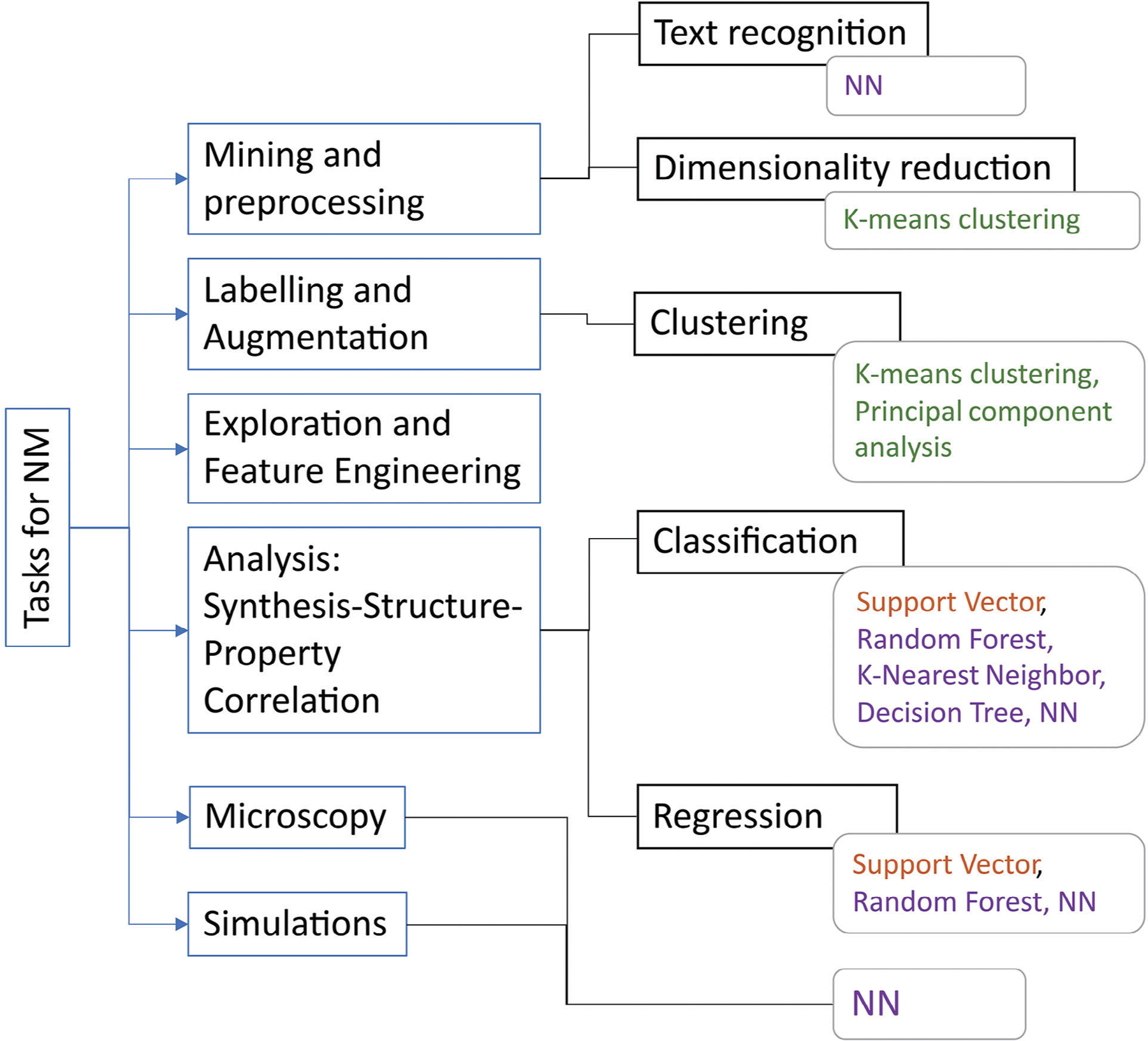
Figure 1.
Summary of tasks and ML methods used in the investigation of nanomaterials. The types of ML methods are sectioned by color, with supervised methods being shown in purple, semi-supervised in orange, an...
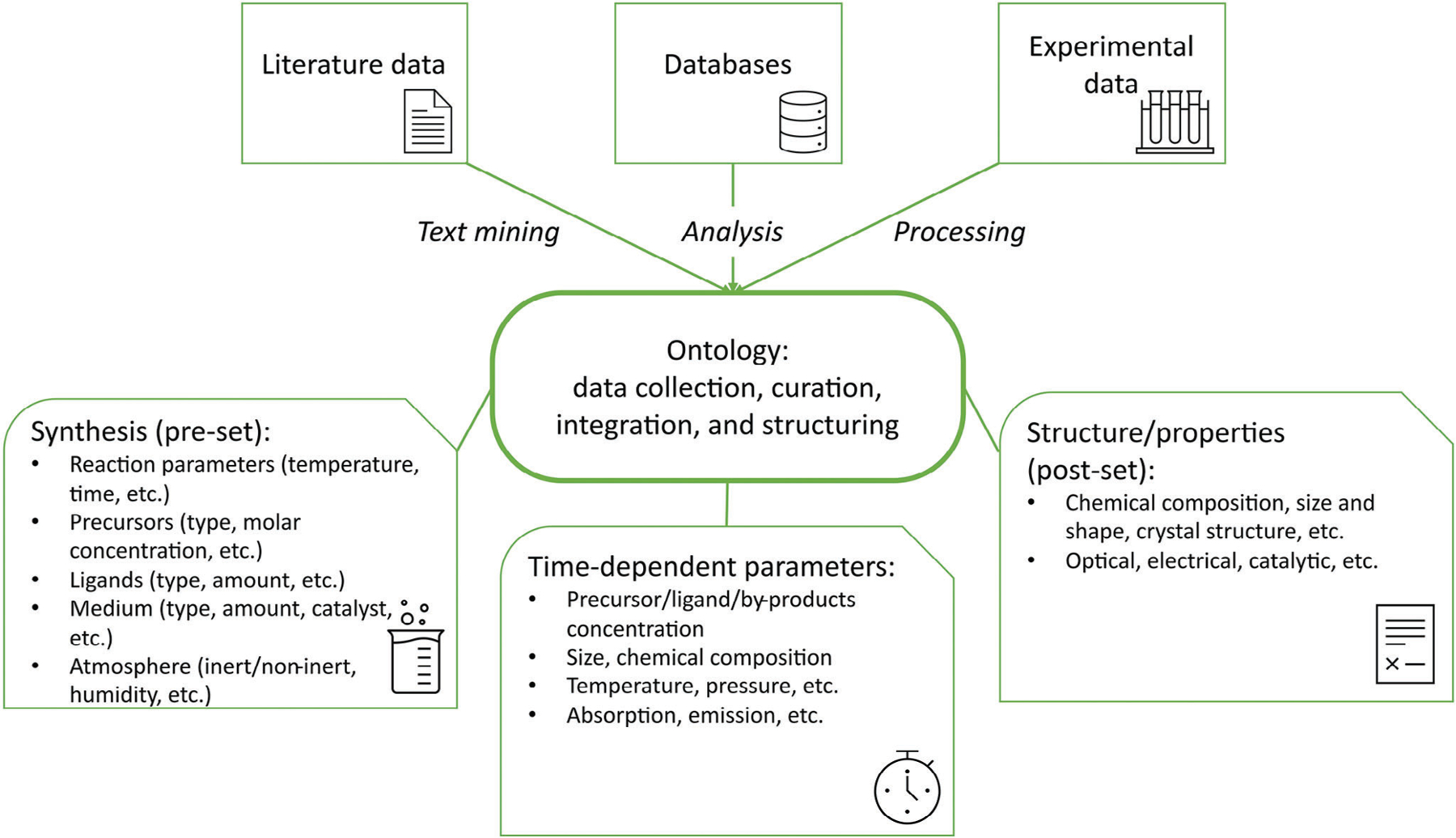
Figure 2.
Data for nanomaterials: data sources, creating data ontology which consists of pre-set, time-dependent, and post-set parameters.
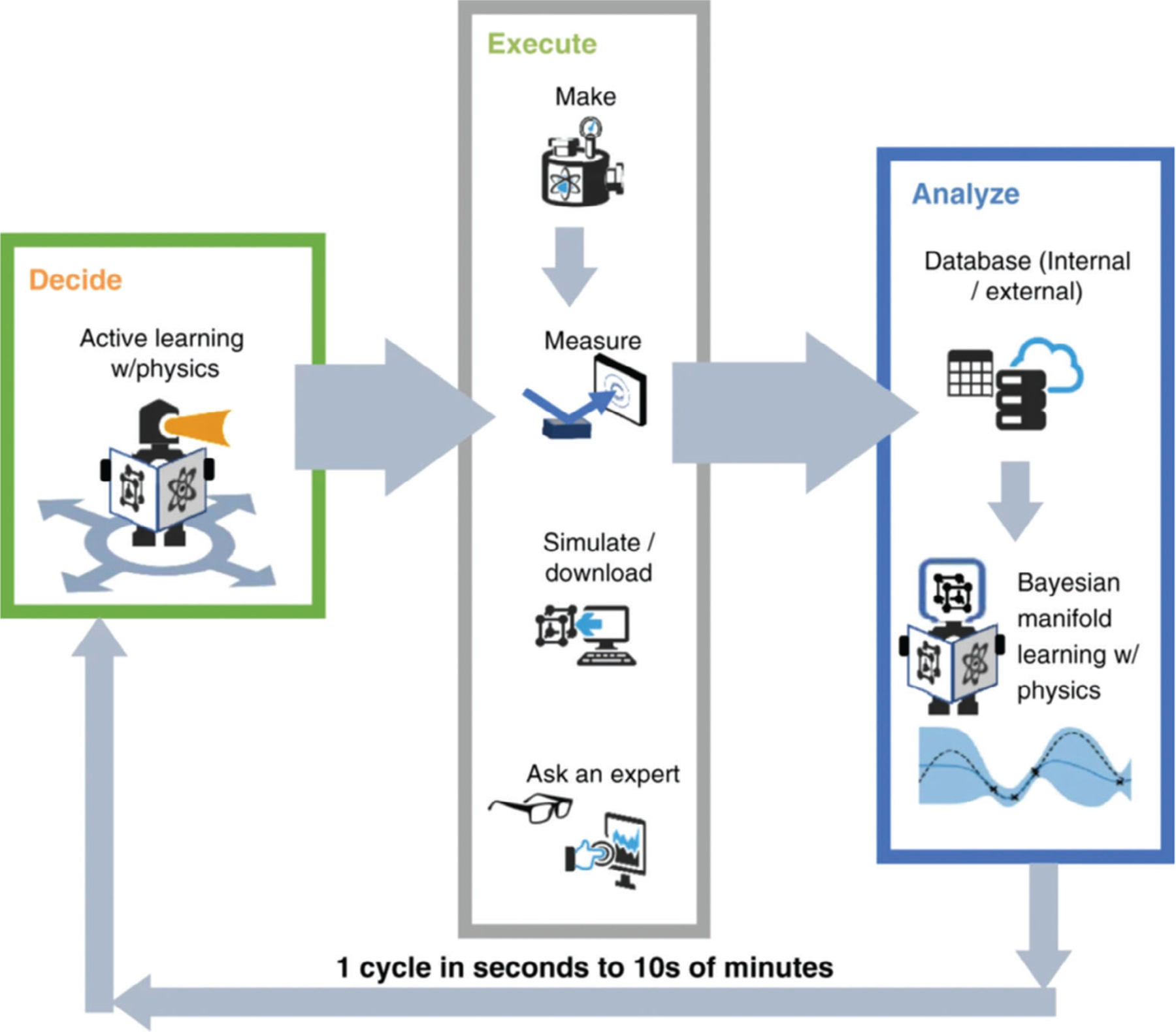
Figure 3.
Schematic of closed-loop materials discovery via Bayesian active learning. Reproduced with permission. [ 105 ] Copyright 2020, Nature.
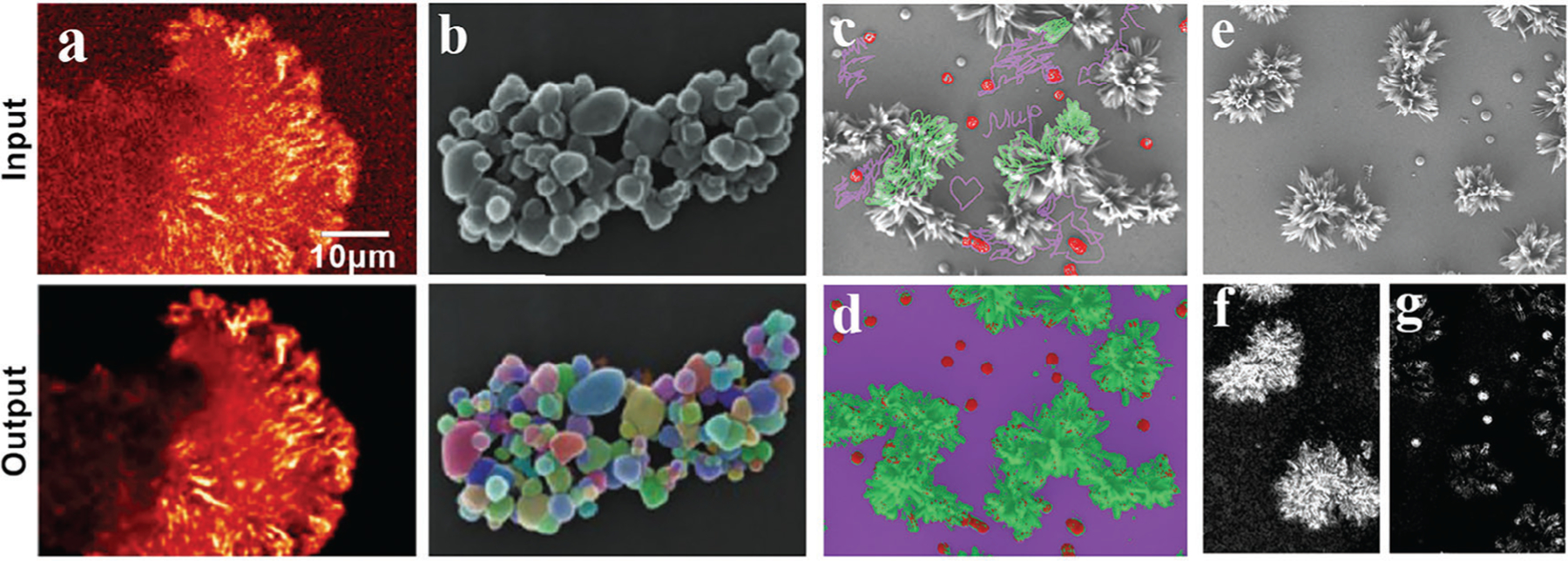
Figure 4.
Images before (top panel) and after (bottom panel) ML-based treatment. a) Image of actin label (paxillin-GFP) in U-251-glioma cells denoised with using Noise2Void network. Adapted with permission. [ 1...
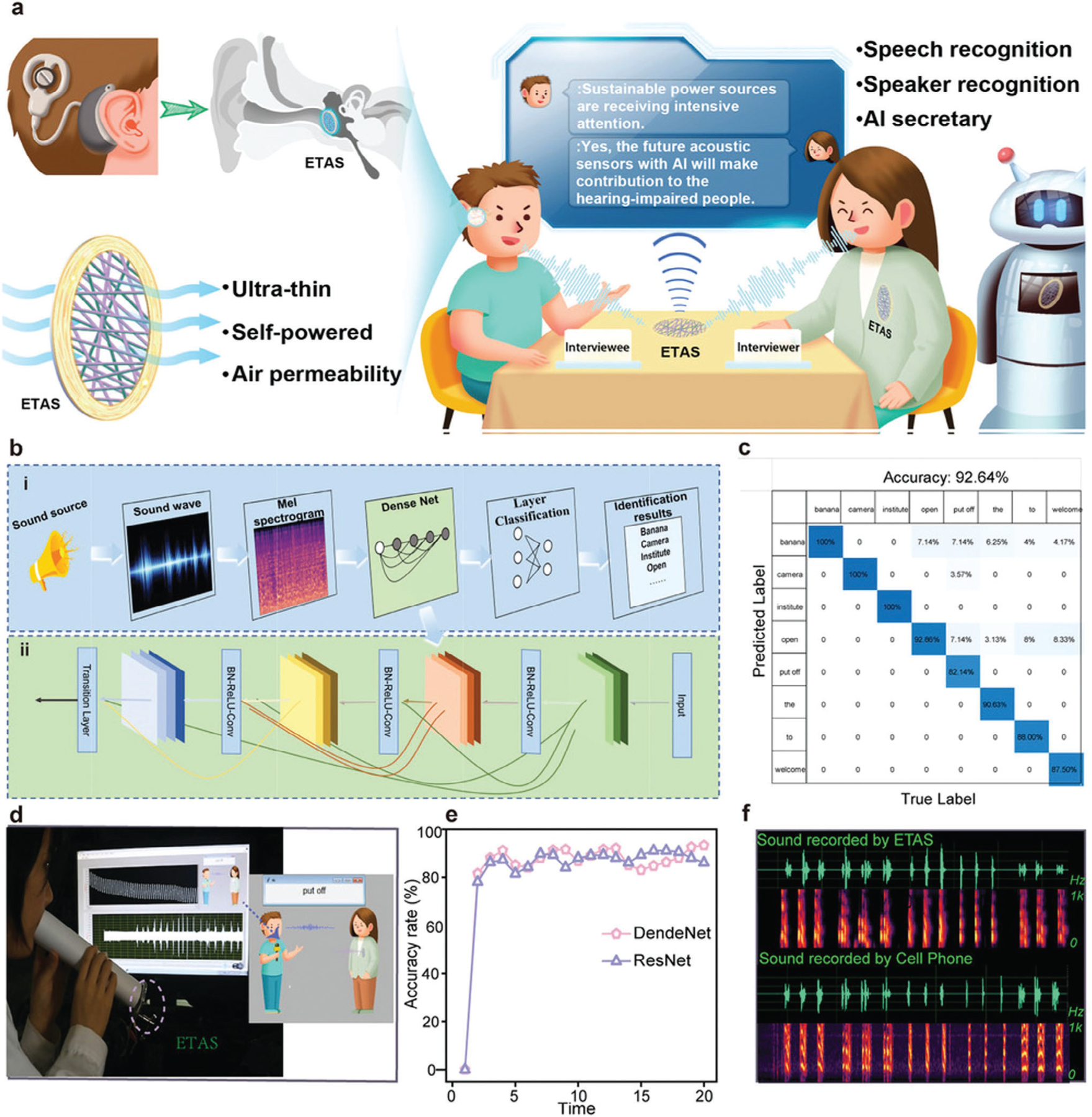
Figure 5.
Application of the TENG sensor for voice-text conversion. a) Proposed wearable sensor with hearing aids to allow a hearing-impaired person to interview. b) Schematic diagram of the voice-to-text conve...
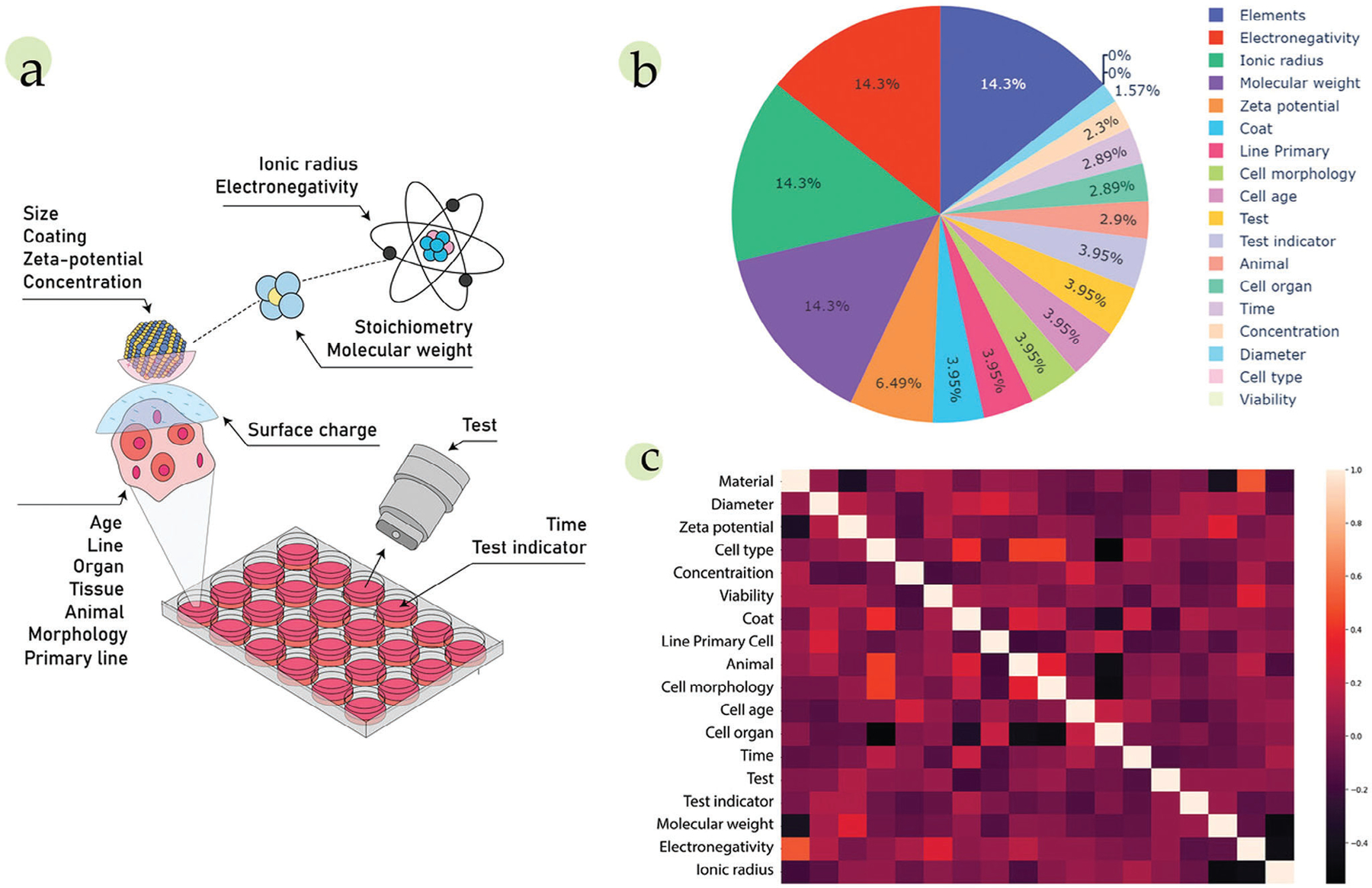
Figure 6.
a) Schematic view of model parameters, b) gap statistics over the dataset variables, where the total number of single missing values is 51,666 out of 145,368 values in the initial dataset; c) correlat...
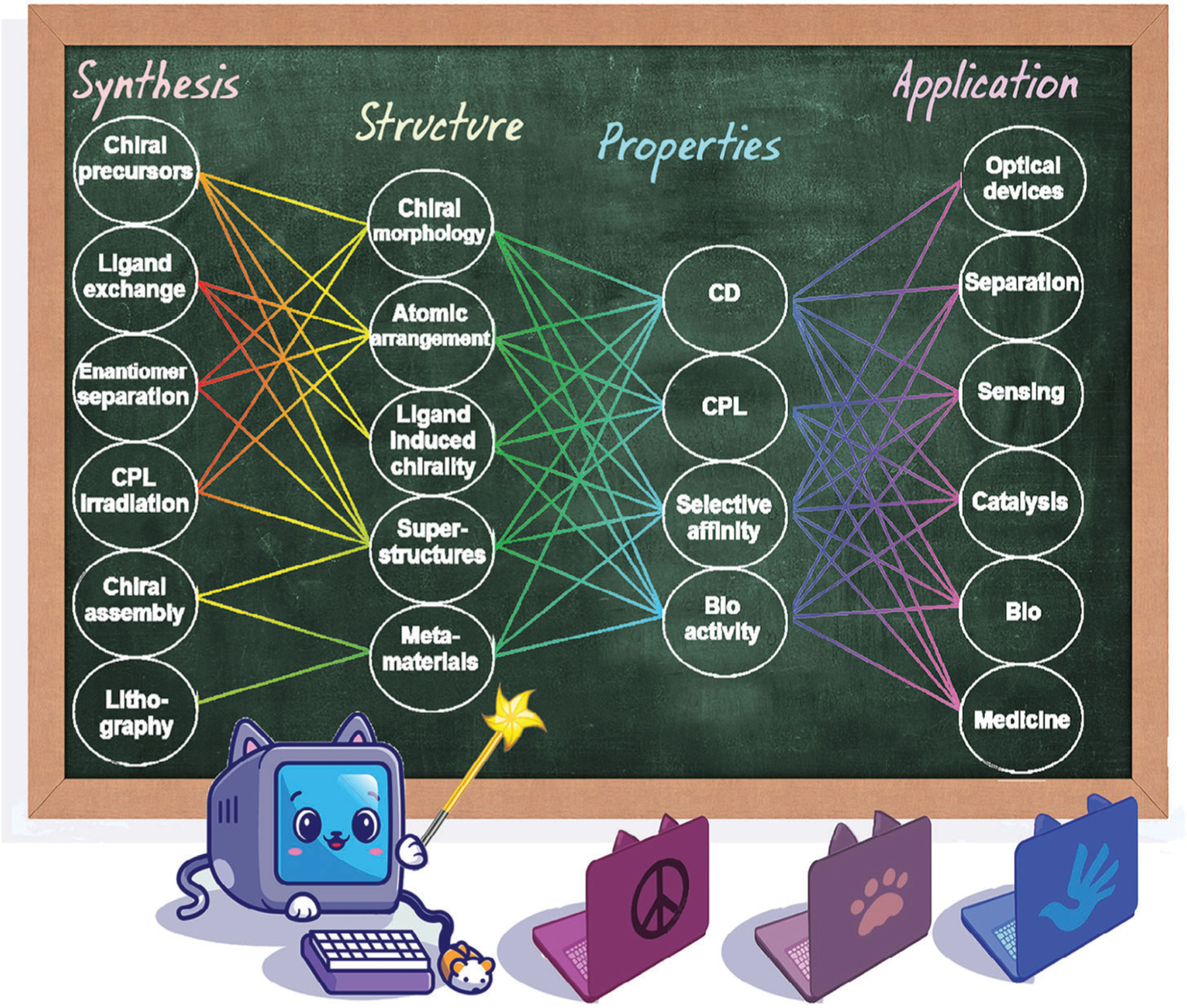
Figure 7.
Schematic representation of the connectivity between synthesis, structure, properties, and applications of chiral nanomaterials. (The neural network diagram is used for visualization purposes only and...
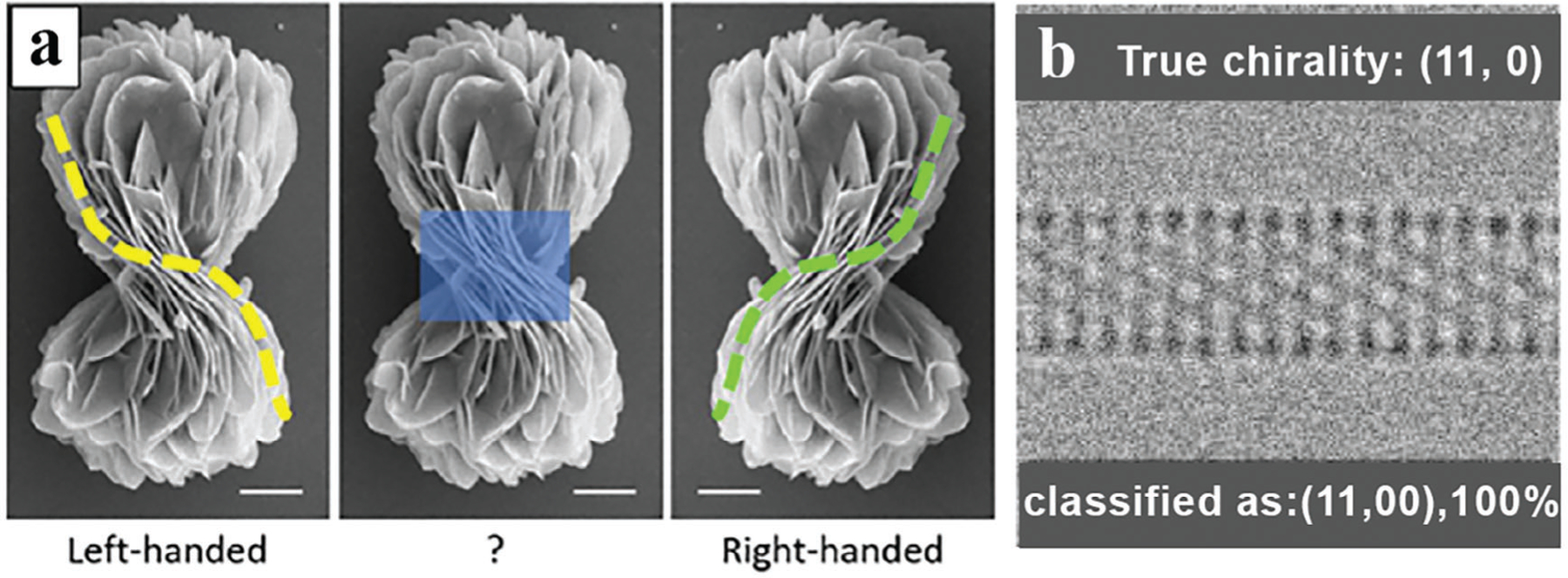
Figure 8.
a) Example of classification of left-handed and right-handed chiral bowties. Numbers in the bounding boxes represent the confidence of the model in the proposed class. Reproduced with permission. [ 29...
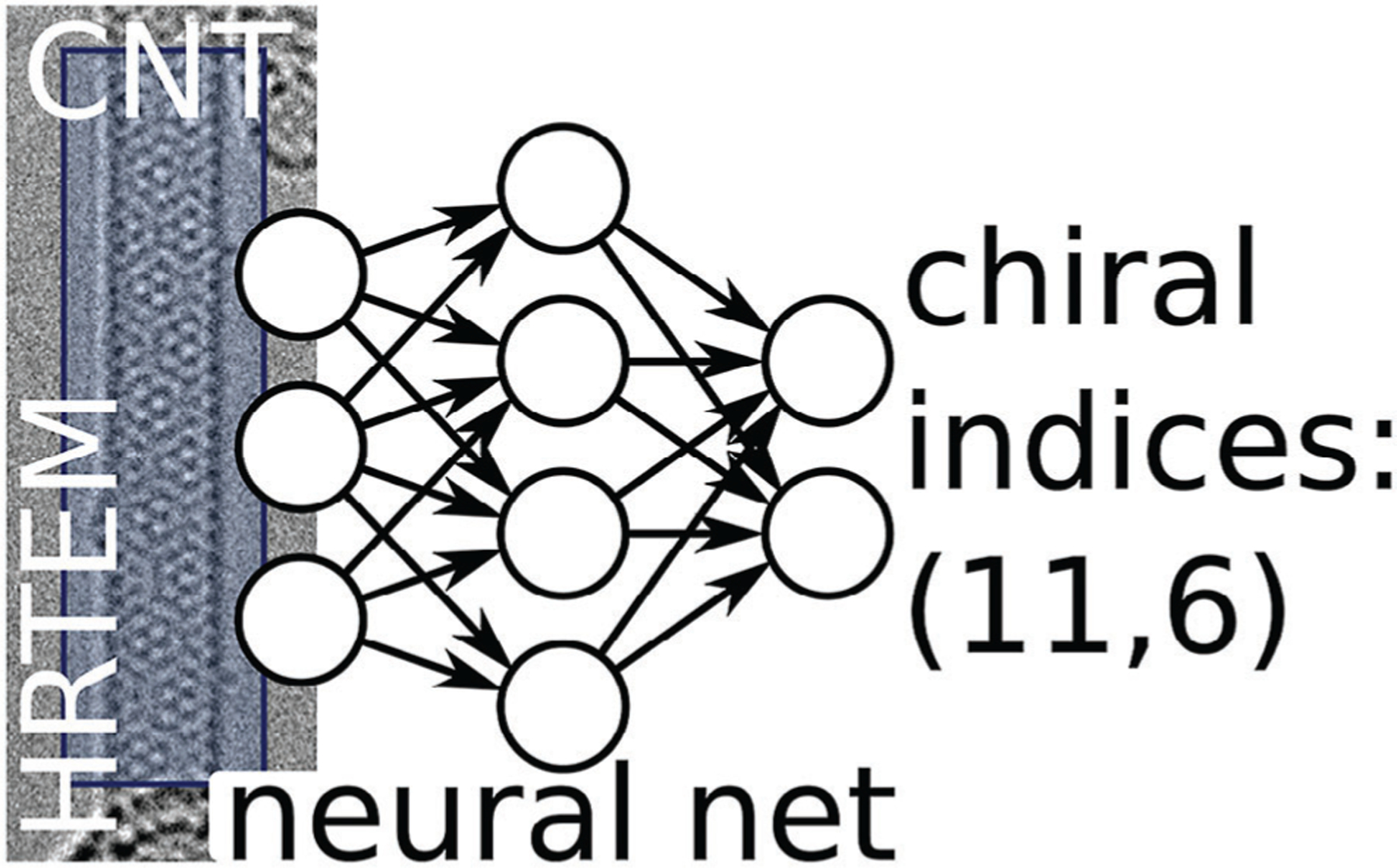
Figure 9.
Schematic representing the use of NNs for the determination of chirality in CNTs. Reproduced with permission. [ 261 ]
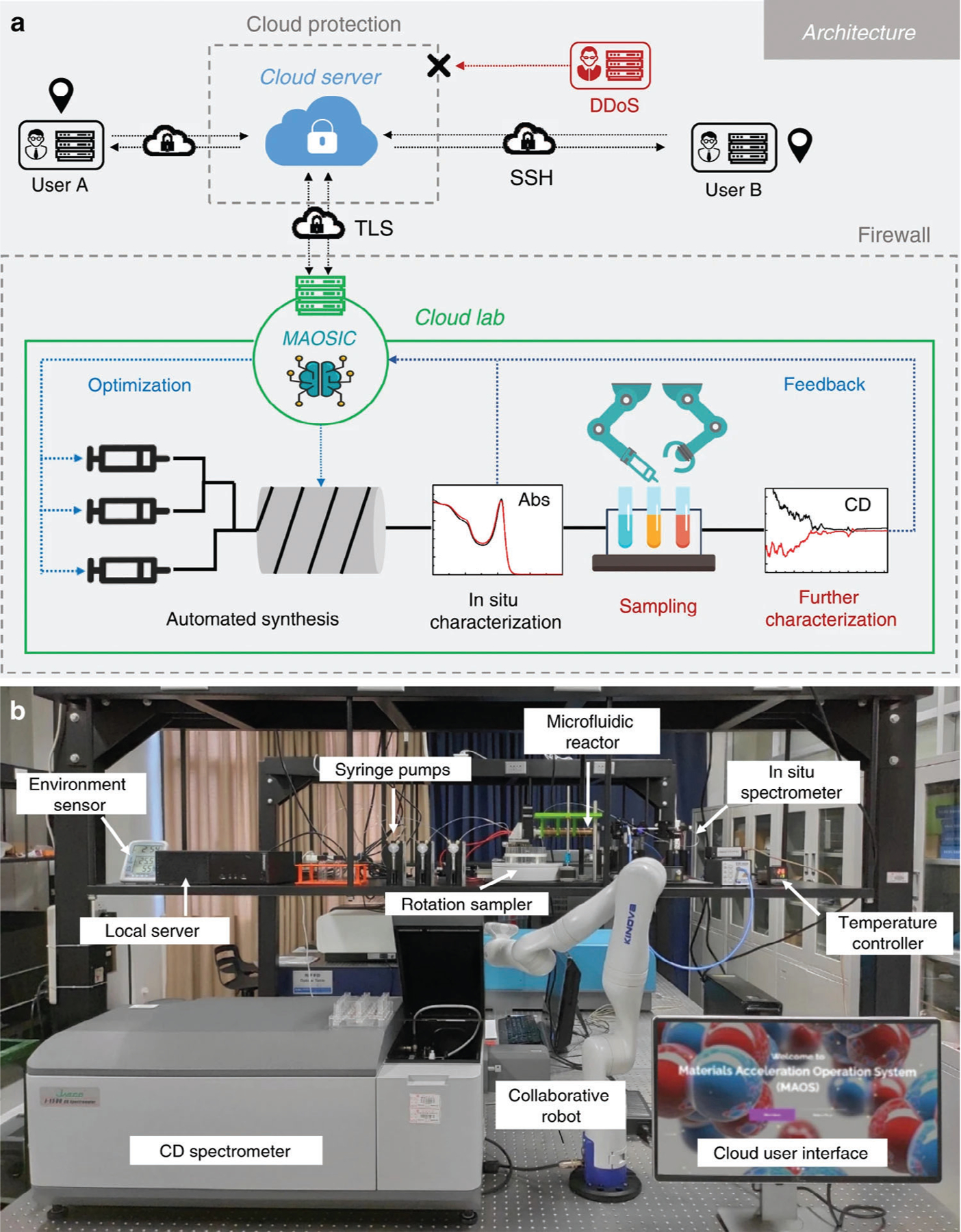
Figure 10.
a) MAOSIC allows remote users to interact with the b) integrated equipment in the lab through the cloud server. Encrypted communication and firewalls were utilized to maintain data security and transf...
Figure images are served from the NIH/NLM PubMed Central Open Access Subset or Europe PMC; copyright remains with the publishers and authors.
💬 Discussion
0 commentsNo comments yet. Be the first to start a discussion!
Leave a Comment