Abstract
AbstractExtracellular vesicles (EVs) are heterogeneous entities secreted by cells into their microenvironment and systemic circulation. Circulating EVs carry functional small RNAs and other molecular footprints from their cell of origin, and thus have evident applications in liquid biopsy, therapeutics, and intercellular communication. Yet, the complete transcriptomic landscape of EVs is poorly characterized due to critical limitations including variable protocols used for EV‐RNA extraction, quality control, cDNA library preparation, sequencing technologies, and bioinformatic analyses. Consequently, there is a gap in knowledge and the need for a standardized approach in delineating EV‐RNAs. Here, we address these gaps by describing the following points by (1) focusing on the large canopy of the EVs and particles (EVPs), which includes, but not limited to – exosomes and other large and small EVs, lipoproteins, exomeres/supermeres, mitochondrial‐derived vesicles, RNA binding proteins, and cell‐free DNA/RNA/proteins; (2) examining the potential functional roles and biogenesis of EVPs; (3) discussing various transcriptomic methods and technologies used in uncovering the cargoes of EVPs; (4) presenting a comprehensive list of RNA subtypes reported in EVPs; (5) describing different EV‐RNA databases and resources specific to EV‐RNA species; (6) reviewing established bioinformatics pipelines and novel strategies for reproducible EV transcriptomics analyses; (7) emphasizing the significant need for a gold standard approach in identifying EV‐RNAs across studies; (8) and finally, we highlight current challenges, discuss possible solutions, and present recommendations for robust and reproducible analyses of EVP‐associated small RNAs. Overall, we seek to provide clarity on the transcriptomics landscape, sequencing technologies, and bioinformatic analyses of EVP‐RNAs. Detailed portrayal of the current state of EVP transcriptomics will lead to a better understanding of how the RNA cargo of EVPs can be used in modern and targeted diagnostics and therapeutics. For the inclusion of different particles discussed in this article, we use the terms large/small EVs, non‐vesicular extracellular particles (NVEPs), EPs and EVPs as defined in MISEV guidelines by the International Society of Extracellular Vesicles (ISEV).
🏭 Microscope Brands
🧪 Reagent Suppliers
🏛️ Research Organizations (ROR)
Affiliated research institutions:
📊 Figures
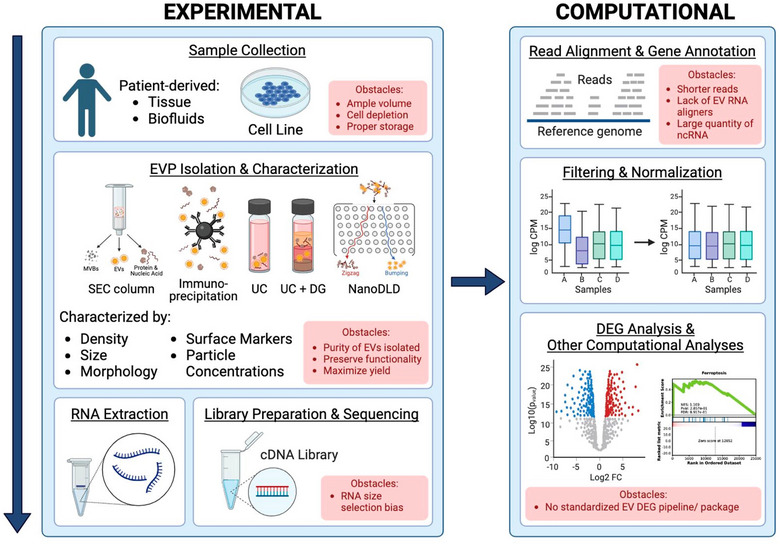
FIGURE 1
A summary of experimental and computation tools used for EV and RNA isolation and transcriptomic analysis of small RNAs from extracellular vesicles and particles. Current obstacles within each section...
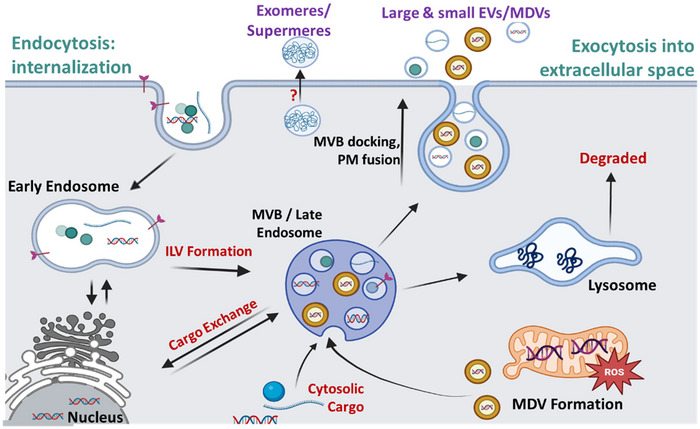
FIGURE 2
The biogenesis of various EVP subtypes, including exosomes, exomeres, supermeres and mitochondrialu2010derived vesicles. Multivesicular bodies (MVB) are specialized u2018lateu2019 endosomes derived fr...
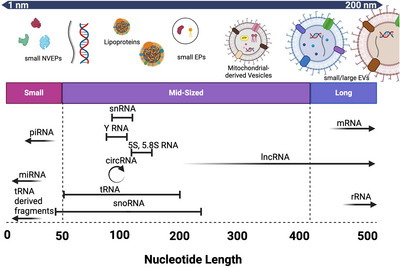
FIGURE 3
Overview of the RNA landscape of EVPs. Most commonly studied small EVP subtypes ranging from a diameter of u223c1u00a0nm tou00a0>200u00a0nm (top), and the most common types of RNA found within EVPs ra...
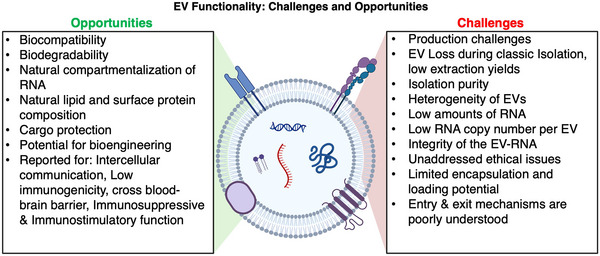
FIGURE 4
EV functionality: challenges and opportunities. Current challenges and potential opportunities with EVu2010RNA functionality.
Figure images are served from the NIH/NLM PubMed Central Open Access Subset or Europe PMC; copyright remains with the publishers and authors.
💬 Discussion
0 commentsNo comments yet. Be the first to start a discussion!
Leave a Comment