Abstract
Extracellular vesicles are produced in all three domains of life, and their biogenesis has common ancient origins in eukaryotes and archaea. Although bacterial vesicles were discovered several decades ago and multiple roles have been attributed to them, no mechanism has been established for vesicles biogenesis in bacteria. For this reason, there is a significant level of skepticism about the biological relevance of bacterial vesicles. Bacteroides thetaiotaomicron ( Bt ), a prominent member of the human intestinal microbiota, produces significant amounts of outer membrane vesicles (OMVs) which have been proposed to play key physiological roles. Here, we employed a dual marker system, consisting of outer membrane- and OMV-specific markers fused to fluorescent proteins to visualize OMV biogenesis by time-lapse microscopy. Furthermore, we performed comparative proteomic analyses to show that, in Bt , the OMV cargo is adapted for the optimal utilization of different polysaccharides. We also show that a negatively charged N-terminal motif acts as a signal for protein sorting into OMVs irrespective of the nutrient availability. Our results demonstrate that OMV production is the result of a highly regulated process in Bt .
🔬 Techniques
✨ Fluorophores
🧪 Reagent Suppliers
💾 Data Repositories
🏛️ Research Organizations (ROR)
Affiliated research institutions:
📋 Methods
Strains, oligonucleotides, and plasmids are described in SI Appendix , Table S1 . Bacteroides strains were routinely grown in an anaerobic chamber (Coy Laboratories) using an atmosphere of 10% H 2 , 5% CO 2 , and 85% N 2 . Bacteria were cultured in brain heart infusion medium supplemented with 5 µg/mL Hemin and 1 µg/mL vitamin K3. When applicable, antibiotics were used as follows: 100 µg/mL ampicillin, 200 µg/mL gentamicin, and 25 µg/mL erythromycin. When required, Bacteroides was grown in minimal medium (MM) containing 100 mM KH 2 PO 4 (pH 7.2), 15 mM NaCl, 8.5 mM (NH 4 ) 2 SO 4 , 4 mM L-cysteine, 1.9 mM hematin/200 mM L-histidine (prepared together as a 1,000× solution), 100 mM MgCl 2 , 1.4 mM FeSO 4 .7H 2 O, 50 mM CaCl 2 , 1 µg/mL vitamin K3, and 5 ng/mL vitamin B12. Carbohydrates used to supplement MM include glucose (G7528, Sigma), levan (P-Levan, Neogen corp.), mannan (M7504, Sigma) starch (S2004, Sigma), hyaluronan (FH76335, Biosynth Carbosynth), heparin (YH09354, Biosynth Carbosynth), and mucin (M2378, Sigma). All carbon sources were added to MM in a final concentration of 0.5% (w/v). A full description of methods is available in the SI Appendix , Materials and Methods . All data are available in the main text or the SI Appendix .
Supplementary Material Appendix 01 (PDF) Click here for additional data file. Dataset S01 (XLSX) Click here for additional data file. Dataset S02 (XLSX) Click here for additional data file. Dataset S03 (XLSX) Click here for additional data file. Dataset S04 (XLSX) Click here for additional data file. Dataset S05 (XLSX) Click here for additional data file. Dataset S06 (XLSX) Click here for additional data file. Dataset S07 (XLSX) Click here for additional data file. Dataset S08 (XLSX) Click here for additional data file. Dataset S09 (XLSX) Click here for additional data file. Movie S1. Live OMV formation in Bt co-expressing Inulinase-GFP and OmpF-mCherry.
Show full methods section
Strains, oligonucleotides, and plasmids are described in SI Appendix , Table S1 . Bacteroides strains were routinely grown in an anaerobic chamber (Coy Laboratories) using an atmosphere of 10% H 2 , 5% CO 2 , and 85% N 2 . Bacteria were cultured in brain heart infusion medium supplemented with 5 µg/mL Hemin and 1 µg/mL vitamin K3. When applicable, antibiotics were used as follows: 100 µg/mL ampicillin, 200 µg/mL gentamicin, and 25 µg/mL erythromycin. When required, Bacteroides was grown in minimal medium (MM) containing 100 mM KH 2 PO 4 (pH 7.2), 15 mM NaCl, 8.5 mM (NH 4 ) 2 SO 4 , 4 mM L-cysteine, 1.9 mM hematin/200 mM L-histidine (prepared together as a 1,000× solution), 100 mM MgCl 2 , 1.4 mM FeSO 4 .7H 2 O, 50 mM CaCl 2 , 1 µg/mL vitamin K3, and 5 ng/mL vitamin B12. Carbohydrates used to supplement MM include glucose (G7528, Sigma), levan (P-Levan, Neogen corp.), mannan (M7504, Sigma) starch (S2004, Sigma), hyaluronan (FH76335, Biosynth Carbosynth), heparin (YH09354, Biosynth Carbosynth), and mucin (M2378, Sigma). All carbon sources were added to MM in a final concentration of 0.5% (w/v). A full description of methods is available in the SI Appendix , Materials and Methods . All data are available in the main text or the SI Appendix .
Supplementary Material Appendix 01 (PDF) Click here for additional data file. Dataset S01 (XLSX) Click here for additional data file. Dataset S02 (XLSX) Click here for additional data file. Dataset S03 (XLSX) Click here for additional data file. Dataset S04 (XLSX) Click here for additional data file. Dataset S05 (XLSX) Click here for additional data file. Dataset S06 (XLSX) Click here for additional data file. Dataset S07 (XLSX) Click here for additional data file. Dataset S08 (XLSX) Click here for additional data file. Dataset S09 (XLSX) Click here for additional data file. Movie S1. Live OMV formation in Bt co-expressing Inulinase-GFP and OmpF-mCherry.
Data, Materials, and Software Availability The mass spectrometry proteomics data have been deposited in the Proteome Xchange Consortium ( 37 ) via the PRIDE partner repository with the data set identifier PXD036181 ( 38 ) PXD036275 ( 39 ) and PXD036272 ( 40 ). All data are available in the main text or the SI Appendix .
📊 Figures
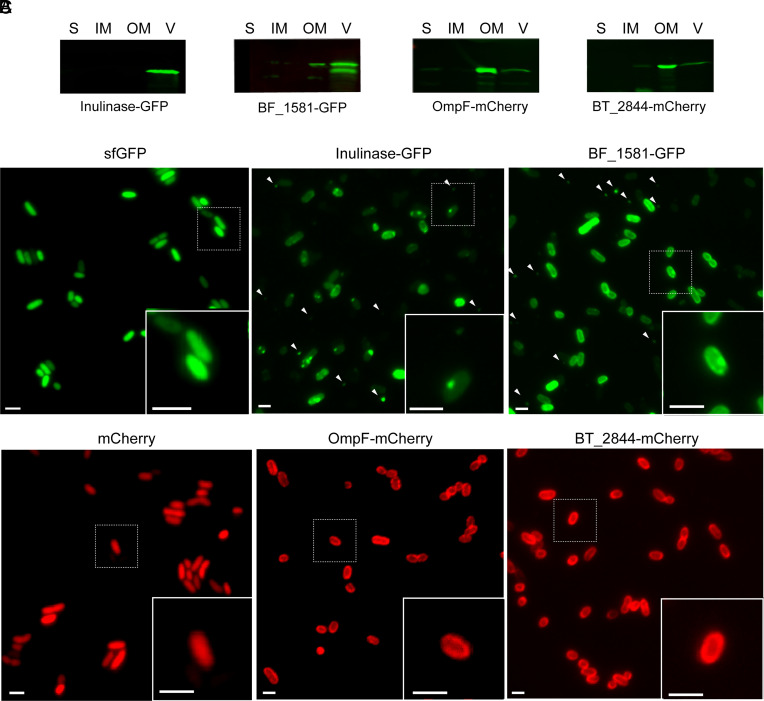
Fig. 1.
OMV and OM chimeric markers show a differential distribution in Bt . ( A ) Western blot of 10 u03bcg of protein from soluble fraction (S), inner membrane (IM), outer membrane (OM), and OMV (V) fractio...
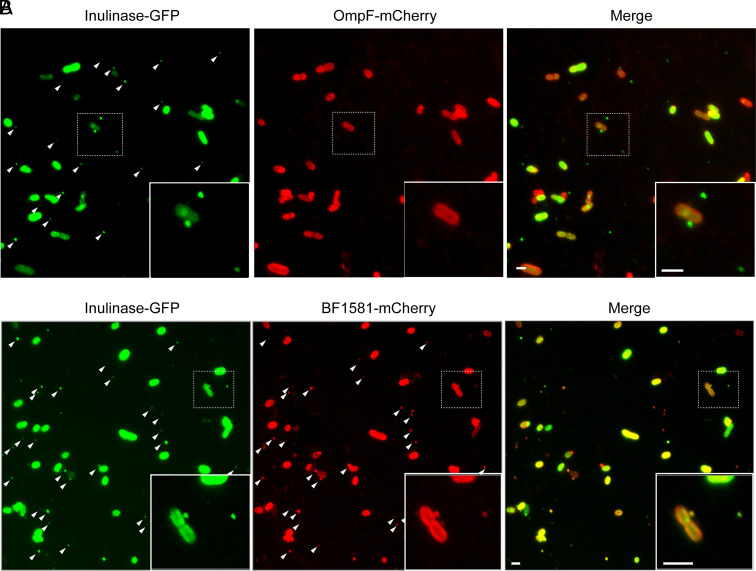
Fig. 2.
Coexpression of OMV and OM markers do not show colocalization in vesicles. Representative widefield fluorescent microscopy images of Bt coexpressing ( A ) Inulinase-GFP and OmpF-mCherry, or ( B ) Inul...
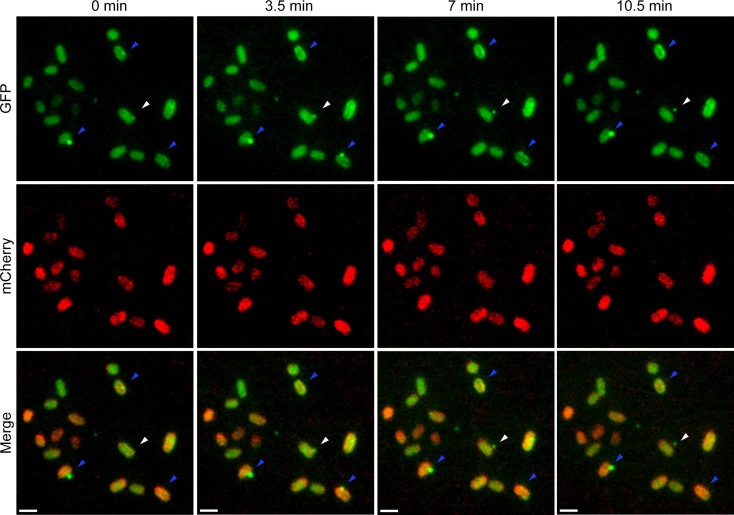
Fig. 3.
Time-lapse of OMV formation. Bt coexpressing Inulinase-GFP and OmpF-mCherry were grown overnight in anaerobic conditions in liquid minimal media supplemented with glucose. Cultures were then incubated...
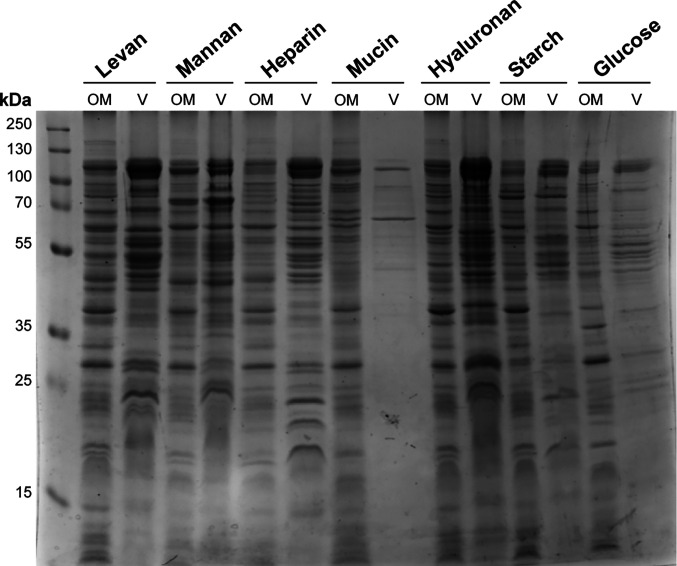
Fig. 4.
Bt modulates OMV cargo in different nutrient conditions. Coomassie blue staining after SDS-PAGE of Bt OM and OMV (V) fractions obtained after growth in minimal media supplemented with levan, mannan, h...
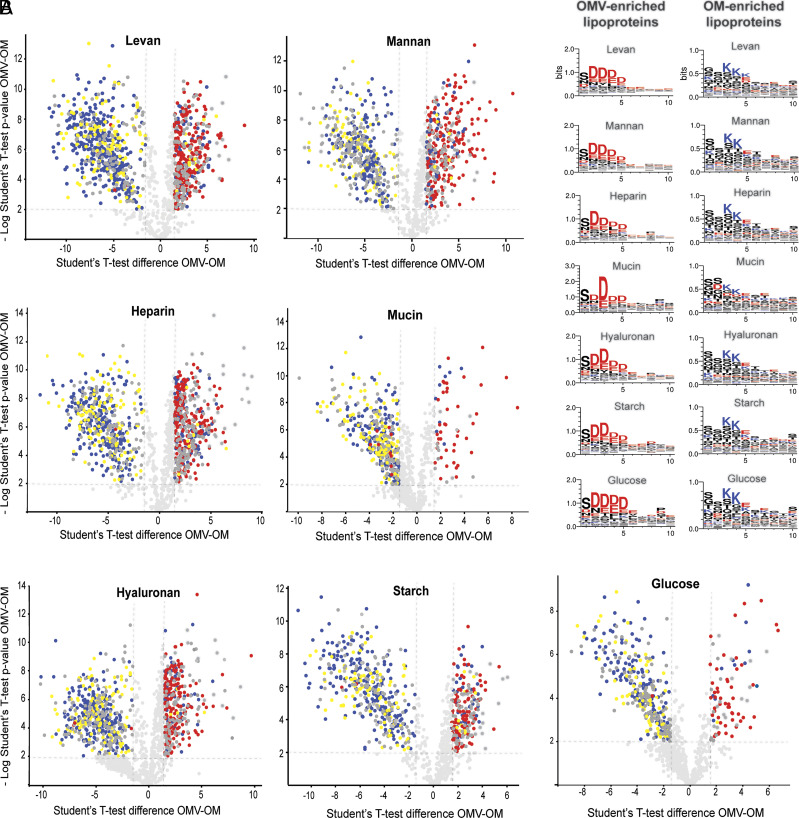
Fig. 5.
OMV-enriched lipoproteins expressed in different culture conditions harbor a conserved N-terminal LES motif. ( A ) Volcano plot representations of OM and OMV-enriched proteins. Integral membrane prote...
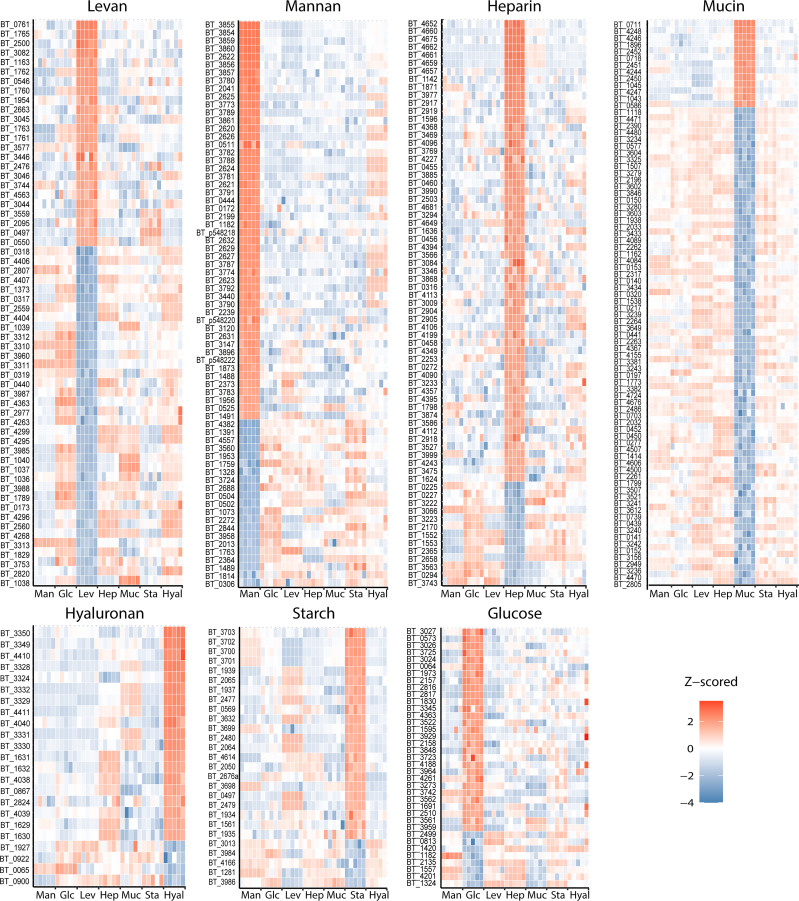
Fig. 6.
OMV cargo is tailored for the digestion of specific polysaccharides. Heat maps of protein levels (Z-score) showing most enriched (red) and excluded (blue) proteins found in OMVs from Bt grown in minim...
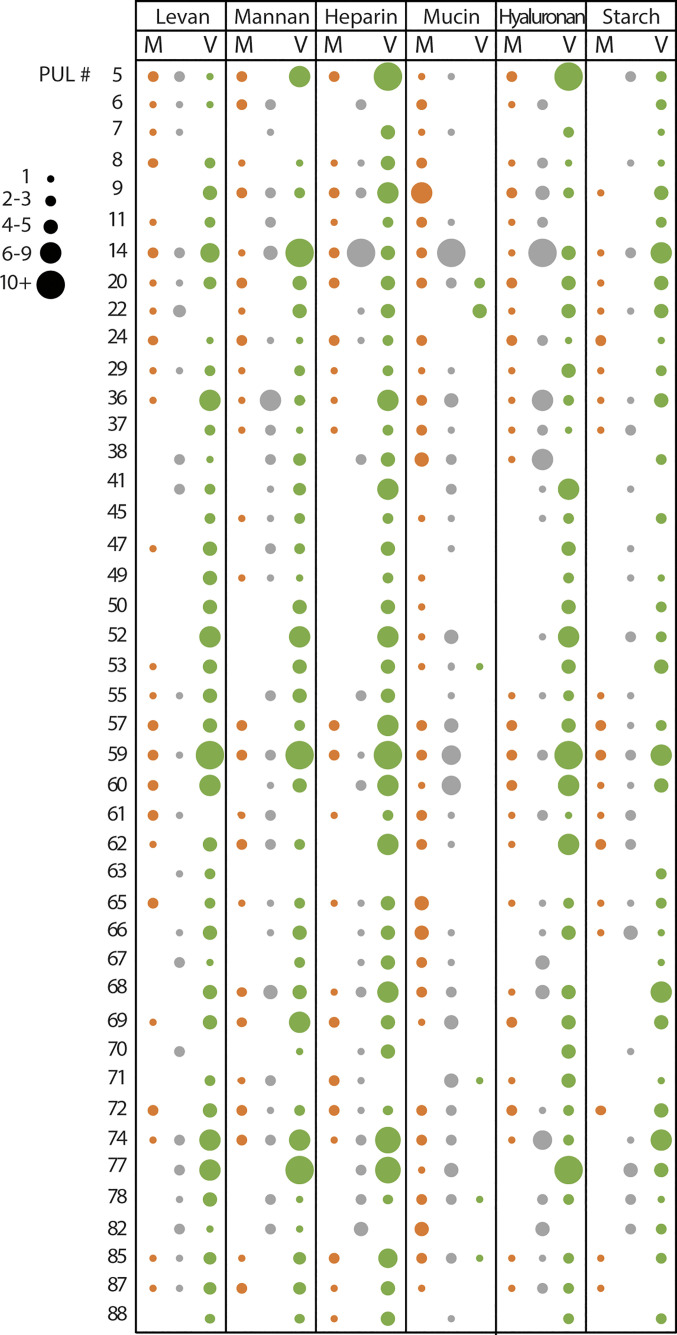
Fig. 7.
PUL-encoded proteins show OMV enrichment except for Bt grown in mucin. PUL-encoded proteins were identified and classified as OM-enriched (OMV/OM fold change 1, V column, colored in green), or unclass...
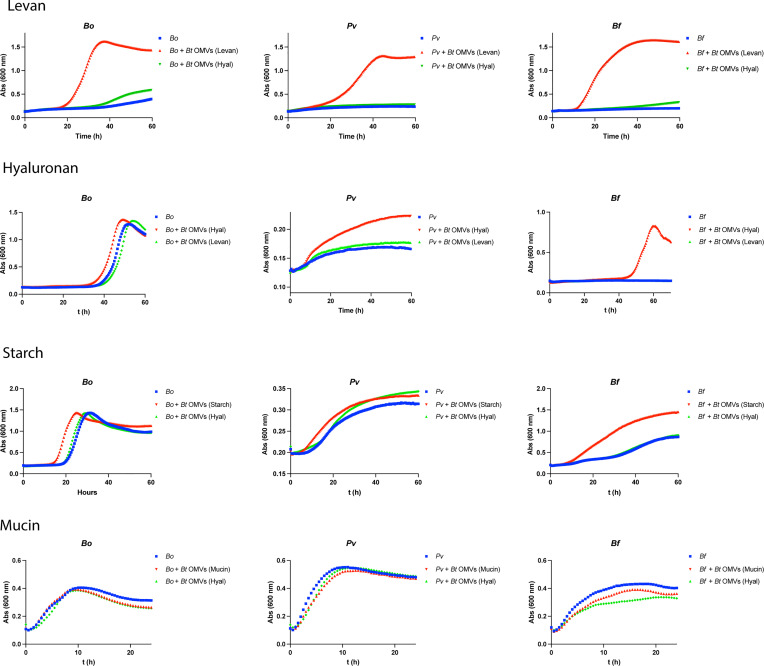
Fig. 8.
Tailored OMVs from Bt grown in a specific glycan enhance growth of Bacteroides spp. under the same culture condition. Growth curves of Bo , Pv , and Bf in minimal media with levan, hyaluronan, starch,...
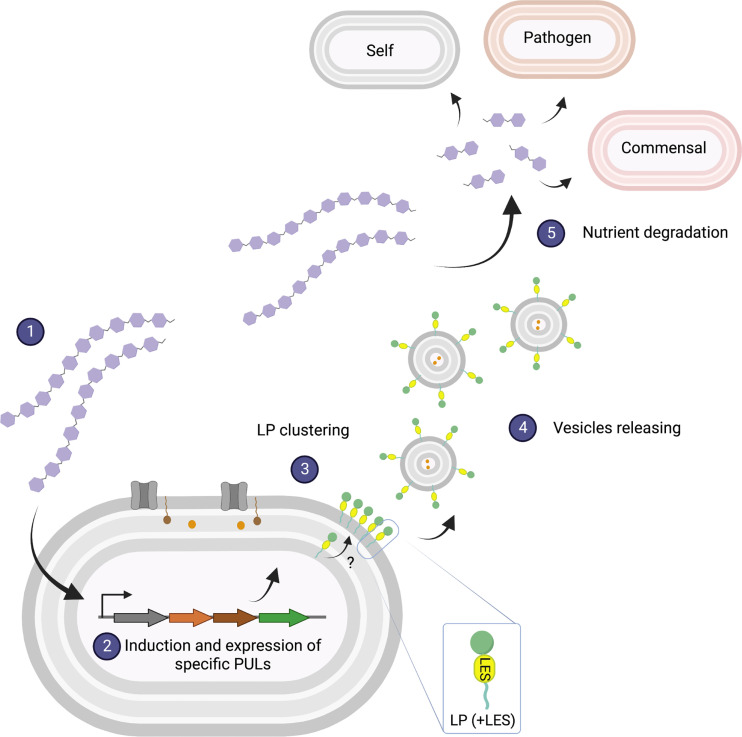
Fig. 9.
Model of OMV biogenesis. In the presence of a specific glycan (1), Bacteroides induces specific PULs (2). Glycosyl-hydrolases containing the LES signal are transported to the OM and exposed to the cel...
Figure images are served from the NIH/NLM PubMed Central Open Access Subset or Europe PMC; copyright remains with the publishers and authors.
💬 Discussion
0 commentsNo comments yet. Be the first to start a discussion!
Leave a Comment