Abstract
AbstractThe viscosity and crowding of biological environment are considered vital for the correct cellular function, and alterations in these parameters are known to underly a number of pathologies including diabetes, malaria, cancer and neurodegenerative diseases, to name a few. Over the last decades, fluorescent molecular probes termed molecular rotors proved extremely useful for exploring viscosity, crowding, and underlying molecular interactions in biologically relevant settings. In this review, we will discuss the basic principles underpinning the functionality of these probes and will review advances in their use as sensors for lipid order, protein crowding and conformation, temperature and non‐canonical nucleic acid structures in live cells and other relevant biological settings.
🔬 Techniques
🧬 Organisms
✨ Fluorophores
🧪 Sample Preparation
🔬 Cell Lines
🧪 Reagent Suppliers
💻 Software Details
🏛️ Research Organizations (ROR)
Affiliated research institutions:
📊 Figures
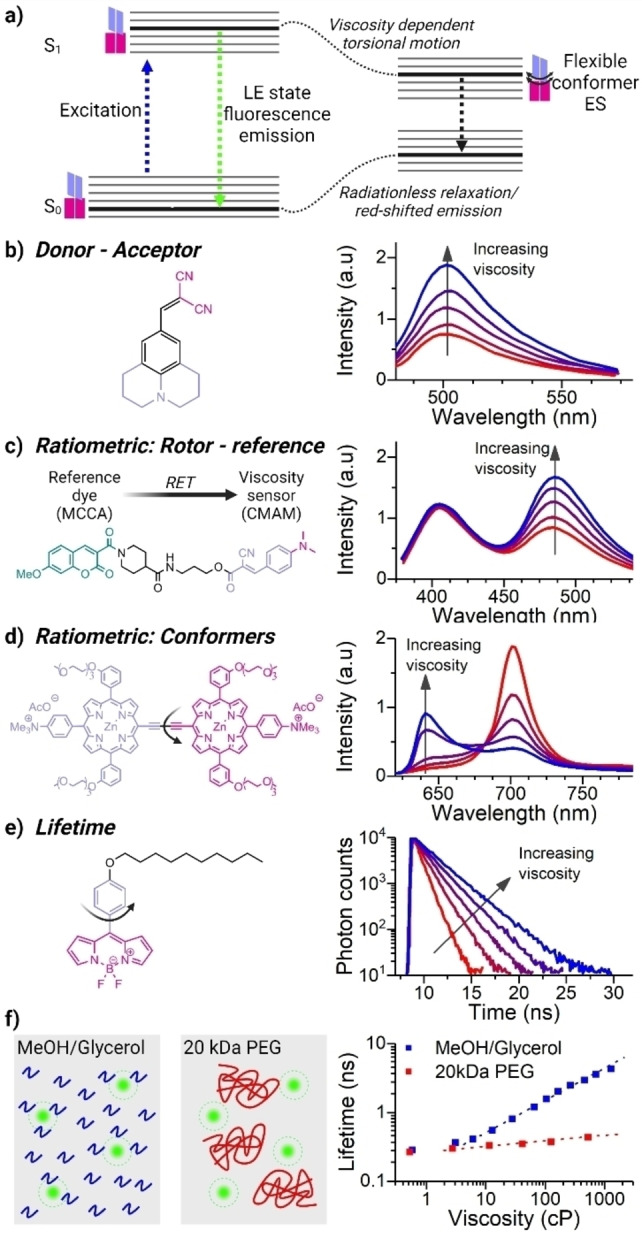
Figure 1
Molecular rotors are fluorescenceu2010based viscosity probes. a) Jablonski diagram showing the generic working principle of molecular rotors: excitation to a locally excited (LE) state is followed eit...
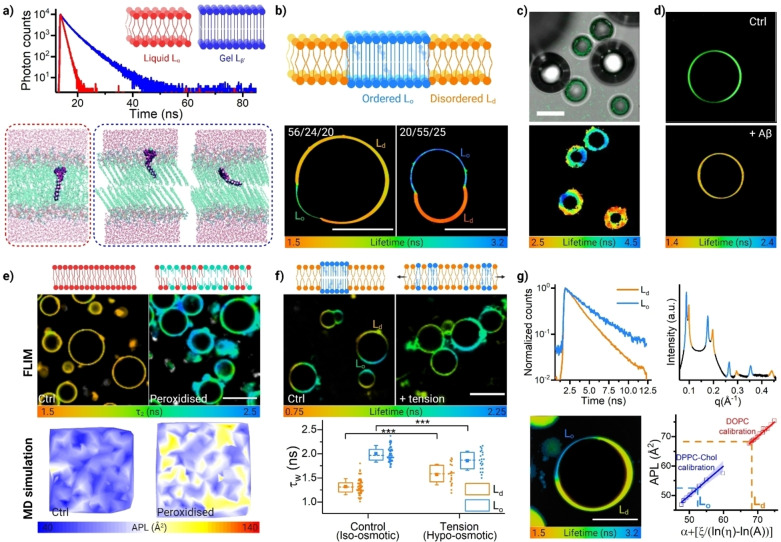
Figure 2
BODIPYu2010based molecular rotors and FLIM imaging enable the quantitative mapping of the lipid membrane's microviscosity. a) MD simulations showing the rotor's single location in fluid phase lipid bi...
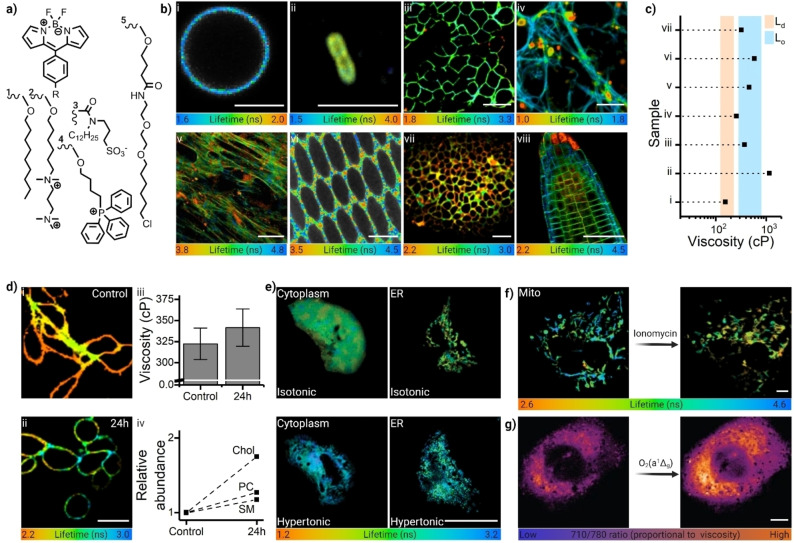
Figure 3
Targeted molecular rotors report on the local microviscosity in organelles of live cells. a) Example targeting moieties used to stain the cell organelles: (1) untargeted; [48a] (2,3) plasma membrane;[...
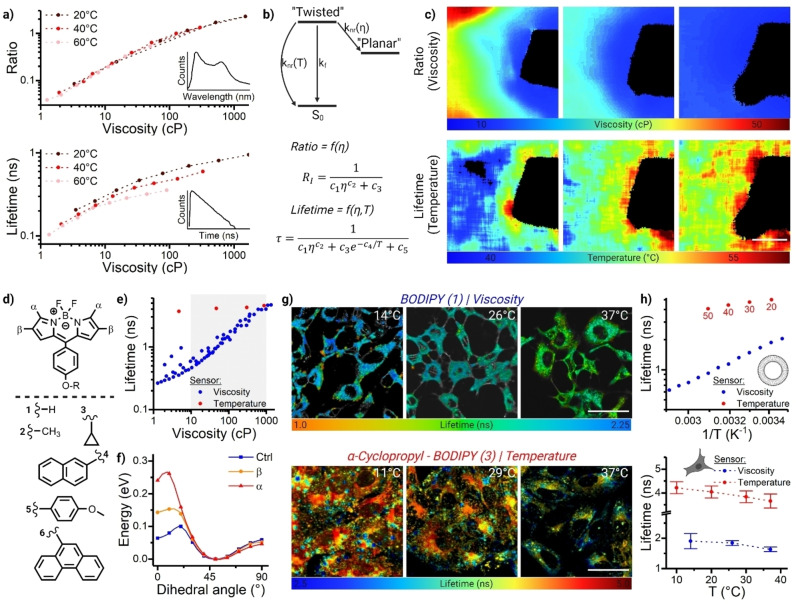
Figure 4
Temperature imaging using molecular rotors. a) Spectral ratiometric (top) and lifetime (bottom) calibration of porphyrin dimeru2010based rotor (Figureu20051d) at different temperatures and viscosities...
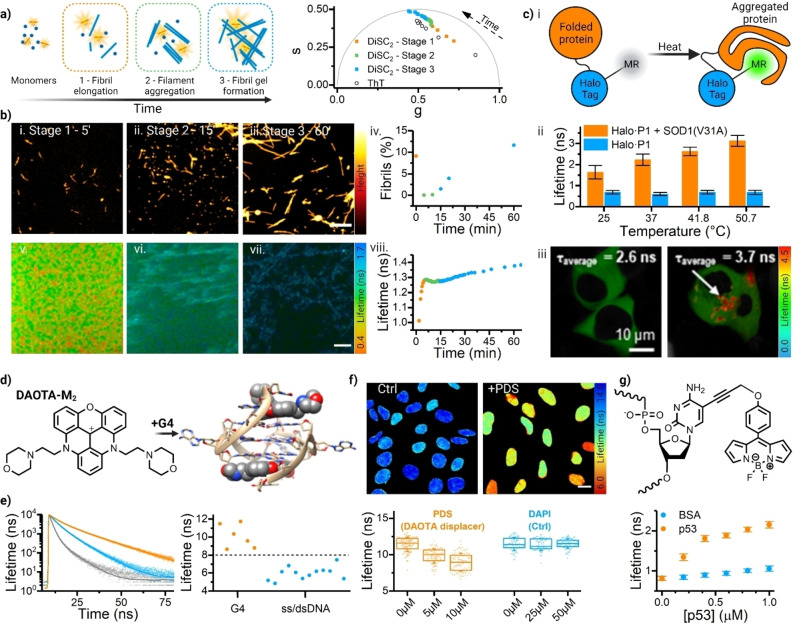
Figure 5
Molecular rotors measure protein aggregation and nucleic acid conformation. a) Lysozyme aggregation is a multistep process, which can be tracked via the phasor analysis of timeu2010resolved decays of ...
Figure images are served from the NIH/NLM PubMed Central Open Access Subset or Europe PMC; copyright remains with the publishers and authors.
💬 Discussion
0 commentsNo comments yet. Be the first to start a discussion!
Leave a Comment