Abstract
The anaphase promoting complex or cyclosome (APC/C) is a large multi-subunit E3 ubiquitin ligase that orchestrates cell cycle progression by mediating the degradation of important cell cycle regulators. During the two decades since its discovery, much has been learnt concerning its role in recognizing and ubiquitinating specific proteins in a cell-cycle-dependent manner, the mechanisms governing substrate specificity, the catalytic process of assembling polyubiquitin chains on its target proteins, and its regulation by phosphorylation and the spindle assembly checkpoint. The past few years have witnessed significant progress in understanding the quantitative mechanisms underlying these varied APC/C functions. This review integrates the overall functions and properties of the APC/C with mechanistic insights gained from recent cryo-electron microscopy (cryo-EM) studies of reconstituted human APC/C complexes.
🔬 Techniques
🧬 Organisms
✨ Fluorophores
🧪 Sample Preparation
🔬 Cell Lines
💾 Data Repositories
🏛️ Research Organizations (ROR)
Affiliated research institutions:
📊 Figures
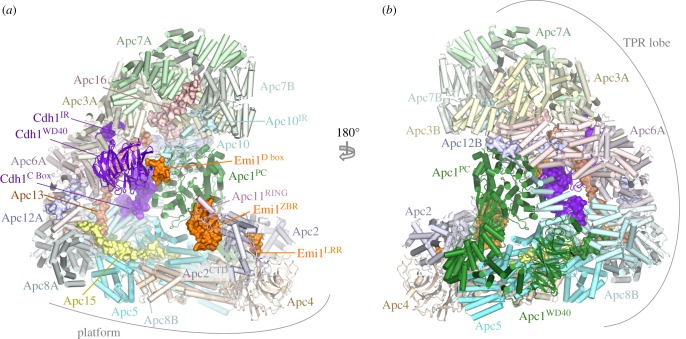
Figure 1.
Overall structure of the human APC/C Cdh1.Emi1 complex. ( a ) and ( b ) Two orthogonal views of the APC/C. Large APC/C subunits are represented as cartoons, whereas small APC/C subunits (Apc12, Apc13,...
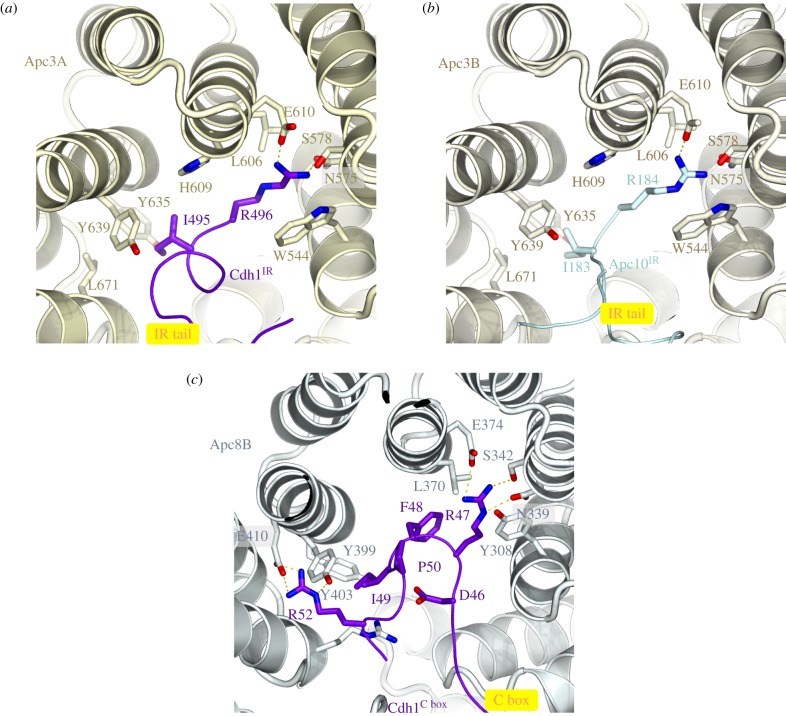
Figure 2.
The IR-tail and C-box binding sites of Apc3 and Apc8 respectively, are homologous. ( a ) Cdh1 IR-tail binding site. ( b ) Apc10 IR-tail binding site. ( c ) C-box binding site on Apc8B. The Ile and Arg...
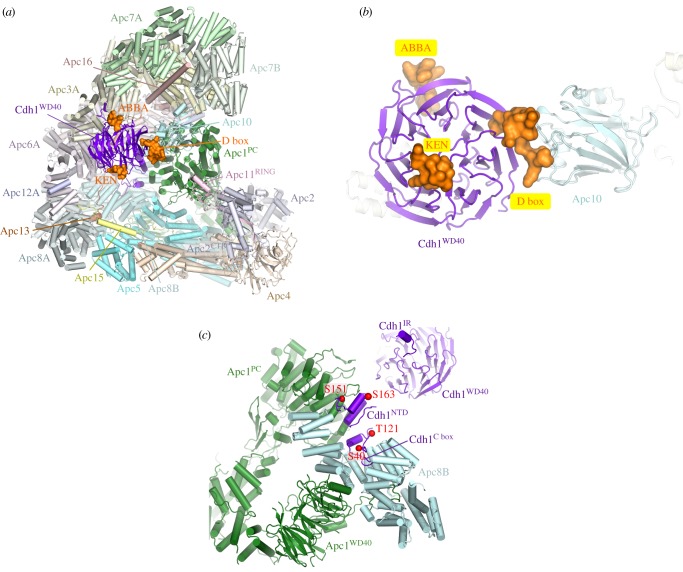
Figure 3.
Coactivators interact with Apc1 and Apc3 and create a D-box co-receptor with Apc10. ( a ) Overview of the APC/C with the Cdh1 coactivator subunit. Based on the APC/C Cdh1.Emi1 coordinates (PDB 4UI9) [...
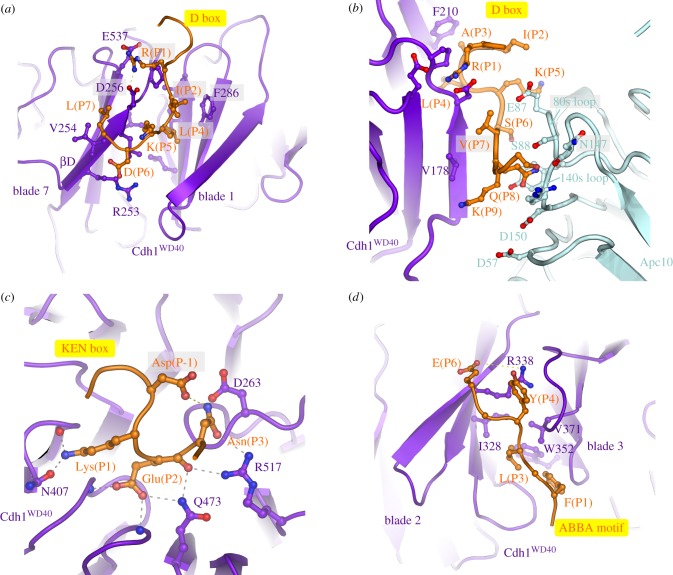
Figure 4.
Substrate recognition is mediated by coactivators and Apc10. ( a ) D-box receptor on Cdh1, ( b ) D-box co-receptor (Cdh1 and Apc10), ( c ) KEN-box receptor on Cdh1, ( d ) ABBA-motif interactions with ...
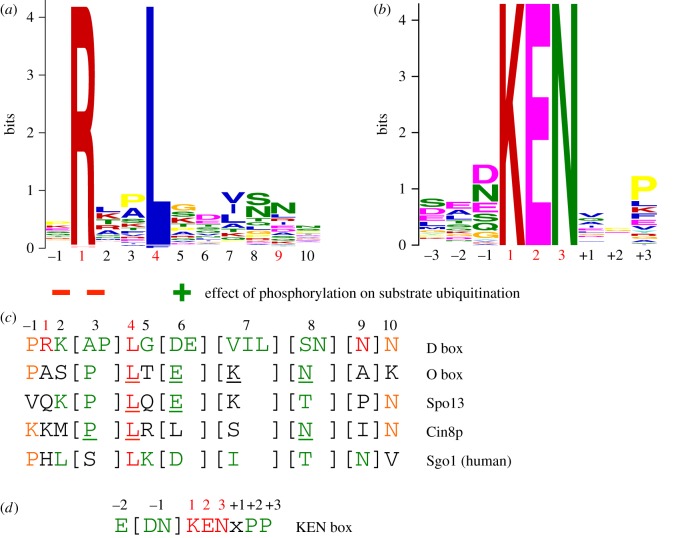
Figure 5.
Degron consensus sequences. ( a ) Sequence motif of D box derived from 68 APC/C substrates [ 71 ]. Sequence motif determined using multiple expectation maximization for motif elicitation (MEME) [ 116 ...
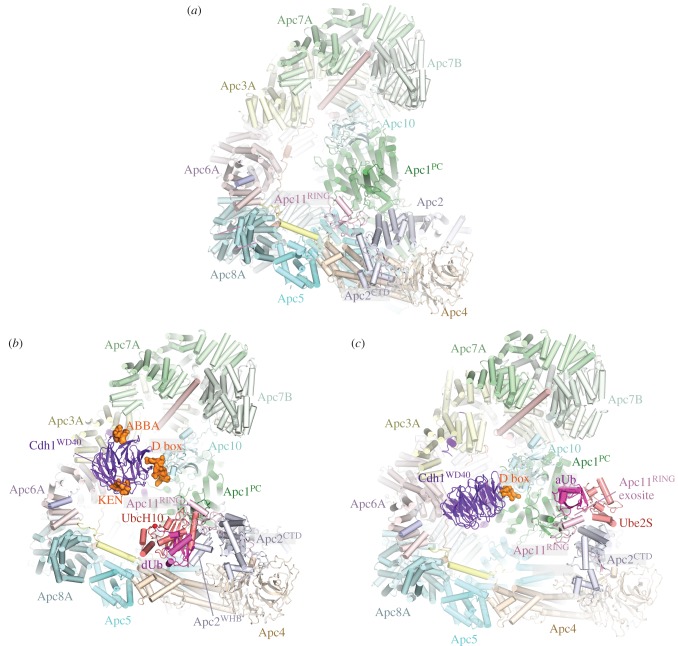
Figure 6.
APC/C ubiquitination reaction. ( a ) Apo APC/C. In the absence of coactivator the catalytic module adopts a u2018downu2019 inactive conformation. UbcH10 binding to Apc11 RING is blocked by Apc5, and A...
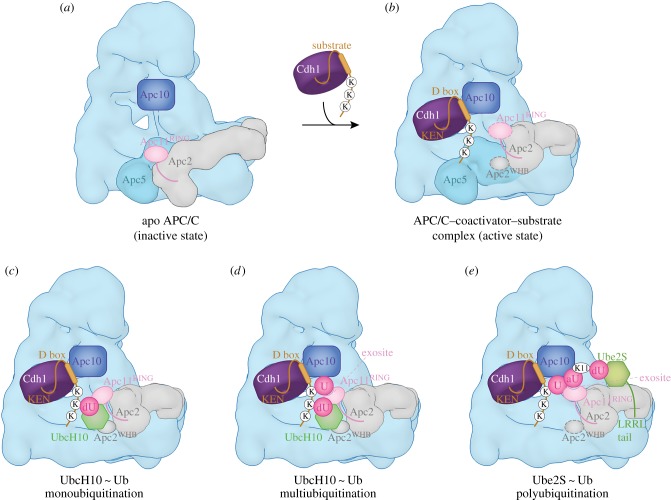
Figure 7.
Schematic of ubiquitination reaction catalysed by the APC/C. ( a ) In the apo state, the downward position of the catalytic module would cause a clash between Apc5 and both UbcH10 and Apc2 WHB (as in ...
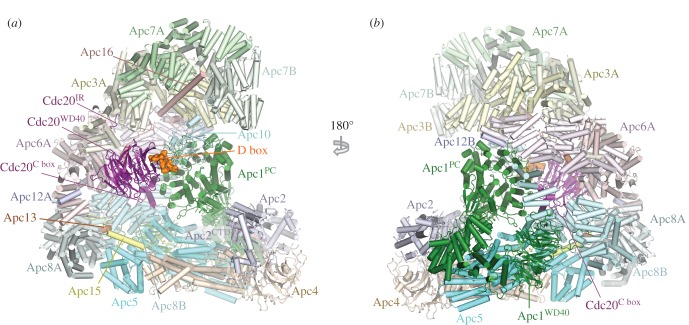
Figure 8.
Overall structure of the phosphorylated APC/C Cdc20.substrate complex. ( a ) and ( b ) Two orthogonal views of the APC/C Cdc20.substrate . The substrate is the high affinity budding yeast substrate Hs...
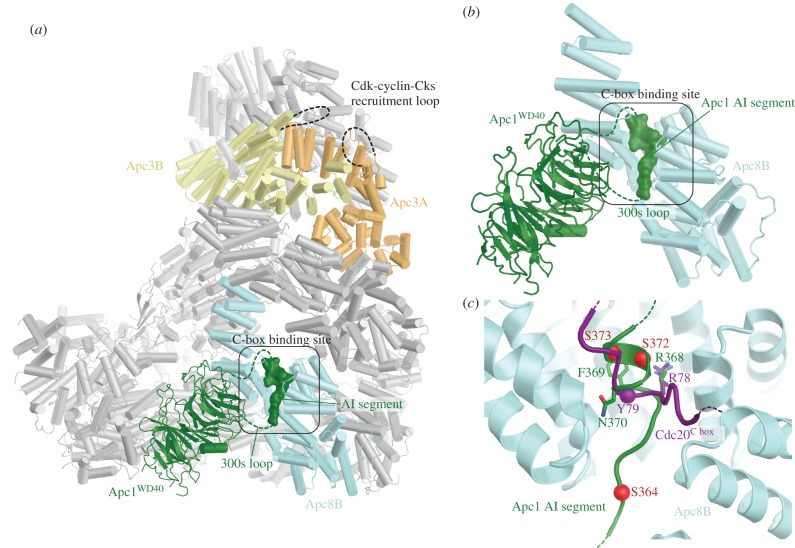
Figure 9.
Control of APC/C Cdc20 by phosphorylation. ( a ) In the unphosphorylated state an auto-inhibitory segment (AI; dark green) within the Apc1 300s loop of Apc1 WD40 mimics the Cdc20 C-box motif and binds...
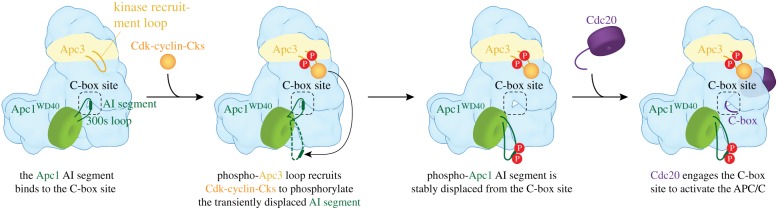
Figure 10.
Schematic of control by phosphorylation. In the unphosphorylated state an auto-inhibitory (AI) segment of Apc1 WD40 mimics the Cdc20 C-box motif and binds to the C-box binding site, blocking Cdc20 ass...
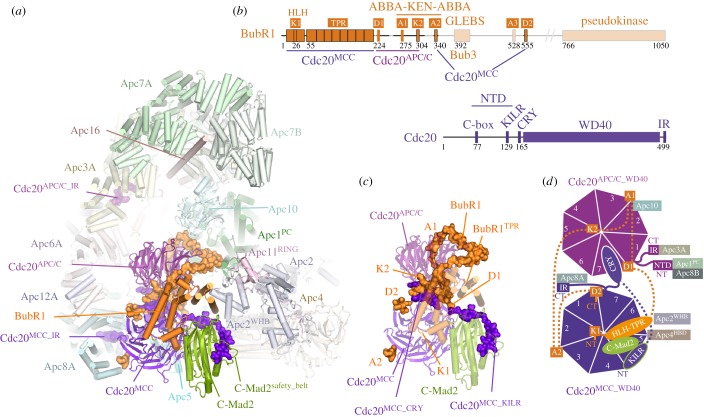
Figure 11.
APC/C regulation by the MCC. ( a ) Atomic structure of APC/C MCC . Ordered regions of BubR1 C-terminal to the TPR domain are shown in space-filling representation, as is the NTD and IR tail of Cdc20 M...
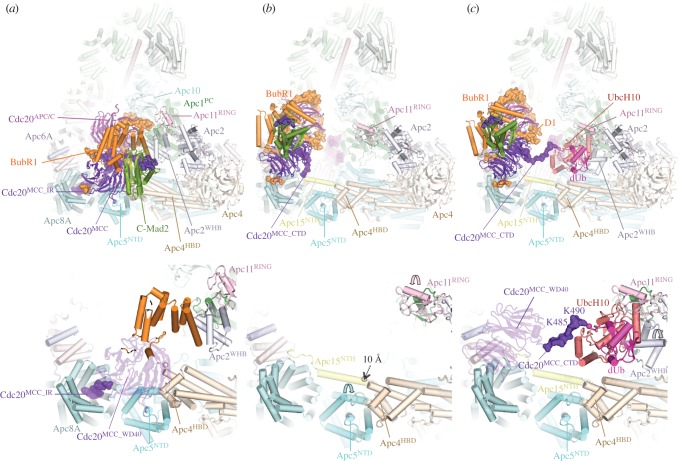
Figure 12.
APC/C MCC adopts open and closed states that allows for reciprocal control by the MCC. ( a ) In APC/C MCC-closed , the MCC inhibits both substrate (for example, securin and cyclin B) and UbcH10 recogn...
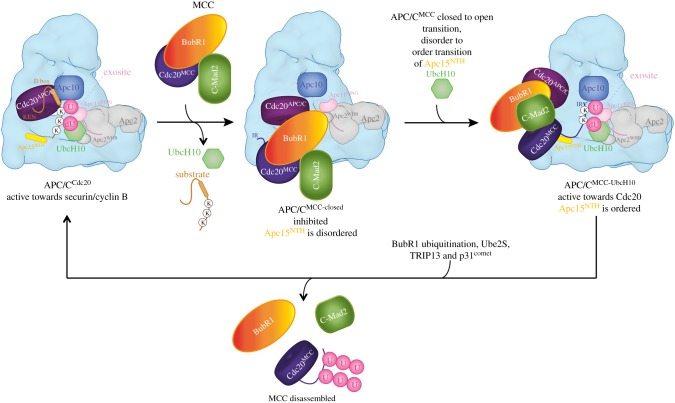
Figure 13.
Reciprocal regulation of the APC/C and MCC at the SAC. Cartoon illustrating reciprocal regulation of APC/C and MCC by APC/C MCC . MCC binding to APC/C Cdc20 generates APC/C MCC that blocks D-box- and ...
Figure images are served from the NIH/NLM PubMed Central Open Access Subset or Europe PMC; copyright remains with the publishers and authors.
💬 Discussion
0 commentsNo comments yet. Be the first to start a discussion!
Leave a Comment